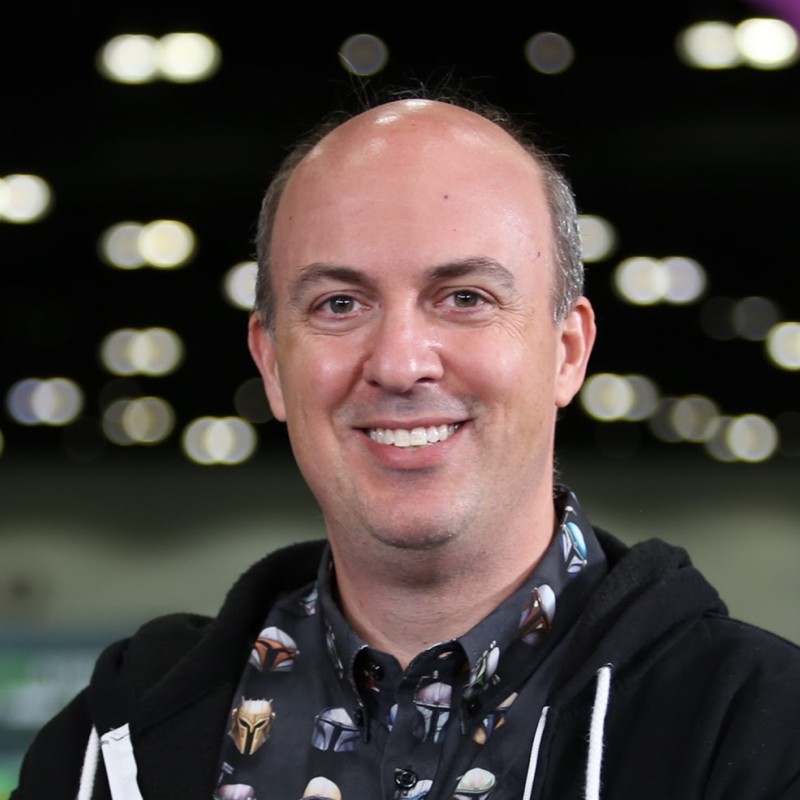
Dave Meyer, Brocade, at Open Networking Summit 2014 with John Furrier and Stu Miniman
@thecube
#ONS2014
Dave Meyer, CTO and Chief Scientist with Brocade, visited theCUBE in Santa Clara at the Open Networking Summit 2014, where John Furrier and Stu Miniman were on the hunt for the best and brightest minds in the tech industry.
Meyer began by showing theCUBE audience a coin: "Everyone that submitted code to the OpenDaylight, Hydrogen release, got one of these coins. On the front it has OpenDaylight Hydrogen and on the back it has CODE. It came to be because I said one time that 'Code is the coin of the realm out here.'"
"You've been involved in networking in a lot of different ways and you are heavily involved in open source," noted Miniman, "How is the network really created today? What's different compared to five years ago?"
"Over the last year, OpenDaylight, it's changed my world view on how networking is going to be done. It really comes down to the collaborative efforts; the open source community is transforming the networking. Not only is code important, but also the way that people build it, the way they collaborate to build it and the way that it gets deployed," said Meyer. "We see that happening right now with things like OpenStack, OpenDaylight, Whitebox, open source and the like."
Miniman invited Meyer to talk more about OpenDaylight, filling in the inner workings of the open source initiative for those unfamiliar viewers.
"Open Daylight is an open source project that's designed to build the industry standard of open source platform, on top of which innovation can be done in the SDN space. It was founded by a group of platinum members in the project, including Cisco, IBM, NEC, Brocade and others. It's real goal is to provide a piece of standardized software on top of which people can build value added applications. It's about building la platform for innovation," explained Meyer.
OpenDaylight's impact on the cloud
"How is OpenDaylight efforts helping the enterprise datacenter game change? What is the OpenDaylight impact on cloud?" asked Furrier.
"What's in hyperscale today will be in enterprise tomorrow. We're trying to build a platform that can be purposed for all these kinds of environments. Open Daylight is not a controller; it's a platform. It can be configured in such a way that it would be appropriate for everyone (enterprise, data center, service provider)," said Meyer. "It's a very dynamic, runtime configurable platform."
Meyer reiterated once more how working for a year at this project has profoundly changed his world view.
"There are three things that are embodied in the open source:
1. the engineering systems are almost as important (if not more important) than the artifacts you're producing.
2. the culture of the organization
3. the people and the processes," said Meyer.
It's pretty clear to Meyer that everyone is starting to notice there's something going on in the open source: "It's the network that we build and the ability to build these collaborations that are so powerful here. That's what's starting to resonate with people in the open source world."
How will the Services model work under the hood?
"If 'Everything-as-a-Service' is going to be a model, what needs to happen 'under the hood'?" asked Furrier.
"In the case of the hyperscale, they cannot have humans in the loop -- the macrotrend is not only to have more automation, but to have more intelligent automation. SDN opens all kind of opportunities for doing automation and optimization, but the technology is still very young," thinks Meyer.
He believes that "one of the most powerful things about open source is the collaboration model."
Forgot Password
Almost there!
We just sent you a verification email. Please verify your account to gain access to
Open Networking Summit (ONS) 2014 | Santa Clara. If you don’t think you received an email check your
spam folder.
Sign in to Open Networking Summit (ONS) 2014 | Santa Clara.
In order to sign in, enter the email address you used to registered for the event. Once completed, you will receive an email with a verification link. Open this link to automatically sign into the site.
Register For Open Networking Summit (ONS) 2014 | Santa Clara
Please fill out the information below. You will recieve an email with a verification link confirming your registration. Click the link to automatically sign into the site.
You’re almost there!
We just sent you a verification email. Please click the verification button in the email. Once your email address is verified, you will have full access to all event content for Open Networking Summit (ONS) 2014 | Santa Clara.
I want my badge and interests to be visible to all attendees.
Checking this box will display your presense on the attendees list, view your profile and allow other attendees to contact you via 1-1 chat. Read the Privacy Policy. At any time, you can choose to disable this preference.
Select your Interests!
add
Upload your photo
Uploading..
OR
Connect via Twitter
Connect via Linkedin
EDIT PASSWORD
Share
Forgot Password
Almost there!
We just sent you a verification email. Please verify your account to gain access to
Open Networking Summit (ONS) 2014 | Santa Clara. If you don’t think you received an email check your
spam folder.
Sign in to Open Networking Summit (ONS) 2014 | Santa Clara.
In order to sign in, enter the email address you used to registered for the event. Once completed, you will receive an email with a verification link. Open this link to automatically sign into the site.
Sign in to gain access to Open Networking Summit (ONS) 2014 | Santa Clara
Please sign in with LinkedIn to continue to Open Networking Summit (ONS) 2014 | Santa Clara. Signing in with LinkedIn ensures a professional environment.
Are you sure you want to remove access rights for this user?
Details
Manage Access
email address
Community Invitation
Dave Meyer | Open Networking Summit 2014
Dave Meyer, Brocade, at Open Networking Summit 2014 with John Furrier and Stu Miniman
@thecube
#ONS2014
Dave Meyer, CTO and Chief Scientist with Brocade, visited theCUBE in Santa Clara at the Open Networking Summit 2014, where John Furrier and Stu Miniman were on the hunt for the best and brightest minds in the tech industry.
Meyer began by showing theCUBE audience a coin: "Everyone that submitted code to the OpenDaylight, Hydrogen release, got one of these coins. On the front it has OpenDaylight Hydrogen and on the back it has CODE. It came to be because I said one time that 'Code is the coin of the realm out here.'"
"You've been involved in networking in a lot of different ways and you are heavily involved in open source," noted Miniman, "How is the network really created today? What's different compared to five years ago?"
"Over the last year, OpenDaylight, it's changed my world view on how networking is going to be done. It really comes down to the collaborative efforts; the open source community is transforming the networking. Not only is code important, but also the way that people build it, the way they collaborate to build it and the way that it gets deployed," said Meyer. "We see that happening right now with things like OpenStack, OpenDaylight, Whitebox, open source and the like."
Miniman invited Meyer to talk more about OpenDaylight, filling in the inner workings of the open source initiative for those unfamiliar viewers.
"Open Daylight is an open source project that's designed to build the industry standard of open source platform, on top of which innovation can be done in the SDN space. It was founded by a group of platinum members in the project, including Cisco, IBM, NEC, Brocade and others. It's real goal is to provide a piece of standardized software on top of which people can build value added applications. It's about building la platform for innovation," explained Meyer.
OpenDaylight's impact on the cloud
"How is OpenDaylight efforts helping the enterprise datacenter game change? What is the OpenDaylight impact on cloud?" asked Furrier.
"What's in hyperscale today will be in enterprise tomorrow. We're trying to build a platform that can be purposed for all these kinds of environments. Open Daylight is not a controller; it's a platform. It can be configured in such a way that it would be appropriate for everyone (enterprise, data center, service provider)," said Meyer. "It's a very dynamic, runtime configurable platform."
Meyer reiterated once more how working for a year at this project has profoundly changed his world view.
"There are three things that are embodied in the open source:
1. the engineering systems are almost as important (if not more important) than the artifacts you're producing.
2. the culture of the organization
3. the people and the processes," said Meyer.
It's pretty clear to Meyer that everyone is starting to notice there's something going on in the open source: "It's the network that we build and the ability to build these collaborations that are so powerful here. That's what's starting to resonate with people in the open source world."
How will the Services model work under the hood?
"If 'Everything-as-a-Service' is going to be a model, what needs to happen 'under the hood'?" asked Furrier.
"In the case of the hyperscale, they cannot have humans in the loop -- the macrotrend is not only to have more automation, but to have more intelligent automation. SDN opens all kind of opportunities for doing automation and optimization, but the technology is still very young," thinks Meyer.
He believes that "one of the most powerful things about open source is the collaboration model."