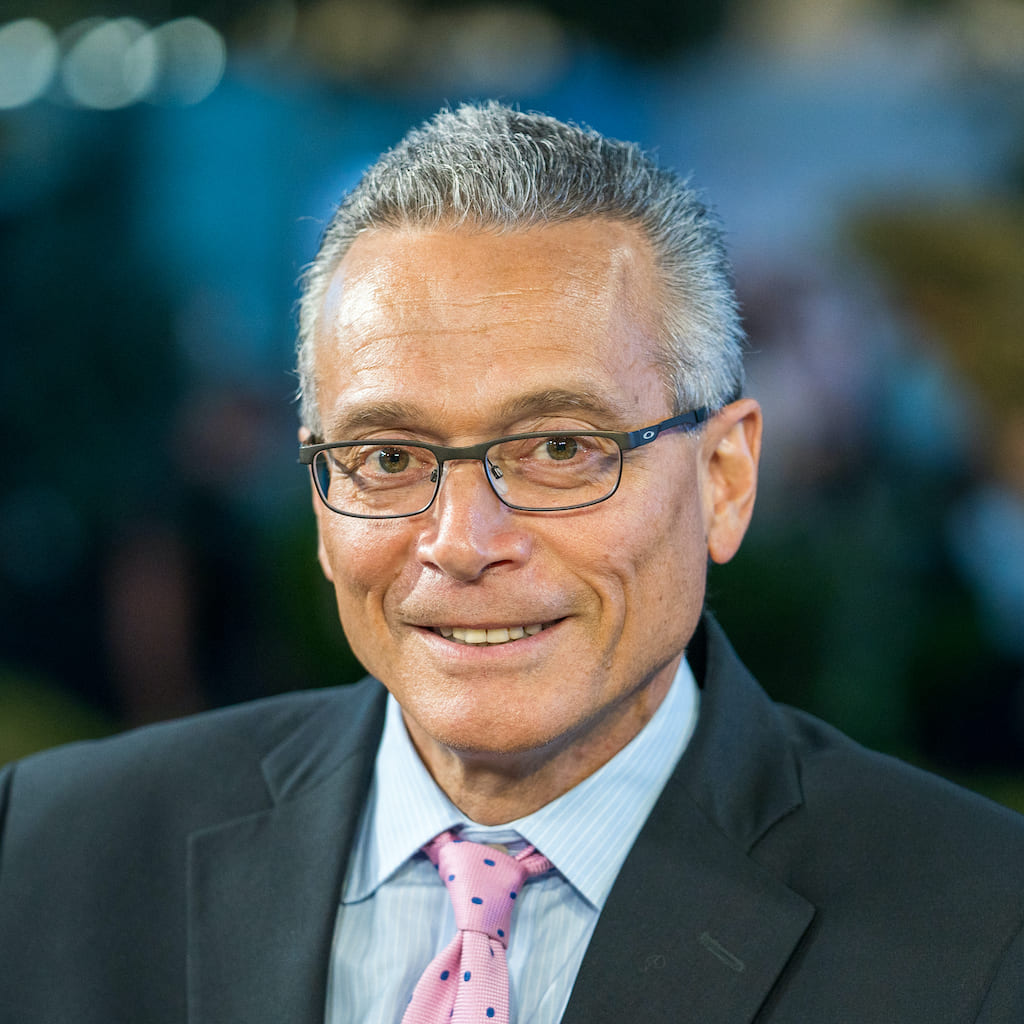
Gary Orenstein, Fusion-io, at Open Compute Summit V (2014) with John Furrier and Dave Vellante
@thecube
#OCPSummit
John Furrier and Dave Vellante, theCUBE co-hosts, took off to San Jose, California this week for the fifth edition of Open Compute Project Summit. They caught up with Gary Orenstein, the CMO at Fusion-io, discussing his company's new solutions and the trends of 2014, including Bitcoin (see the entire segment below).
"It's a great time to be participating at #OCP, started Orenstein. "The fun part now, as the ecosystem is growing, is becoming easier and easier for people to participate -- by contributing ideas and designs, or by acquiring OCP technologies that can be easily deployed in the data center."
"Today Fusion-io announced two solutions they are working on with a couple of solutions providers: 1) Hyve solution; 2) Quanta computer. With both you can buy fully integrated OCP solutions that include Fusion-io flash memory. This, in my opinion, is a great example of how it's working its way into the mainstream," summarized Orenstein.
As Furrier noted, it's a great trend towards diversity: there are the OpenStack guys on one side and the hardware geeks on the other.
Open source supports diversity
"Anybody who has a few racks of servers is a great candidate for OCP," Orenstein stated. "Anybody who has a few racks of servers is wondering 'How do I squeeze efficiency out of that?' Everybody wants a smaller, more efficient, more effective data center which can serve more compute power with less energy. This mission of openness is a great way to get to this level of efficiency. As the open compute mission expands, it's the payday of the efficiency that's going to keep this wheel turning more and more, not just openness."
Continuing the update on the company's news, Orenstein talked next about Open NVM: "Between last year and this show we worked with OCP on a project called Open NVM (Open non-volatile memory), which is the first software project in open compute. In that project there is a collection of technologies designed to use flash in a way that it can best be exploited from an efficiency point of view," explained Orenstein.
"Some examples of technologies included are Atomic Rights for MySQL, a native key value store for flash which can be used as a plug-in for popular databases, and the Advanced Swap for Linux, making it flash-aware. All of these software initiatives under the Open NVM umbrella share the same mission. We have this new media of flash memory and, beyond just designing great performing and highly reliable hardware products, how can we use software all the way up and down the stack to make that more efficient?"
New trends in virtualization, hyperscale
As far as the processor niche is concerned, Orenstein salutes the Group Hug initiatives and the common socket interface for the motherboard, regardless of the processor choice.
Orenstein believes that "the ability to use new processor technologies combined with new storage technologies and new flash memory technologies in a very efficient, easy to consume package, in an OCP configuration, is goodness for all end-users -- be it hyperscale focused or enterprise focused."
Furrier couldn't help quoting George Slessmen (CEO and Product Architect at IO): "If people don't see open compute coming, they will be run over by it." He mentioned virtual machines running OpenStack on Open Compute.
Orenstein himself had a very interesting point, sharing on Twitter that "hyperscale bleeding into the enterprise" is likely a big theme over the next couple of days. To explain what he meant by that, Orenstein exemplified with Linux:
"When Linux came about, people looked at it with disdain because it was not mission critical and they thought it would never work in enterprise environments. Now, just about every major enterprise is a multi-operating system environment, with large Windows installations as well as large Linux installations, and they still have Unix and mainframe. Linux cemented its place as a significant deployment operating system for the enterprise, and it took a number of years to do so. We're seeing similar things with hyperscale architecture where you add servers because it's the best way to do it for these environments."
Forgot Password
Almost there!
We just sent you a verification email. Please verify your account to gain access to
Open Compute Project Summit | 2014 San Jose. If you don’t think you received an email check your
spam folder.
Sign in to Open Compute Project Summit | 2014 San Jose.
In order to sign in, enter the email address you used to registered for the event. Once completed, you will receive an email with a verification link. Open this link to automatically sign into the site.
Register For Open Compute Project Summit | 2014 San Jose
Please fill out the information below. You will recieve an email with a verification link confirming your registration. Click the link to automatically sign into the site.
You’re almost there!
We just sent you a verification email. Please click the verification button in the email. Once your email address is verified, you will have full access to all event content for Open Compute Project Summit | 2014 San Jose.
I want my badge and interests to be visible to all attendees.
Checking this box will display your presense on the attendees list, view your profile and allow other attendees to contact you via 1-1 chat. Read the Privacy Policy. At any time, you can choose to disable this preference.
Select your Interests!
add
Upload your photo
Uploading..
OR
Connect via Twitter
Connect via Linkedin
EDIT PASSWORD
Share
Forgot Password
Almost there!
We just sent you a verification email. Please verify your account to gain access to
Open Compute Project Summit | 2014 San Jose. If you don’t think you received an email check your
spam folder.
Sign in to Open Compute Project Summit | 2014 San Jose.
In order to sign in, enter the email address you used to registered for the event. Once completed, you will receive an email with a verification link. Open this link to automatically sign into the site.
Sign in to gain access to Open Compute Project Summit | 2014 San Jose
Please sign in with LinkedIn to continue to Open Compute Project Summit | 2014 San Jose. Signing in with LinkedIn ensures a professional environment.
Are you sure you want to remove access rights for this user?
Details
Manage Access
email address
Community Invitation
Gary Orenstein, Fusion-io - Open Compute Summit V (2014) #theCUBE
Gary Orenstein, Fusion-io, at Open Compute Summit V (2014) with John Furrier and Dave Vellante
@thecube
#OCPSummit
John Furrier and Dave Vellante, theCUBE co-hosts, took off to San Jose, California this week for the fifth edition of Open Compute Project Summit. They caught up with Gary Orenstein, the CMO at Fusion-io, discussing his company's new solutions and the trends of 2014, including Bitcoin (see the entire segment below).
"It's a great time to be participating at #OCP, started Orenstein. "The fun part now, as the ecosystem is growing, is becoming easier and easier for people to participate -- by contributing ideas and designs, or by acquiring OCP technologies that can be easily deployed in the data center."
"Today Fusion-io announced two solutions they are working on with a couple of solutions providers: 1) Hyve solution; 2) Quanta computer. With both you can buy fully integrated OCP solutions that include Fusion-io flash memory. This, in my opinion, is a great example of how it's working its way into the mainstream," summarized Orenstein.
As Furrier noted, it's a great trend towards diversity: there are the OpenStack guys on one side and the hardware geeks on the other.
Open source supports diversity
"Anybody who has a few racks of servers is a great candidate for OCP," Orenstein stated. "Anybody who has a few racks of servers is wondering 'How do I squeeze efficiency out of that?' Everybody wants a smaller, more efficient, more effective data center which can serve more compute power with less energy. This mission of openness is a great way to get to this level of efficiency. As the open compute mission expands, it's the payday of the efficiency that's going to keep this wheel turning more and more, not just openness."
Continuing the update on the company's news, Orenstein talked next about Open NVM: "Between last year and this show we worked with OCP on a project called Open NVM (Open non-volatile memory), which is the first software project in open compute. In that project there is a collection of technologies designed to use flash in a way that it can best be exploited from an efficiency point of view," explained Orenstein.
"Some examples of technologies included are Atomic Rights for MySQL, a native key value store for flash which can be used as a plug-in for popular databases, and the Advanced Swap for Linux, making it flash-aware. All of these software initiatives under the Open NVM umbrella share the same mission. We have this new media of flash memory and, beyond just designing great performing and highly reliable hardware products, how can we use software all the way up and down the stack to make that more efficient?"
New trends in virtualization, hyperscale
As far as the processor niche is concerned, Orenstein salutes the Group Hug initiatives and the common socket interface for the motherboard, regardless of the processor choice.
Orenstein believes that "the ability to use new processor technologies combined with new storage technologies and new flash memory technologies in a very efficient, easy to consume package, in an OCP configuration, is goodness for all end-users -- be it hyperscale focused or enterprise focused."
Furrier couldn't help quoting George Slessmen (CEO and Product Architect at IO): "If people don't see open compute coming, they will be run over by it." He mentioned virtual machines running OpenStack on Open Compute.
Orenstein himself had a very interesting point, sharing on Twitter that "hyperscale bleeding into the enterprise" is likely a big theme over the next couple of days. To explain what he meant by that, Orenstein exemplified with Linux:
"When Linux came about, people looked at it with disdain because it was not mission critical and they thought it would never work in enterprise environments. Now, just about every major enterprise is a multi-operating system environment, with large Windows installations as well as large Linux installations, and they still have Unix and mainframe. Linux cemented its place as a significant deployment operating system for the enterprise, and it took a number of years to do so. We're seeing similar things with hyperscale architecture where you add servers because it's the best way to do it for these environments."