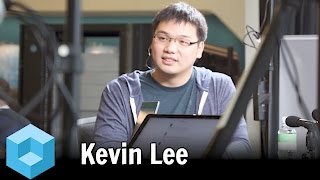
Enhanced video at http://vinja.tv/Gc6BKW21
01. James Liao, Pica8, visits #theCUBE!. (00:17)
02. The Last Year for Pica8. (01:02)
03. The White Box: Dividing the Software and Hardware of Networking. (02:43)
04. Networking and Bringing the White Box to the Storage Cloud. (06:15)
05. SDN and the Value Proposition that Pica8 is Bringing. (07:17)
06. The Importance of Building Partnerships at the Application Level. (09:19)
07. Blurring the Lines Between ODM and OCPs. (11:32)
08. Leveraging Open Source While Maintaining Competitive Advantage. (13:32)
09. The Last Word: What's Coming Up in the Next 12 Months. (15:44)
Track List created with http://www.vinjavideo.com.
https://siliconangle.com/2016/03/09/can-the-enterprise-overcome-networking-limitations-ocpsummit16/
--- ---
Can the enterprise overcome networking limitations? | #OCPSummit16
by Gabriel Pesek | Mar 9, 2016
Open computing and its various aspects for disruption of the current state of things in the tech landscape are under careful scrutiny by companies and enterprises looking to stay ahead of the curve.
And during the gathering in San Jose, California, for this year’s OCP U.S. Summit conference, Jeff Frick and Stu Miniman, cohosts of theCUBE, from the SiliconANGLE Media team, were happy to welcome a return guest to theCUBE to discuss these topics. James Liao, CEO and cofounder of Pica8, Inc., met with the cohosts to talk about some of the ins and outs of open computing, its ecosystem and networking.
Whiteboxes and open computing
While a lot of ground was covered in the conversation, Liao provided some concise summaries on a few points. An early instance came in his assessment of how open computing had grown since the last OCP Summit: “The biggest change we have seen in the last year is the ecosystem coming together.” He expanded on this by saying, “The ecosystem includes the application, the controller … a lot of platforms. So we’re seeing a lot of players here to push [it] forward.”
Another major point of discussion, one which fed into several other topics covered, was the growing use of whiteboxes. Though Liao admitted, “I think whitebox has a lot of definitions, it’s definitely confusing,” the general-use meaning was that of a software subsystem with visible internals.
From this, Liao proceeded on a consideration of whitebox value and impact to several fields: “If you think about the adoption of the whitebox, there are three segments that are really interesting to all the big movers … The first one is data-centric. Everybody knows that service providers need whitebox … And this is the segment that really knows about how to use the whitebox, not only on the server and storage, but also on the network itself.”
Liao continued, “But if you move … to a different segment, enterprise, [they’re] moving a little slower than the data-centric, because they tend to be more conservative about what kind of service they want to use.” The third point was a “segment that people don’t realize … the OEM business.”
With OEM, he said, “People have to build around networking and compromise with the networking limitation. This is the first time they can just take a whitebox [and] optimize the software for their application. Storage vendors, for example, they really want to optimize networking for their storage, instead of changing storage for networking.”
Encouraging alternatives
The opportunities opened up by such changes are producing some interesting market shifts. Liao noted, “We’re seeing very encouraging signs this past year … in the enterprise market, people looked beyond Cisco, looked beyond Juniper … and look into HP and Dell as alternative providers, not because it’s cheaper, but because they provide certain flexibility, they can optimize their environment, reduce the operation cost and then provide the service.”
Asked to outline three things his company will work on over the next year, Liao itemized, “SDN and whitebox are here, they’re ready. We’re going to see good growth of revenue and the customer base. We will continue to build partnerships … Networking is the barrier, and we have to work together to solve that problem.”
@Open Compute Project @Pica8 @theCUBE #theCUBE @SiliconANGLE theCUBE
#OCPSummit16
Forgot Password
Almost there!
We just sent you a verification email. Please verify your account to gain access to
Open Compute Project Summit 2016 | San Jose. If you don’t think you received an email check your
spam folder.
Sign in to Open Compute Project Summit 2016 | San Jose.
In order to sign in, enter the email address you used to registered for the event. Once completed, you will receive an email with a verification link. Open this link to automatically sign into the site.
Register For Open Compute Project Summit 2016 | San Jose
Please fill out the information below. You will recieve an email with a verification link confirming your registration. Click the link to automatically sign into the site.
You’re almost there!
We just sent you a verification email. Please click the verification button in the email. Once your email address is verified, you will have full access to all event content for Open Compute Project Summit 2016 | San Jose.
I want my badge and interests to be visible to all attendees.
Checking this box will display your presense on the attendees list, view your profile and allow other attendees to contact you via 1-1 chat. Read the Privacy Policy. At any time, you can choose to disable this preference.
Select your Interests!
add
Upload your photo
Uploading..
OR
Connect via Twitter
Connect via Linkedin
EDIT PASSWORD
Share
Forgot Password
Almost there!
We just sent you a verification email. Please verify your account to gain access to
Open Compute Project Summit 2016 | San Jose. If you don’t think you received an email check your
spam folder.
Sign in to Open Compute Project Summit 2016 | San Jose.
In order to sign in, enter the email address you used to registered for the event. Once completed, you will receive an email with a verification link. Open this link to automatically sign into the site.
Sign in to gain access to Open Compute Project Summit 2016 | San Jose
Please sign in with LinkedIn to continue to Open Compute Project Summit 2016 | San Jose. Signing in with LinkedIn ensures a professional environment.
Are you sure you want to remove access rights for this user?
Details
Manage Access
email address
Community Invitation
James Liao, Pica8 - OCP Summit - #OCPSummit16 - #theCUBE
Enhanced video at http://vinja.tv/Gc6BKW21
01. James Liao, Pica8, visits #theCUBE!. (00:17)
02. The Last Year for Pica8. (01:02)
03. The White Box: Dividing the Software and Hardware of Networking. (02:43)
04. Networking and Bringing the White Box to the Storage Cloud. (06:15)
05. SDN and the Value Proposition that Pica8 is Bringing. (07:17)
06. The Importance of Building Partnerships at the Application Level. (09:19)
07. Blurring the Lines Between ODM and OCPs. (11:32)
08. Leveraging Open Source While Maintaining Competitive Advantage. (13:32)
09. The Last Word: What's Coming Up in the Next 12 Months. (15:44)
Track List created with http://www.vinjavideo.com.
https://siliconangle.com/2016/03/09/can-the-enterprise-overcome-networking-limitations-ocpsummit16/
--- ---
Can the enterprise overcome networking limitations? | #OCPSummit16
by Gabriel Pesek | Mar 9, 2016
Open computing and its various aspects for disruption of the current state of things in the tech landscape are under careful scrutiny by companies and enterprises looking to stay ahead of the curve.
And during the gathering in San Jose, California, for this year’s OCP U.S. Summit conference, Jeff Frick and Stu Miniman, cohosts of theCUBE, from the SiliconANGLE Media team, were happy to welcome a return guest to theCUBE to discuss these topics. James Liao, CEO and cofounder of Pica8, Inc., met with the cohosts to talk about some of the ins and outs of open computing, its ecosystem and networking.
Whiteboxes and open computing
While a lot of ground was covered in the conversation, Liao provided some concise summaries on a few points. An early instance came in his assessment of how open computing had grown since the last OCP Summit: “The biggest change we have seen in the last year is the ecosystem coming together.” He expanded on this by saying, “The ecosystem includes the application, the controller … a lot of platforms. So we’re seeing a lot of players here to push [it] forward.”
Another major point of discussion, one which fed into several other topics covered, was the growing use of whiteboxes. Though Liao admitted, “I think whitebox has a lot of definitions, it’s definitely confusing,” the general-use meaning was that of a software subsystem with visible internals.
From this, Liao proceeded on a consideration of whitebox value and impact to several fields: “If you think about the adoption of the whitebox, there are three segments that are really interesting to all the big movers … The first one is data-centric. Everybody knows that service providers need whitebox … And this is the segment that really knows about how to use the whitebox, not only on the server and storage, but also on the network itself.”
Liao continued, “But if you move … to a different segment, enterprise, [they’re] moving a little slower than the data-centric, because they tend to be more conservative about what kind of service they want to use.” The third point was a “segment that people don’t realize … the OEM business.”
With OEM, he said, “People have to build around networking and compromise with the networking limitation. This is the first time they can just take a whitebox [and] optimize the software for their application. Storage vendors, for example, they really want to optimize networking for their storage, instead of changing storage for networking.”
Encouraging alternatives
The opportunities opened up by such changes are producing some interesting market shifts. Liao noted, “We’re seeing very encouraging signs this past year … in the enterprise market, people looked beyond Cisco, looked beyond Juniper … and look into HP and Dell as alternative providers, not because it’s cheaper, but because they provide certain flexibility, they can optimize their environment, reduce the operation cost and then provide the service.”
Asked to outline three things his company will work on over the next year, Liao itemized, “SDN and whitebox are here, they’re ready. We’re going to see good growth of revenue and the customer base. We will continue to build partnerships … Networking is the barrier, and we have to work together to solve that problem.”
@Open Compute Project @Pica8 @theCUBE #theCUBE @SiliconANGLE theCUBE
#OCPSummit16