01. Frank Frankovsky, Open Compute Project Foundation, Visits #theCUBE. (00:29)
02. Did You Expect Open Compute to Be Such a Large Event?. (00:52)
03. Microsoft's Contribution to Open Compute. (02:19)
04. How Does Being Part of an Open Source Project Effect Companies?. (04:21)
05. The Economic Opportunities of Open Compute. (05:57)
06. The Future Model of Open Source. (10:06)
07. Congratulations and Thanks For Coming On #theCUBE. (15:17)
https://siliconangle.com/2015/03/11/open-compute-project-its-not-just-for-hackers-any-more-not-even-close/
--- ---
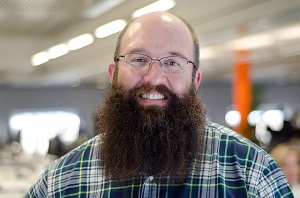
Frank Frankovsky, Open Compute Project Foundation, at Open Compute Project Summit 2015 with John Furrier and Jeff Frick
Open Compute Project not just for hackers anymore. Not even close. | #OCPSummit2015
Rapidly changing industry norms are a testament to the power of the Open Compute Project, said Frank Frankovsky, the President and Chairman of the Open Compute Project Foundation. Once viewed as a “hacker” organization with a “hacker” conference, Frankovsky said the voice of the community has risen in support of the Open Compute Project. And that voice says: “I know what my environment needs, I want it to look this way.” Galvanization of their collective voices is “what’s driven the change to happen and happen so quickly,” he emphasized.
That said, Frankovsky doesn’t believe that open source and open compute should mean “the entire stack gets normalized and commoditized and that’s no room for anybody to build anything proprietary on top.” Indeed, Frankovsky stressed that it’s just “gratuitous differentiation” that gets in the way. Proprietary differentiation — that he’s all for. “If you solve a need no one else has solved,” he explained, you should be able to profit.
Microsoft’s actions spurred a sea-change
Big companies, he suggested, were the ones that used lead industry standardization efforts, and not “out of the goodness of their hearts. They were leading them because they had a commercial opportunity…” But recently that’s begun to change, as more big companies commit their time and intellectual property to Open Compute.
In fact, the change in the Open Compute Project occurred when Microsoft began contributing. The tech giant as “contributed more IP in the last twelve months than anybody else in the community,” Frankovsky commented. Though he was initially skeptical that Microsoft’s contribution was nothing more than a “PR thing,” he now recognizes that Microsoft has “come through in spades.” He hopes to see that pattern repeat itself with companies like Cisco Systems, Inc., Hewlett-Packard Development Company, L.P., and Apple, Inc.
Enabling developers to share and share alike
Part of the reason big companies have began to contribute to the Open Compute Project is because of the innovation it ignites in their own developers. “It’s a source of pride when you can share your work openly with other colleagues and peers in the industry,”Frankovsky explained. In particular, the Open Compute Project offers a forum in which developers can share, improve, and critique each other’s ideas. “It creates this awesome cycle of friendly competition and it improves the designs,” Frankovsky said.
Prioritizing transparency
Open Compute will have a profound effect on “software defined anything” Frankovsky explained, because open compute enables “transparency in that underlying base.” Developers will no longer need to build on top of “shifting sand” because they’ll be able to “build whatever software-defined X is on top of something [they] understand completely.”
The next wave of opportunities the hardware level
One of the untapped opportunities Frankovsky sees that Open Compute could play a key role in data center orchestration. Open Compute can offer “a good understanding of what’s happening environmentally,” he said, and the ability to use analytics to get an accurate view of what’s going on in their datacenter. A fixed provisioning model, he furthered, would give clients the ability to coordinate when and where power should be used. The goal of such an innovation, he said, would be “to reshape how people utilize the very expensive infrastructure that they have.”
@theCUBE @Open Compute Project #OpenCompute #theCUBE @SiliconANGLE theCUBE
#ocpsummit
Forgot Password
Almost there!
We just sent you a verification email. Please verify your account to gain access to
Open Compute Project Summit 2015 | San Jose. If you don’t think you received an email check your
spam folder.
Sign in to Open Compute Project Summit 2015 | San Jose.
In order to sign in, enter the email address you used to registered for the event. Once completed, you will receive an email with a verification link. Open this link to automatically sign into the site.
Register For Open Compute Project Summit 2015 | San Jose
Please fill out the information below. You will recieve an email with a verification link confirming your registration. Click the link to automatically sign into the site.
You’re almost there!
We just sent you a verification email. Please click the verification button in the email. Once your email address is verified, you will have full access to all event content for Open Compute Project Summit 2015 | San Jose.
I want my badge and interests to be visible to all attendees.
Checking this box will display your presense on the attendees list, view your profile and allow other attendees to contact you via 1-1 chat. Read the Privacy Policy. At any time, you can choose to disable this preference.
Select your Interests!
add
Upload your photo
Uploading..
OR
Connect via Twitter
Connect via Linkedin
EDIT PASSWORD
Share
Forgot Password
Almost there!
We just sent you a verification email. Please verify your account to gain access to
Open Compute Project Summit 2015 | San Jose. If you don’t think you received an email check your
spam folder.
Sign in to Open Compute Project Summit 2015 | San Jose.
In order to sign in, enter the email address you used to registered for the event. Once completed, you will receive an email with a verification link. Open this link to automatically sign into the site.
Sign in to gain access to Open Compute Project Summit 2015 | San Jose
Please sign in with LinkedIn to continue to Open Compute Project Summit 2015 | San Jose. Signing in with LinkedIn ensures a professional environment.
Are you sure you want to remove access rights for this user?
Details
Manage Access
email address
Community Invitation
Frank Frankovsky, Open Compute Project Foundation | Open Compute Project Summit 2015
01. Frank Frankovsky, Open Compute Project Foundation, Visits #theCUBE. (00:29)
02. Did You Expect Open Compute to Be Such a Large Event?. (00:52)
03. Microsoft's Contribution to Open Compute. (02:19)
04. How Does Being Part of an Open Source Project Effect Companies?. (04:21)
05. The Economic Opportunities of Open Compute. (05:57)
06. The Future Model of Open Source. (10:06)
07. Congratulations and Thanks For Coming On #theCUBE. (15:17)
https://siliconangle.com/2015/03/11/open-compute-project-its-not-just-for-hackers-any-more-not-even-close/
--- ---
Frank Frankovsky, Open Compute Project Foundation, at Open Compute Project Summit 2015 with John Furrier and Jeff Frick
Open Compute Project not just for hackers anymore. Not even close. | #OCPSummit2015
Rapidly changing industry norms are a testament to the power of the Open Compute Project, said Frank Frankovsky, the President and Chairman of the Open Compute Project Foundation. Once viewed as a “hacker” organization with a “hacker” conference, Frankovsky said the voice of the community has risen in support of the Open Compute Project. And that voice says: “I know what my environment needs, I want it to look this way.” Galvanization of their collective voices is “what’s driven the change to happen and happen so quickly,” he emphasized.
That said, Frankovsky doesn’t believe that open source and open compute should mean “the entire stack gets normalized and commoditized and that’s no room for anybody to build anything proprietary on top.” Indeed, Frankovsky stressed that it’s just “gratuitous differentiation” that gets in the way. Proprietary differentiation — that he’s all for. “If you solve a need no one else has solved,” he explained, you should be able to profit.
Microsoft’s actions spurred a sea-change
Big companies, he suggested, were the ones that used lead industry standardization efforts, and not “out of the goodness of their hearts. They were leading them because they had a commercial opportunity…” But recently that’s begun to change, as more big companies commit their time and intellectual property to Open Compute.
In fact, the change in the Open Compute Project occurred when Microsoft began contributing. The tech giant as “contributed more IP in the last twelve months than anybody else in the community,” Frankovsky commented. Though he was initially skeptical that Microsoft’s contribution was nothing more than a “PR thing,” he now recognizes that Microsoft has “come through in spades.” He hopes to see that pattern repeat itself with companies like Cisco Systems, Inc., Hewlett-Packard Development Company, L.P., and Apple, Inc.
Enabling developers to share and share alike
Part of the reason big companies have began to contribute to the Open Compute Project is because of the innovation it ignites in their own developers. “It’s a source of pride when you can share your work openly with other colleagues and peers in the industry,”Frankovsky explained. In particular, the Open Compute Project offers a forum in which developers can share, improve, and critique each other’s ideas. “It creates this awesome cycle of friendly competition and it improves the designs,” Frankovsky said.
Prioritizing transparency
Open Compute will have a profound effect on “software defined anything” Frankovsky explained, because open compute enables “transparency in that underlying base.” Developers will no longer need to build on top of “shifting sand” because they’ll be able to “build whatever software-defined X is on top of something [they] understand completely.”
The next wave of opportunities the hardware level
One of the untapped opportunities Frankovsky sees that Open Compute could play a key role in data center orchestration. Open Compute can offer “a good understanding of what’s happening environmentally,” he said, and the ability to use analytics to get an accurate view of what’s going on in their datacenter. A fixed provisioning model, he furthered, would give clients the ability to coordinate when and where power should be used. The goal of such an innovation, he said, would be “to reshape how people utilize the very expensive infrastructure that they have.”
@theCUBE @Open Compute Project #OpenCompute #theCUBE @SiliconANGLE theCUBE
#ocpsummit