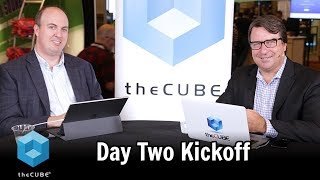
Christine Corbett Moran sits down with Stu Miniman & John Furrier at Open Source Summit 2017 in Los Angeles, CA
#OSSummit #theCUBE
https://siliconangle.com/2017/09/15/equifax-breach-profit-pressures-squeeze-open-source-community-says-signal-coder-ossummit-guestoftheweek/
Equifax breach, profit pressures squeeze open-source community, says Signal coder
The open-source community may be headed toward a major turning point, thanks to a security breach of epic scale.
When news broke this month that the personal credit records, including names, birthdates, Social Security Numbers and home addresses of 143 million people had been breached at the credit rating bureau Equifax Inc., there was outrage. As more details have emerged, reports have placed some of the blame on an open-source server framework called Apache Struts, although representatives from that project have issued their own statement questioning whether vulnerabilities in open-source software led to a hack of historic proportions.
Even if it’s found that a flaw in Apache Struts led to the massive breach, open-source is not going away. In fact, major tech players, such as Microsoft and Amazon Web Services Inc., have recently put significant support behind open-source projects and startup investment in the field — reaching $3.5 billion between 2012 and 2015.
But there is still tension between a community of open-source developers who believe in the power of its collective, democratic model and companies who need to bring successful products to market that will realize a nice return for the bottom line.
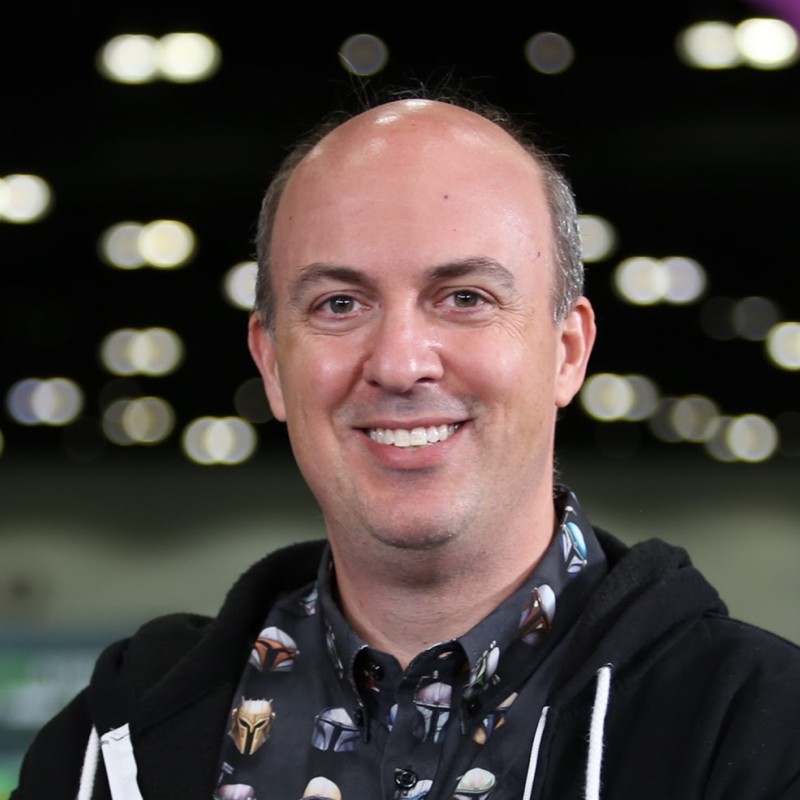
“I don’t think that money is a primary motivating factor for most people in the [open-source] community,” said Christine Corbett Moran, Ph.D. (pictured), NSF astronomy and astrophysics postdoctoral fellow at California Institute of Technology. “When you do something of value, money is the reward for that, and the only question is how to distribute that reward to the community.”
Moran paid a visit to theCUBE, SiliconANGLE’s mobile livestreaming studio, and spoke with co-hosts John Furrier (@furrier) and Stu Miniman (@stu) during the Open Source Summit in Los Angeles, California. They discussed the power behind the open-source community, Moran’s own successful invention three years ago, corporate involvement in getting products to market, nation state attempts to stifle innovation and the challenge of training the next generation. (* Disclosure below.)
This week theCUBE features Christine Corbett Moran as our Guest of the Week.
Red Hat only winner so far
On the scoreboard of corporate success, the only purely open-source company to emerge as a “winner” has been Red Hat Inc., a publicly traded firm with $19 billion in market capitalization and a share price currently in excess of $100. Hortonworks Inc., with open-source products built on the Apache Hadoop open-source ecosystem, has been showing stronger earnings of late and recently signed a major deal with IBM Corp. But Hortonworks is still cash-flow negative.
There are also “mixed” companies emerging, such as Cloudera Inc., with open-source Hadoop products and proprietary extensions. Cloudera’s co-founder was recently quoted by SiliconANGLE describing his firm as “an enterprise company” rather than open source. Nevertheless, there is a school of thought in the open-source universe that current challenges facing the tech world demand community-based solutions.
“Open source has really shown that you can’t do as much unless you share your contributions and benefits from people around the globe,” Moran explained. “You can’t do it alone; there’s no lone genius. You have to do it as a community.”
The astrophysicist knows this first hand. Moran helped develop Signal, a calling app in 2014. It was the first iOS open-source app that enabled encrypted voice calling for free. Signal came out of the nonprofit software group Open Whisper Systems, and its open-source protocols are widely used today for encrypted communications, including Facebook’s popular WhatsApp platform.
The success of Signal highlights a hard reality confronting open-source developers. They can spend countless hours creating a superb product, but it doesn’t really become commercially viable until a company adds the final tweaks to generate easier use and wider adoption in the commercial marketplace. This final work can be difficult, and open-source developers often shy away because it lacks the fun, technical elements they enjoy.
...
Watch the complete video interview below, and be sure to check out more of SiliconANGLE’s and theCUBE’s coverage of Open Source Summit 2017. (* Disclosure: TheCUBE is a paid media partner for Open Source Summit 2017. Neither The Linux Foundation nor Red Hat Inc. have editorial control over content on theCUBE or SiliconANGLE.)
Forgot Password
Almost there!
We just sent you a verification email. Please verify your account to gain access to
Open Source Summit 2017 | Los Angeles. If you don’t think you received an email check your
spam folder.
In order to sign in, enter the email address you used to registered for the event. Once completed, you will receive an email with a verification link. Open this link to automatically sign into the site.
Register For Open Source Summit 2017 | Los Angeles
Please fill out the information below. You will recieve an email with a verification link confirming your registration. Click the link to automatically sign into the site.
You’re almost there!
We just sent you a verification email. Please click the verification button in the email. Once your email address is verified, you will have full access to all event content for Open Source Summit 2017 | Los Angeles.
I want my badge and interests to be visible to all attendees.
Checking this box will display your presense on the attendees list, view your profile and allow other attendees to contact you via 1-1 chat. Read the Privacy Policy. At any time, you can choose to disable this preference.
Select your Interests!
add
Upload your photo
Uploading..
OR
Connect via Twitter
Connect via Linkedin
EDIT PASSWORD
Share
Forgot Password
Almost there!
We just sent you a verification email. Please verify your account to gain access to
Open Source Summit 2017 | Los Angeles. If you don’t think you received an email check your
spam folder.
In order to sign in, enter the email address you used to registered for the event. Once completed, you will receive an email with a verification link. Open this link to automatically sign into the site.
Sign in to gain access to Open Source Summit 2017 | Los Angeles
Please sign in with LinkedIn to continue to Open Source Summit 2017 | Los Angeles. Signing in with LinkedIn ensures a professional environment.
Are you sure you want to remove access rights for this user?
Details
Manage Access
email address
Community Invitation
Christine Corbett Moran, Caltech | Open Source Summit 2017
Christine Corbett Moran sits down with Stu Miniman & John Furrier at Open Source Summit 2017 in Los Angeles, CA
#OSSummit #theCUBE
https://siliconangle.com/2017/09/15/equifax-breach-profit-pressures-squeeze-open-source-community-says-signal-coder-ossummit-guestoftheweek/
Equifax breach, profit pressures squeeze open-source community, says Signal coder
The open-source community may be headed toward a major turning point, thanks to a security breach of epic scale.
When news broke this month that the personal credit records, including names, birthdates, Social Security Numbers and home addresses of 143 million people had been breached at the credit rating bureau Equifax Inc., there was outrage. As more details have emerged, reports have placed some of the blame on an open-source server framework called Apache Struts, although representatives from that project have issued their own statement questioning whether vulnerabilities in open-source software led to a hack of historic proportions.
Even if it’s found that a flaw in Apache Struts led to the massive breach, open-source is not going away. In fact, major tech players, such as Microsoft and Amazon Web Services Inc., have recently put significant support behind open-source projects and startup investment in the field — reaching $3.5 billion between 2012 and 2015.
But there is still tension between a community of open-source developers who believe in the power of its collective, democratic model and companies who need to bring successful products to market that will realize a nice return for the bottom line.
“I don’t think that money is a primary motivating factor for most people in the [open-source] community,” said Christine Corbett Moran, Ph.D. (pictured), NSF astronomy and astrophysics postdoctoral fellow at California Institute of Technology. “When you do something of value, money is the reward for that, and the only question is how to distribute that reward to the community.”
Moran paid a visit to theCUBE, SiliconANGLE’s mobile livestreaming studio, and spoke with co-hosts John Furrier (@furrier) and Stu Miniman (@stu) during the Open Source Summit in Los Angeles, California. They discussed the power behind the open-source community, Moran’s own successful invention three years ago, corporate involvement in getting products to market, nation state attempts to stifle innovation and the challenge of training the next generation. (* Disclosure below.)
This week theCUBE features Christine Corbett Moran as our Guest of the Week.
Red Hat only winner so far
On the scoreboard of corporate success, the only purely open-source company to emerge as a “winner” has been Red Hat Inc., a publicly traded firm with $19 billion in market capitalization and a share price currently in excess of $100. Hortonworks Inc., with open-source products built on the Apache Hadoop open-source ecosystem, has been showing stronger earnings of late and recently signed a major deal with IBM Corp. But Hortonworks is still cash-flow negative.
There are also “mixed” companies emerging, such as Cloudera Inc., with open-source Hadoop products and proprietary extensions. Cloudera’s co-founder was recently quoted by SiliconANGLE describing his firm as “an enterprise company” rather than open source. Nevertheless, there is a school of thought in the open-source universe that current challenges facing the tech world demand community-based solutions.
“Open source has really shown that you can’t do as much unless you share your contributions and benefits from people around the globe,” Moran explained. “You can’t do it alone; there’s no lone genius. You have to do it as a community.”
The astrophysicist knows this first hand. Moran helped develop Signal, a calling app in 2014. It was the first iOS open-source app that enabled encrypted voice calling for free. Signal came out of the nonprofit software group Open Whisper Systems, and its open-source protocols are widely used today for encrypted communications, including Facebook’s popular WhatsApp platform.
The success of Signal highlights a hard reality confronting open-source developers. They can spend countless hours creating a superb product, but it doesn’t really become commercially viable until a company adds the final tweaks to generate easier use and wider adoption in the commercial marketplace. This final work can be difficult, and open-source developers often shy away because it lacks the fun, technical elements they enjoy.
...
Watch the complete video interview below, and be sure to check out more of SiliconANGLE’s and theCUBE’s coverage of Open Source Summit 2017. (* Disclosure: TheCUBE is a paid media partner for Open Source Summit 2017. Neither The Linux Foundation nor Red Hat Inc. have editorial control over content on theCUBE or SiliconANGLE.)