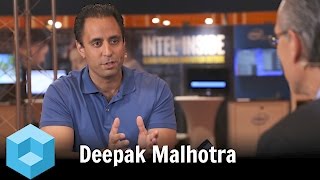
01. Mark Templeton, Former CEO Citrix, visits #theCUBE!. (00:02)
02. A Look Into the Future with Mark. (01:20)
03. Finding Deep Layers of Specialization in IT. (05:12)
04. Consumerization vs. Humanization of IT. (07:12)
05. The End of the Digital Age?. (08:28)
06. Education and the Second Machine Age. (10:18)
07. Creativity is the New Frontier. (12:18)
08. Betting on Your Opinions of the Future. (14:05)
09. Short-Term Focus: The Quarterly Model Works. (17:23)
10. The Need for Transparency Today. (20:07)
11. What's Next for Mark Templeton?. (21:42)
Track List created with http://www.vinjavideo.com.
--- ---
Wait, what? We’re at the end of the Digital Age? | #NEXTConf
by R. Danes | Jun 22, 2016
Technology moves fast; sometimes it moves so fast that beginnings and endings collide with each other at the same time and place. Take digitization. Even as service providers and business consultants are selling ways for customers to enter the digital age, here comes a news flash: We’re actually at the end of the Digital Age.
Mark Templeton, former president and CEO at Citrix Systems, Inc., said, “I’ve actually concluded that we’re at the end of the Digital Age, because we’re on digital overload.” He told Stu Miniman (@stu) and Dave Vellante (@dvellante), cohosts of theCUBE, from the SiliconANGLE Media team, “There are too many devices, there are too many apps, there’s too much data, too many social connections. No one can handle and manage it all.”
Templeton qualified his claim: “It’s the end of the visibility of digital.” He said that in order for technology to evolve in a way that is usable to humans, it must become invisible. We have to take things that have been considered analogue for a very long time — like human emotion and relationships– and “start creating context out of that through digital mechanisms,” he said.
And that will be the future for technology, he said — decreased visibility of digital, times increased contextuality, equaling an improved, “humanized” experience.
Context is king
“I’m spending all my time on technologies that increase contextuality,” Templeton told Vellante and Miniman. He said that the combining of technologies will produce applications with unprecedented intelligence.
He mentioned psychographics, similar to WebNow in its function. But unlike WebNow, which he said gathers basic demographic information, “Psychographics actually takes a lot of that and actually figures out the why, the behavior, what’s in your head,” he explained.
Forgot Password
Almost there!
We just sent you a verification email. Please verify your account to gain access to
Nutanix .NEXT US 2016 | Las Vegas. If you don’t think you received an email check your
spam folder.
In order to sign in, enter the email address you used to registered for the event. Once completed, you will receive an email with a verification link. Open this link to automatically sign into the site.
Register For Nutanix .NEXT US 2016 | Las Vegas
Please fill out the information below. You will recieve an email with a verification link confirming your registration. Click the link to automatically sign into the site.
You’re almost there!
We just sent you a verification email. Please click the verification button in the email. Once your email address is verified, you will have full access to all event content for Nutanix .NEXT US 2016 | Las Vegas.
I want my badge and interests to be visible to all attendees.
Checking this box will display your presense on the attendees list, view your profile and allow other attendees to contact you via 1-1 chat. Read the Privacy Policy. At any time, you can choose to disable this preference.
Select your Interests!
add
Upload your photo
Uploading..
OR
Connect via Twitter
Connect via Linkedin
EDIT PASSWORD
Share
Forgot Password
Almost there!
We just sent you a verification email. Please verify your account to gain access to
Nutanix .NEXT US 2016 | Las Vegas. If you don’t think you received an email check your
spam folder.
In order to sign in, enter the email address you used to registered for the event. Once completed, you will receive an email with a verification link. Open this link to automatically sign into the site.
Sign in to gain access to Nutanix .NEXT US 2016 | Las Vegas
Please sign in with LinkedIn to continue to Nutanix .NEXT US 2016 | Las Vegas. Signing in with LinkedIn ensures a professional environment.
Are you sure you want to remove access rights for this user?
Details
Manage Access
email address
Community Invitation
Mark Templeton - #NEXTCONF - #theCUBE
01. Mark Templeton, Former CEO Citrix, visits #theCUBE!. (00:02)
02. A Look Into the Future with Mark. (01:20)
03. Finding Deep Layers of Specialization in IT. (05:12)
04. Consumerization vs. Humanization of IT. (07:12)
05. The End of the Digital Age?. (08:28)
06. Education and the Second Machine Age. (10:18)
07. Creativity is the New Frontier. (12:18)
08. Betting on Your Opinions of the Future. (14:05)
09. Short-Term Focus: The Quarterly Model Works. (17:23)
10. The Need for Transparency Today. (20:07)
11. What's Next for Mark Templeton?. (21:42)
Track List created with http://www.vinjavideo.com.
--- ---
Wait, what? We’re at the end of the Digital Age? | #NEXTConf
by R. Danes | Jun 22, 2016
Technology moves fast; sometimes it moves so fast that beginnings and endings collide with each other at the same time and place. Take digitization. Even as service providers and business consultants are selling ways for customers to enter the digital age, here comes a news flash: We’re actually at the end of the Digital Age.
Mark Templeton, former president and CEO at Citrix Systems, Inc., said, “I’ve actually concluded that we’re at the end of the Digital Age, because we’re on digital overload.” He told Stu Miniman (@stu) and Dave Vellante (@dvellante), cohosts of theCUBE, from the SiliconANGLE Media team, “There are too many devices, there are too many apps, there’s too much data, too many social connections. No one can handle and manage it all.”
Templeton qualified his claim: “It’s the end of the visibility of digital.” He said that in order for technology to evolve in a way that is usable to humans, it must become invisible. We have to take things that have been considered analogue for a very long time — like human emotion and relationships– and “start creating context out of that through digital mechanisms,” he said.
And that will be the future for technology, he said — decreased visibility of digital, times increased contextuality, equaling an improved, “humanized” experience.
Context is king
“I’m spending all my time on technologies that increase contextuality,” Templeton told Vellante and Miniman. He said that the combining of technologies will produce applications with unprecedented intelligence.
He mentioned psychographics, similar to WebNow in its function. But unlike WebNow, which he said gathers basic demographic information, “Psychographics actually takes a lot of that and actually figures out the why, the behavior, what’s in your head,” he explained.