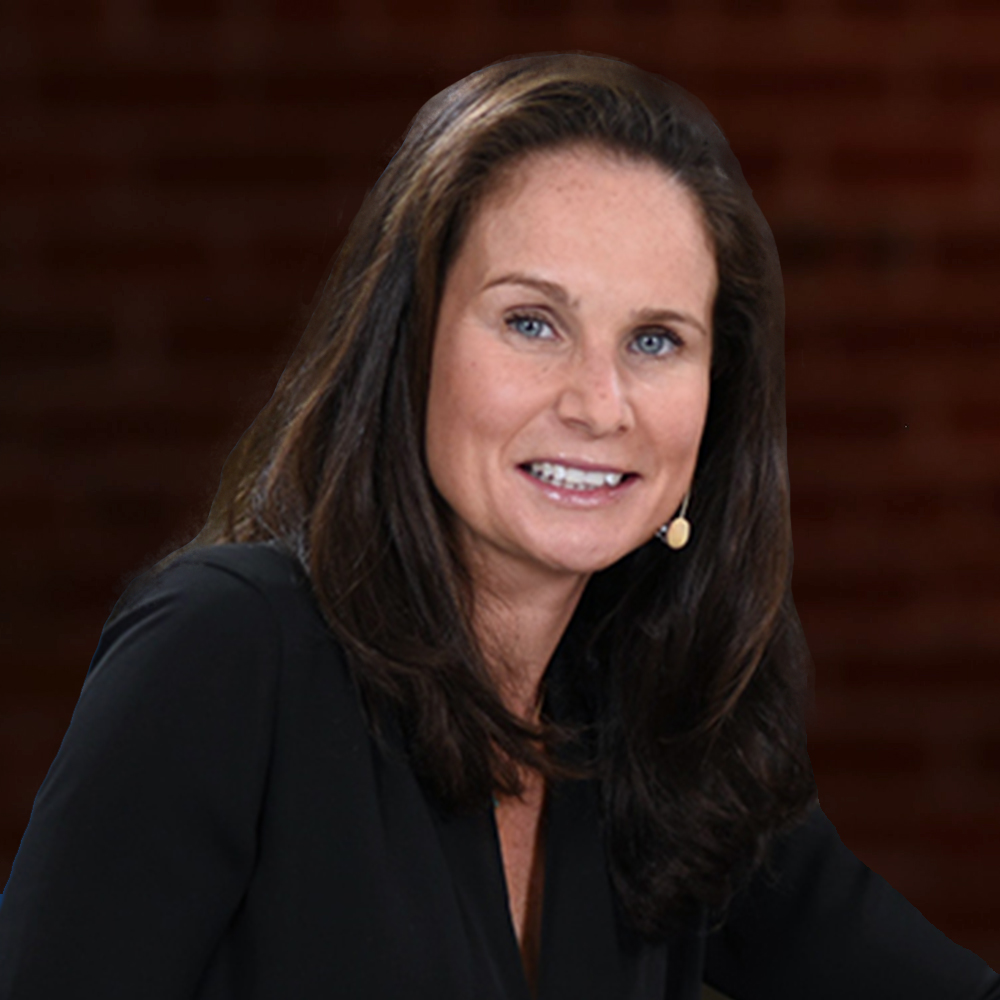
Dr. Ayanna Howard, Professor and Chair, School of Interactive Computing, College of Computing, GA TECH, sit with John Furrier & Rebecca Knight at Nutanix .NEXT Conference 2019 in Anaheim, CA
#NEXTconf #Nutanix #theCUBE
https://siliconangle.com/2019/05/14/empathic-ai-mirrors-human-emotions-to-help-autistic-children-nextconf-womenintech/
Empathic AI mirrors human emotions to help autistic children
Robotic emotion is a contentious topic. From their first appearance in Rossum’s Universal Robots to the recent New York Times bestseller “Machines Like Me,” fictional androids have shown emotion. Yet science has been firm that machines are rational and logical; robotic personality an anthropomorphism.
Technological advances in robotics are changing that point of view. As artificial intelligence is programmed to understand facial expressions and mirror empathy, scientists are working on using emotionally aware robots as assistive technology for children with autistic spectrum disorder.
So, can robots have emotions?
“Yes, machines do have emotions, which sounds kind of weird, but in order for us to work with others, we typically have a bond, so why not have a bond with our machines?” said Dr. Ayanna Howard (pictured), professor and chair of the School of Interactive Computing in the College of Computing at Georgia Institute of Technology.
Howard spoke with John Furrier (@furrier) and Rebecca Knight (@knightrm), co- hosts of theCUBE, SiliconANGLE Media’s mobile livestreaming studio, during the .NEXT event in Anaheim, California. They discussed using robotics as a force for good, how robots and AI can become ’emotional,’ and how Howard, as a woman of color, is mentoring others to follow in her footsteps (see the full interview with transcript here). (* Disclosure below.)
This week, theCUBE spotlights Dr. Ayanna Howard in its Women in Tech feature.
Robotic playmates help autistic children
Howard’s passion for robotics grew out of a childhood fascination with “The Bionic Woman.” In the TV show, assistive technology gave injured tennis star Jaime Sommers super-human powers. Her current research isn’t far from that fiction. Howard and her team have created emotionally aware robots that interact with children diagnosed with ASD. The robot companions she is creating may not give bionic powers, but they can change children’s lives.
Limited time in therapy restricts autistic children’s ability to learn how to socially interact. Knowing that ASD children enjoy digital toys and devices, Howard asked: “How do you bring technology into the home to do therapy with them, even education?” Her answer is robots that model real-world behaviors and provide positive reinforcement to the child.
Eighteen children recently participated in a study with the robots. Five had ASD, and 13 showed signs of developing the syndrome. Howard and her team of scientists observed as they navigated a series of real-world scenarios alongside their robotic “friends.” The results were positive.
“With the robot … encouraging, guiding, providing them input on how well they’re doing … the child improves their behavior. Between day zero and day ‘N,’ the child has gotten better. We see that. We have the data that shows that,” Howard stated.
Helping humanity through technology
Advances in AI are already hitting the workplace, with robotic process automation taking over repetitive tasks. “If you think about collaborative artificial intelligence, collaborative machines, we’re going to the place where … you’re going to have an AI as a companion, a robot as an assistant, so you might not be sitting next to a human; you might be sitting next to a robot,” Howard said.
With research showing that even battle-hardened soldiers feel emotional connections with their robotic companions, it is a natural conclusion that we will bond with our mechanical workmates.
Some people consider emotions a complex, human attribute. They would be wrong; science has established that all emotions correspond to just four easily classified expressions. “Emotions are actually very predictable and not that hard to model,” Howard explained. Add facial expression input to signals from increased pulse rates, sweating, and skin tone, and your body communicates a lot about your emotional state. Not-so-advanced tech has been taking advantage of this for years.
“Remember the mood rings back in the day?” Howard asked. “OK, those were fake, but still, the concept about them was that your body gives a response based on the emotions inside.”
...
Watch the complete video interview below, and be sure to check out more of SiliconANGLE’s and theCUBE’s coverage of the .NEXT 2019 event. (* Disclosure: TheCUBE is a paid media partner for the .NEXT conference. Neither Nutanix Inc., the sponsor for theCUBE’s event coverage, nor other sponsors have editorial control over content on theCUBE or SiliconANGLE.)
Forgot Password
Almost there!
We just sent you a verification email. Please verify your account to gain access to
Nutanix .NEXT US Anaheim | 2019. If you don’t think you received an email check your
spam folder.
In order to sign in, enter the email address you used to registered for the event. Once completed, you will receive an email with a verification link. Open this link to automatically sign into the site.
Register For Nutanix .NEXT US Anaheim | 2019
Please fill out the information below. You will recieve an email with a verification link confirming your registration. Click the link to automatically sign into the site.
You’re almost there!
We just sent you a verification email. Please click the verification button in the email. Once your email address is verified, you will have full access to all event content for Nutanix .NEXT US Anaheim | 2019.
I want my badge and interests to be visible to all attendees.
Checking this box will display your presense on the attendees list, view your profile and allow other attendees to contact you via 1-1 chat. Read the Privacy Policy. At any time, you can choose to disable this preference.
Select your Interests!
add
Upload your photo
Uploading..
OR
Connect via Twitter
Connect via Linkedin
EDIT PASSWORD
Share
Forgot Password
Almost there!
We just sent you a verification email. Please verify your account to gain access to
Nutanix .NEXT US Anaheim | 2019. If you don’t think you received an email check your
spam folder.
In order to sign in, enter the email address you used to registered for the event. Once completed, you will receive an email with a verification link. Open this link to automatically sign into the site.
Sign in to gain access to Nutanix .NEXT US Anaheim | 2019
Please sign in with LinkedIn to continue to Nutanix .NEXT US Anaheim | 2019. Signing in with LinkedIn ensures a professional environment.
Are you sure you want to remove access rights for this user?
Details
Manage Access
email address
Community Invitation
Dr. Ayanna Howard, Georgia Institute of Technology | Nutanix .NEXT Conference 2019
Dr. Ayanna Howard, Professor and Chair, School of Interactive Computing, College of Computing, GA TECH, sit with John Furrier & Rebecca Knight at Nutanix .NEXT Conference 2019 in Anaheim, CA
#NEXTconf #Nutanix #theCUBE
https://siliconangle.com/2019/05/14/empathic-ai-mirrors-human-emotions-to-help-autistic-children-nextconf-womenintech/
Empathic AI mirrors human emotions to help autistic children
Robotic emotion is a contentious topic. From their first appearance in Rossum’s Universal Robots to the recent New York Times bestseller “Machines Like Me,” fictional androids have shown emotion. Yet science has been firm that machines are rational and logical; robotic personality an anthropomorphism.
Technological advances in robotics are changing that point of view. As artificial intelligence is programmed to understand facial expressions and mirror empathy, scientists are working on using emotionally aware robots as assistive technology for children with autistic spectrum disorder.
So, can robots have emotions?
“Yes, machines do have emotions, which sounds kind of weird, but in order for us to work with others, we typically have a bond, so why not have a bond with our machines?” said Dr. Ayanna Howard (pictured), professor and chair of the School of Interactive Computing in the College of Computing at Georgia Institute of Technology.
Howard spoke with John Furrier (@furrier) and Rebecca Knight (@knightrm), co- hosts of theCUBE, SiliconANGLE Media’s mobile livestreaming studio, during the .NEXT event in Anaheim, California. They discussed using robotics as a force for good, how robots and AI can become ’emotional,’ and how Howard, as a woman of color, is mentoring others to follow in her footsteps (see the full interview with transcript here). (* Disclosure below.)
This week, theCUBE spotlights Dr. Ayanna Howard in its Women in Tech feature.
Robotic playmates help autistic children
Howard’s passion for robotics grew out of a childhood fascination with “The Bionic Woman.” In the TV show, assistive technology gave injured tennis star Jaime Sommers super-human powers. Her current research isn’t far from that fiction. Howard and her team have created emotionally aware robots that interact with children diagnosed with ASD. The robot companions she is creating may not give bionic powers, but they can change children’s lives.
Limited time in therapy restricts autistic children’s ability to learn how to socially interact. Knowing that ASD children enjoy digital toys and devices, Howard asked: “How do you bring technology into the home to do therapy with them, even education?” Her answer is robots that model real-world behaviors and provide positive reinforcement to the child.
Eighteen children recently participated in a study with the robots. Five had ASD, and 13 showed signs of developing the syndrome. Howard and her team of scientists observed as they navigated a series of real-world scenarios alongside their robotic “friends.” The results were positive.
“With the robot … encouraging, guiding, providing them input on how well they’re doing … the child improves their behavior. Between day zero and day ‘N,’ the child has gotten better. We see that. We have the data that shows that,” Howard stated.
Helping humanity through technology
Advances in AI are already hitting the workplace, with robotic process automation taking over repetitive tasks. “If you think about collaborative artificial intelligence, collaborative machines, we’re going to the place where … you’re going to have an AI as a companion, a robot as an assistant, so you might not be sitting next to a human; you might be sitting next to a robot,” Howard said.
With research showing that even battle-hardened soldiers feel emotional connections with their robotic companions, it is a natural conclusion that we will bond with our mechanical workmates.
Some people consider emotions a complex, human attribute. They would be wrong; science has established that all emotions correspond to just four easily classified expressions. “Emotions are actually very predictable and not that hard to model,” Howard explained. Add facial expression input to signals from increased pulse rates, sweating, and skin tone, and your body communicates a lot about your emotional state. Not-so-advanced tech has been taking advantage of this for years.
“Remember the mood rings back in the day?” Howard asked. “OK, those were fake, but still, the concept about them was that your body gives a response based on the emotions inside.”
...
Watch the complete video interview below, and be sure to check out more of SiliconANGLE’s and theCUBE’s coverage of the .NEXT 2019 event. (* Disclosure: TheCUBE is a paid media partner for the .NEXT conference. Neither Nutanix Inc., the sponsor for theCUBE’s event coverage, nor other sponsors have editorial control over content on theCUBE or SiliconANGLE.)