David Clark, MIT, at MIT Cyber Security & the Governance Crisis: Complexity, Contention, Cooperation 2014 with Dave Vellante and Jeff Kelly
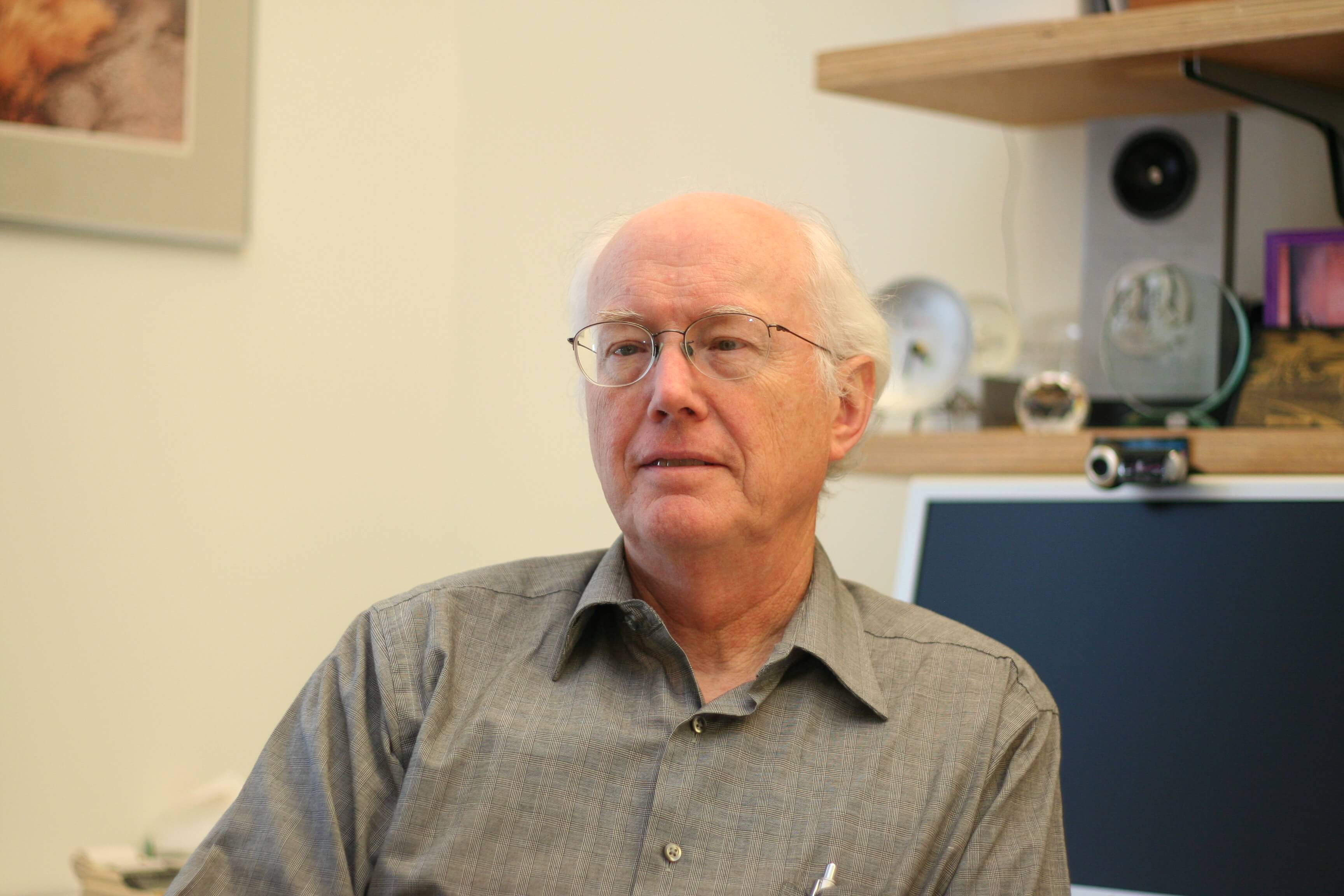
David Clark, who could be described as one of the inventors of TCP/IP (protocols that became the foundation of the Internet), sat down with Dave Vellante and Jeff Kelley at MIT ECIR 2014 for an interview in theCUBE. Clark's list of accolades is long and his title stretches out: Senior Research Scientist, Computer Science and Artificial Intelligence Laboratory at MIT. This means he is someone more-than-worth listening to about the health and status of the Internet in this age of connected technology.
First tackling governance of the internet, Clark states, "There's nobody in charge, and that's probably a good thing most of the time, so the question is, What does it take to mitigate some of these problems?" Clark suggests turning to organizations that deal with security—such as cybercrime and espionage, but there are few that have much authority, responsibility, or even capability when it comes to this focus.
Dave Vellante asks, "Can computer science successfully coexist with social science?" Clark responds, "Yes, but they need to learn to speak each other's language." It's all about finding a way of taking the structure of the Internet (computer science) and boiling it down to what's important to society and its end goal (social science). Many of the struggles between technology and society take place across points of control, such as discussions of Digital Rights Management, or controlling interests and trust in major corporations, or standard bodies and adoption of or diversion from standards.
Clark mentions that governments have trouble approaching technology such as the Internet and standard processes because "governments don't know how to involve themselves if they're not in charge. If at the end of the day, a government isn't in charge, they run away." Although he points out that numerous governments do in fact involve themselves in standard bodies, his admonition reflects the haphazard nature of that involvement.
Excitement about the future
Clark sees a fork in the road in the future of the Internet that divides national interests (such as cybercrime and espionage) and how personal attachment to the technology of the Internet moves people to adopt or reject it. With governments, it's obvious that they want to keep secrets safe, maintain national security and protect infrastructure from external attacks. As a result, state actors have a tendency not just to use networking technologies, but to seek out ways to clamp down on how data moves and what it can do in order to protect against particular attacks.
According to Clark, the future of the Internet will be significantly shaped by users' perception of how safe the Internet is. "Do they know that they're going to a bad cyber-neighborhood?" he asks. As an examples, he reflects on how people feel about losing their data, such as wedding photos, home movies, or personal and important ephemera that have been virtualized.
He forwards a thoughtful idea about a "protocol approach" to solving the tension between technology and society, and acknowledges the pitfalls this approach might entail. As different cultures seek different avenues to use technology for similar purposes (as the experience of a Chinese person living in China differs from the experience of an American living in the United States) the Internet--and the protocols built atop it--will have to change to fit local needs concurrently with global needs.
In the end, this tension between personal Internet use and state-level Internet concerns will shape the future of the Internet, security, and the interface between society and technology.
Quotes of the day
"All things that we think of as specifiable or technically constrained very quickly get embedded in a larger social ecosystem and defies the simplicity of the protocol."
"We should be accepting of reasonable rates of change."
-- David Clark, MIT Research Scientist
@thecube
#mitecir
Forgot Password
Almost there!
We just sent you a verification email. Please verify your account to gain access to
MIT Explorations in Cyber International Relations (ECIR) 2014 | Cambridge. If you don’t think you received an email check your
spam folder.
Sign in to MIT Explorations in Cyber International Relations (ECIR) 2014 | Cambridge.
In order to sign in, enter the email address you used to registered for the event. Once completed, you will receive an email with a verification link. Open this link to automatically sign into the site.
Register For MIT Explorations in Cyber International Relations (ECIR) 2014 | Cambridge
Please fill out the information below. You will recieve an email with a verification link confirming your registration. Click the link to automatically sign into the site.
You’re almost there!
We just sent you a verification email. Please click the verification button in the email. Once your email address is verified, you will have full access to all event content for MIT Explorations in Cyber International Relations (ECIR) 2014 | Cambridge.
Thanks for confirming your account. Now you can access MIT Explorations in Cyber International Relations (ECIR) 2014 | Cambridge with this email address.
I want my badge and interests to be visible to all attendees.
Checking this box will display your presense on the attendees list, view your profile and allow other attendees to contact you via 1-1 chat. Read the Privacy Policy. At any time, you can choose to disable this preference.
Select your Interests!
add
Upload your photo
Uploading..
OR
Connect via Twitter
Connect via Linkedin
EDIT PASSWORD
Share
Forgot Password
Almost there!
We just sent you a verification email. Please verify your account to gain access to
MIT Explorations in Cyber International Relations (ECIR) 2014 | Cambridge. If you don’t think you received an email check your
spam folder.
Sign in to MIT Explorations in Cyber International Relations (ECIR) 2014 | Cambridge.
In order to sign in, enter the email address you used to registered for the event. Once completed, you will receive an email with a verification link. Open this link to automatically sign into the site.
Sign in to gain access to MIT Explorations in Cyber International Relations (ECIR) 2014 | Cambridge
Please sign in with LinkedIn to continue to MIT Explorations in Cyber International Relations (ECIR) 2014 | Cambridge. Signing in with LinkedIn ensures a professional environment.
Are you sure you want to remove access rights for this user?
Details
Manage Access
email address
Community Invitation
David Clark, MIT - MIT ECIR 2014 - #theCUBE
David Clark, MIT, at MIT Cyber Security & the Governance Crisis: Complexity, Contention, Cooperation 2014 with Dave Vellante and Jeff Kelly
David Clark, who could be described as one of the inventors of TCP/IP (protocols that became the foundation of the Internet), sat down with Dave Vellante and Jeff Kelley at MIT ECIR 2014 for an interview in theCUBE. Clark's list of accolades is long and his title stretches out: Senior Research Scientist, Computer Science and Artificial Intelligence Laboratory at MIT. This means he is someone more-than-worth listening to about the health and status of the Internet in this age of connected technology.
First tackling governance of the internet, Clark states, "There's nobody in charge, and that's probably a good thing most of the time, so the question is, What does it take to mitigate some of these problems?" Clark suggests turning to organizations that deal with security—such as cybercrime and espionage, but there are few that have much authority, responsibility, or even capability when it comes to this focus.
Dave Vellante asks, "Can computer science successfully coexist with social science?" Clark responds, "Yes, but they need to learn to speak each other's language." It's all about finding a way of taking the structure of the Internet (computer science) and boiling it down to what's important to society and its end goal (social science). Many of the struggles between technology and society take place across points of control, such as discussions of Digital Rights Management, or controlling interests and trust in major corporations, or standard bodies and adoption of or diversion from standards.
Clark mentions that governments have trouble approaching technology such as the Internet and standard processes because "governments don't know how to involve themselves if they're not in charge. If at the end of the day, a government isn't in charge, they run away." Although he points out that numerous governments do in fact involve themselves in standard bodies, his admonition reflects the haphazard nature of that involvement.
Excitement about the future
Clark sees a fork in the road in the future of the Internet that divides national interests (such as cybercrime and espionage) and how personal attachment to the technology of the Internet moves people to adopt or reject it. With governments, it's obvious that they want to keep secrets safe, maintain national security and protect infrastructure from external attacks. As a result, state actors have a tendency not just to use networking technologies, but to seek out ways to clamp down on how data moves and what it can do in order to protect against particular attacks.
According to Clark, the future of the Internet will be significantly shaped by users' perception of how safe the Internet is. "Do they know that they're going to a bad cyber-neighborhood?" he asks. As an examples, he reflects on how people feel about losing their data, such as wedding photos, home movies, or personal and important ephemera that have been virtualized.
He forwards a thoughtful idea about a "protocol approach" to solving the tension between technology and society, and acknowledges the pitfalls this approach might entail. As different cultures seek different avenues to use technology for similar purposes (as the experience of a Chinese person living in China differs from the experience of an American living in the United States) the Internet--and the protocols built atop it--will have to change to fit local needs concurrently with global needs.
In the end, this tension between personal Internet use and state-level Internet concerns will shape the future of the Internet, security, and the interface between society and technology.
Quotes of the day
"All things that we think of as specifiable or technically constrained very quickly get embedded in a larger social ecosystem and defies the simplicity of the protocol."
"We should be accepting of reasonable rates of change."
-- David Clark, MIT Research Scientist
@thecube
#mitecir