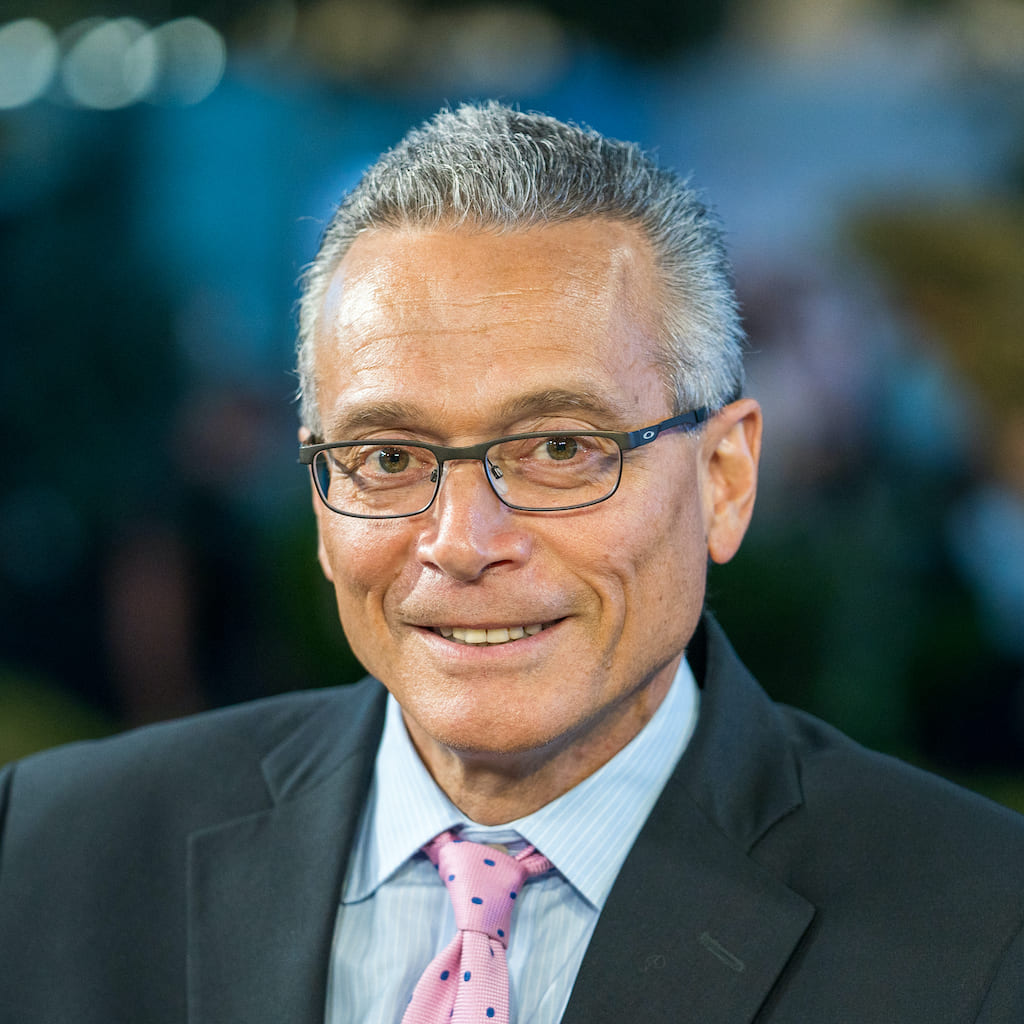
Fadi Chehade, as the President and CEO of ICANN, is frankly one of the more important people in the Internet world. His organization is responsible for two key aspects of the Internet. The first is managing the naming system of the Internet and how that system is used globally and how people reach it (ICANN manages the naming system through its policies and operations). The second is numbers. Specifically, any device that talks to the Internet (cell phone, smart phone, Mac, PC, etc.) is given a unique Internet Protocol or IP number, marking its specific entry point to the web. ICANN maintains the global IP numbering system.
A single naming and numbering system equals a single Internet. Traditionally, ICANN has a function called The Internet Assigned Numbers Authority (IANA) that is responsible for the global coordination of the DNS Root, IP addressing, and other Internet protocol resources. IANA is under contract with the U.S. Congress. More generically, that means that the U.S. "helps control" the Internet. However it was always envisioned that the contract between ICANN's IANA and the U.S. would eventually go away. Chehade believes that contract with the U.S. government should in fact be "sunset", and the time has come. Chehade believes that ICANN, who is accountable to the global community, should do so without U.S. government oversight.
"The world is seeking and growing ever more anxious to see an independent, globally-accountable ICANN where no one government, no one organization, no one individual has oversight or rights higher than the others," Chehade says. "I believe this is fundamental to the spirit of the Internet as well. Equal footing for all stakeholders engaged in the management and governance of this global resource."
So does this mean the U.S. has had more of a stacked-deck in its favor? theCUBE co-host Dave Vellante, Chief Analyst at Wikibon, brings up the fact that the power of U.S. companies like IBM (who at one point had two-thirds of the profit of the web), Intel and Microsoft show that the Internet didn't level the deck as much as it was supposed to, right? Or have other factors lead to U.S. companies power? Factors like venture capital, Silicon Valley, competitive realities, technical innovation, agility, etc.
Turns out it was the latter, Chehade says emphatically. There is nothing stopping great entrepreneurs from other countries taking advantage of the Internet.
Fragmented internet would cause tension amongst nations
The outcome of a more balanced adjudication system would not take away the power of the U.S. in Chehade's opinion. A more balanced system would thwart the very real danger though, that the Internet becomes fragmented. It is Chehade's belief that if that happens, there will be so much friction between countries and entities to do commerce and to exchange information that the cost of doing business on the Internet would go up significantly. How much of a cost increase? Substantial. Increased frictional cost would let the world down at the policy, economic and physical levels.
"The current governance model was born from a reality that was based in the U.S. -- the Internet has since become vital to the worlds economy, to societies, to the political life, to the cultural life of the world," says Chehade. "Governance mechanisms of the Internet need to become equally global and inclusive. That can be solved two ways. One, any one from any stakeholder group who wish to participate in shaping the policies and standards of the Internet need to have easy, equal access and we (ICANN) must facilitate that. Two, everyone has equal access."
However, theCUBE co-host Charles M. Sennott, Editor-at-Large with GlobalPost sees contradictions in that line of thinking. "You're saying on the one hand we cannot let the Internet fragment, but on the other hand we need to be inclusive and global — aren't those two things running right into each other?"
"The Internet is many many networks -- what makes it one is a logical layer on top of the physical layer," Chehade answers. "That logical layer includes what ICANN manages, names, numbers protocol parameters. That layer has to remain strong and in tact, in order for the physical infrastructure to be unified before we get to the application layer and content layer. If we lose that, and suddenly governments decide they will create their own numbering or naming system. A country like China, would name introduce to the world a Chinese Internet route."
@thecube
#mitecir
Forgot Password
Almost there!
We just sent you a verification email. Please verify your account to gain access to
MIT Explorations in Cyber International Relations (ECIR) 2014 | Cambridge. If you don’t think you received an email check your
spam folder.
Sign in to MIT Explorations in Cyber International Relations (ECIR) 2014 | Cambridge.
In order to sign in, enter the email address you used to registered for the event. Once completed, you will receive an email with a verification link. Open this link to automatically sign into the site.
Register For MIT Explorations in Cyber International Relations (ECIR) 2014 | Cambridge
Please fill out the information below. You will recieve an email with a verification link confirming your registration. Click the link to automatically sign into the site.
You’re almost there!
We just sent you a verification email. Please click the verification button in the email. Once your email address is verified, you will have full access to all event content for MIT Explorations in Cyber International Relations (ECIR) 2014 | Cambridge.
Thanks for confirming your account. Now you can access MIT Explorations in Cyber International Relations (ECIR) 2014 | Cambridge with this email address.
I want my badge and interests to be visible to all attendees.
Checking this box will display your presense on the attendees list, view your profile and allow other attendees to contact you via 1-1 chat. Read the Privacy Policy. At any time, you can choose to disable this preference.
Select your Interests!
add
Upload your photo
Uploading..
OR
Connect via Twitter
Connect via Linkedin
EDIT PASSWORD
Share
Forgot Password
Almost there!
We just sent you a verification email. Please verify your account to gain access to
MIT Explorations in Cyber International Relations (ECIR) 2014 | Cambridge. If you don’t think you received an email check your
spam folder.
Sign in to MIT Explorations in Cyber International Relations (ECIR) 2014 | Cambridge.
In order to sign in, enter the email address you used to registered for the event. Once completed, you will receive an email with a verification link. Open this link to automatically sign into the site.
Sign in to gain access to MIT Explorations in Cyber International Relations (ECIR) 2014 | Cambridge
Please sign in with LinkedIn to continue to MIT Explorations in Cyber International Relations (ECIR) 2014 | Cambridge. Signing in with LinkedIn ensures a professional environment.
Are you sure you want to remove access rights for this user?
Details
Manage Access
email address
Community Invitation
Fadi Chehade, ICANN | MIT ECIR 2014
Fadi Chehade, as the President and CEO of ICANN, is frankly one of the more important people in the Internet world. His organization is responsible for two key aspects of the Internet. The first is managing the naming system of the Internet and how that system is used globally and how people reach it (ICANN manages the naming system through its policies and operations). The second is numbers. Specifically, any device that talks to the Internet (cell phone, smart phone, Mac, PC, etc.) is given a unique Internet Protocol or IP number, marking its specific entry point to the web. ICANN maintains the global IP numbering system.
A single naming and numbering system equals a single Internet. Traditionally, ICANN has a function called The Internet Assigned Numbers Authority (IANA) that is responsible for the global coordination of the DNS Root, IP addressing, and other Internet protocol resources. IANA is under contract with the U.S. Congress. More generically, that means that the U.S. "helps control" the Internet. However it was always envisioned that the contract between ICANN's IANA and the U.S. would eventually go away. Chehade believes that contract with the U.S. government should in fact be "sunset", and the time has come. Chehade believes that ICANN, who is accountable to the global community, should do so without U.S. government oversight.
"The world is seeking and growing ever more anxious to see an independent, globally-accountable ICANN where no one government, no one organization, no one individual has oversight or rights higher than the others," Chehade says. "I believe this is fundamental to the spirit of the Internet as well. Equal footing for all stakeholders engaged in the management and governance of this global resource."
So does this mean the U.S. has had more of a stacked-deck in its favor? theCUBE co-host Dave Vellante, Chief Analyst at Wikibon, brings up the fact that the power of U.S. companies like IBM (who at one point had two-thirds of the profit of the web), Intel and Microsoft show that the Internet didn't level the deck as much as it was supposed to, right? Or have other factors lead to U.S. companies power? Factors like venture capital, Silicon Valley, competitive realities, technical innovation, agility, etc.
Turns out it was the latter, Chehade says emphatically. There is nothing stopping great entrepreneurs from other countries taking advantage of the Internet.
Fragmented internet would cause tension amongst nations
The outcome of a more balanced adjudication system would not take away the power of the U.S. in Chehade's opinion. A more balanced system would thwart the very real danger though, that the Internet becomes fragmented. It is Chehade's belief that if that happens, there will be so much friction between countries and entities to do commerce and to exchange information that the cost of doing business on the Internet would go up significantly. How much of a cost increase? Substantial. Increased frictional cost would let the world down at the policy, economic and physical levels.
"The current governance model was born from a reality that was based in the U.S. -- the Internet has since become vital to the worlds economy, to societies, to the political life, to the cultural life of the world," says Chehade. "Governance mechanisms of the Internet need to become equally global and inclusive. That can be solved two ways. One, any one from any stakeholder group who wish to participate in shaping the policies and standards of the Internet need to have easy, equal access and we (ICANN) must facilitate that. Two, everyone has equal access."
However, theCUBE co-host Charles M. Sennott, Editor-at-Large with GlobalPost sees contradictions in that line of thinking. "You're saying on the one hand we cannot let the Internet fragment, but on the other hand we need to be inclusive and global — aren't those two things running right into each other?"
"The Internet is many many networks -- what makes it one is a logical layer on top of the physical layer," Chehade answers. "That logical layer includes what ICANN manages, names, numbers protocol parameters. That layer has to remain strong and in tact, in order for the physical infrastructure to be unified before we get to the application layer and content layer. If we lose that, and suddenly governments decide they will create their own numbering or naming system. A country like China, would name introduce to the world a Chinese Internet route."
@thecube
#mitecir