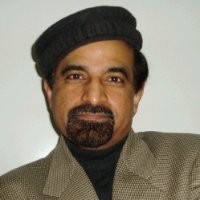
Naeem Hashmi, Chief Research Officer at Information Frameworks, explored the different perspectives of data analytics vs. informatics and challenges for the healthcare industry in making full use of their electronic systems and data with theCUBE co-hosts Dave Vellante and Paul Gillin, live at the MITIQ Symposium.
Describing his professional focus, Hashmi says he has always worked in an "area where how we are going to manage information in the future" is paramount. His work involves building architecture and reference models, and working with vendors as well as IT organizations, and helping them establish how to roll out their vision. "I'm a vision type of person," he added.
Mentioning the book he's working on -- his fifth -- Hashmi reveals that it discusses informatics and analytics design strategies. "In healthcare today there is a lot of talk about informatics and analytics." Any kind of analysis in the healthcare business is classified as informatics. Informatics means that "you are basically discovering the information, you are synthesizing information." In the analytics world you are anlyzing the data, while in the informatics world you are also "giving a sort of a recommendation and looking up some kind of pattern," especially in healthcare.
Explaining the differences between a clinician and a physician's approach to data, Hashmi says a physician's perspective allows them to look at visualization models of data and look up some kind of pattern. When presenting the information visually, they determine a trend. Clinicians, on the other hand, look at data from an algorithmic perspective, thinking about what steps they have to go through. It is a very different thought process. The analytics piece helps clinicians to optimize a clinical process. For example, clinicians are able to determine how to conduct a profitability analysis, how to optimize the workflow, etc..
As electronic medical records (EMRs) are implemented, there are several ways in which clinicians will be able to improve their work. "We are just starting up in that area, it's virgin territory," Hashmi says. He shares his own experiences from his time as a VP of knowledge management (a similar role to that of a CDO) in a large dialysis center treating 60,000 patients daily across about 2000 clinics throughout the U.S. using an estimated 1500-1600 individual EMRs. As patients move from clinic to clinic, it is imperative to make sure the information travels with them. "We built an architecture using the Big Data platform to move all of this information from these clinics' systems into a central hub." Using analytics, the system would show the latest results of a patient, and based on that, make recommendations on how treatment dosage should be adjusted. When a physician or clinician make a decision about treatment, he or she has the latest information and the EMR-generated recommendation to go with it (a doctor's signature is still required for final approval of a new dosage).
"In the future it will have to do with a few power services that are available, that you subscribe to as part of the clinical processes," Hashmi states. The clinical processes themselves will be more customizable. "Today's vendors [and] their systems are not really flexible enough. Their systems do nothing more than change their paper forms to electronic forms. I call it forming without reforming -- not really understanding how you automize and electronize these things." Thus, a lot of data quality issues arise when health centers convert to EMR due to the lack of data validation and verification.
Asked how patients should change their own mindset, Hashmi answers, "Patients also have to be open" because there is too much concern for privacy, and information sharing becomes an issue. Some of the healthcare reforms are going into the right direction, "the intent is right," but we are still in the early stages of changing the culture in a very regulated industry.
Naeem Hashmi, Information Frameworks, at MIT Information Quality 2013 with Dave Vellante and Paul Gellin
@thecube
#MITIQ
Forgot Password
Almost there!
We just sent you a verification email. Please verify your account to gain access to
MITChief Data Officer and Information Quality Symposium (CDOIQ) | 2013. If you don’t think you received an email check your
spam folder.
Sign in to MITChief Data Officer and Information Quality Symposium (CDOIQ) | 2013.
In order to sign in, enter the email address you used to registered for the event. Once completed, you will receive an email with a verification link. Open this link to automatically sign into the site.
Register For MITChief Data Officer and Information Quality Symposium (CDOIQ) | 2013
Please fill out the information below. You will recieve an email with a verification link confirming your registration. Click the link to automatically sign into the site.
You’re almost there!
We just sent you a verification email. Please click the verification button in the email. Once your email address is verified, you will have full access to all event content for MITChief Data Officer and Information Quality Symposium (CDOIQ) | 2013.
I want my badge and interests to be visible to all attendees.
Checking this box will display your presense on the attendees list, view your profile and allow other attendees to contact you via 1-1 chat. Read the Privacy Policy. At any time, you can choose to disable this preference.
Select your Interests!
add
Upload your photo
Uploading..
OR
Connect via Twitter
Connect via Linkedin
EDIT PASSWORD
Share
Forgot Password
Almost there!
We just sent you a verification email. Please verify your account to gain access to
MITChief Data Officer and Information Quality Symposium (CDOIQ) | 2013. If you don’t think you received an email check your
spam folder.
Sign in to MITChief Data Officer and Information Quality Symposium (CDOIQ) | 2013.
In order to sign in, enter the email address you used to registered for the event. Once completed, you will receive an email with a verification link. Open this link to automatically sign into the site.
Sign in to gain access to MITChief Data Officer and Information Quality Symposium (CDOIQ) | 2013
Please sign in with LinkedIn to continue to MITChief Data Officer and Information Quality Symposium (CDOIQ) | 2013. Signing in with LinkedIn ensures a professional environment.
Are you sure you want to remove access rights for this user?
Details
Manage Access
email address
Community Invitation
Naeem Hashmi, Information Frameworks - MIT Information Quality 2013 - #MIT #CDOIQ #theCUBE
Naeem Hashmi, Chief Research Officer at Information Frameworks, explored the different perspectives of data analytics vs. informatics and challenges for the healthcare industry in making full use of their electronic systems and data with theCUBE co-hosts Dave Vellante and Paul Gillin, live at the MITIQ Symposium.
Describing his professional focus, Hashmi says he has always worked in an "area where how we are going to manage information in the future" is paramount. His work involves building architecture and reference models, and working with vendors as well as IT organizations, and helping them establish how to roll out their vision. "I'm a vision type of person," he added.
Mentioning the book he's working on -- his fifth -- Hashmi reveals that it discusses informatics and analytics design strategies. "In healthcare today there is a lot of talk about informatics and analytics." Any kind of analysis in the healthcare business is classified as informatics. Informatics means that "you are basically discovering the information, you are synthesizing information." In the analytics world you are anlyzing the data, while in the informatics world you are also "giving a sort of a recommendation and looking up some kind of pattern," especially in healthcare.
Explaining the differences between a clinician and a physician's approach to data, Hashmi says a physician's perspective allows them to look at visualization models of data and look up some kind of pattern. When presenting the information visually, they determine a trend. Clinicians, on the other hand, look at data from an algorithmic perspective, thinking about what steps they have to go through. It is a very different thought process. The analytics piece helps clinicians to optimize a clinical process. For example, clinicians are able to determine how to conduct a profitability analysis, how to optimize the workflow, etc..
As electronic medical records (EMRs) are implemented, there are several ways in which clinicians will be able to improve their work. "We are just starting up in that area, it's virgin territory," Hashmi says. He shares his own experiences from his time as a VP of knowledge management (a similar role to that of a CDO) in a large dialysis center treating 60,000 patients daily across about 2000 clinics throughout the U.S. using an estimated 1500-1600 individual EMRs. As patients move from clinic to clinic, it is imperative to make sure the information travels with them. "We built an architecture using the Big Data platform to move all of this information from these clinics' systems into a central hub." Using analytics, the system would show the latest results of a patient, and based on that, make recommendations on how treatment dosage should be adjusted. When a physician or clinician make a decision about treatment, he or she has the latest information and the EMR-generated recommendation to go with it (a doctor's signature is still required for final approval of a new dosage).
"In the future it will have to do with a few power services that are available, that you subscribe to as part of the clinical processes," Hashmi states. The clinical processes themselves will be more customizable. "Today's vendors [and] their systems are not really flexible enough. Their systems do nothing more than change their paper forms to electronic forms. I call it forming without reforming -- not really understanding how you automize and electronize these things." Thus, a lot of data quality issues arise when health centers convert to EMR due to the lack of data validation and verification.
Asked how patients should change their own mindset, Hashmi answers, "Patients also have to be open" because there is too much concern for privacy, and information sharing becomes an issue. Some of the healthcare reforms are going into the right direction, "the intent is right," but we are still in the early stages of changing the culture in a very regulated industry.
Naeem Hashmi, Information Frameworks, at MIT Information Quality 2013 with Dave Vellante and Paul Gellin
@thecube
#MITIQ