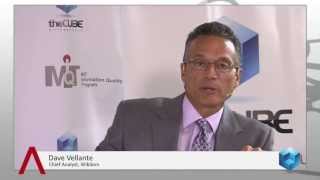
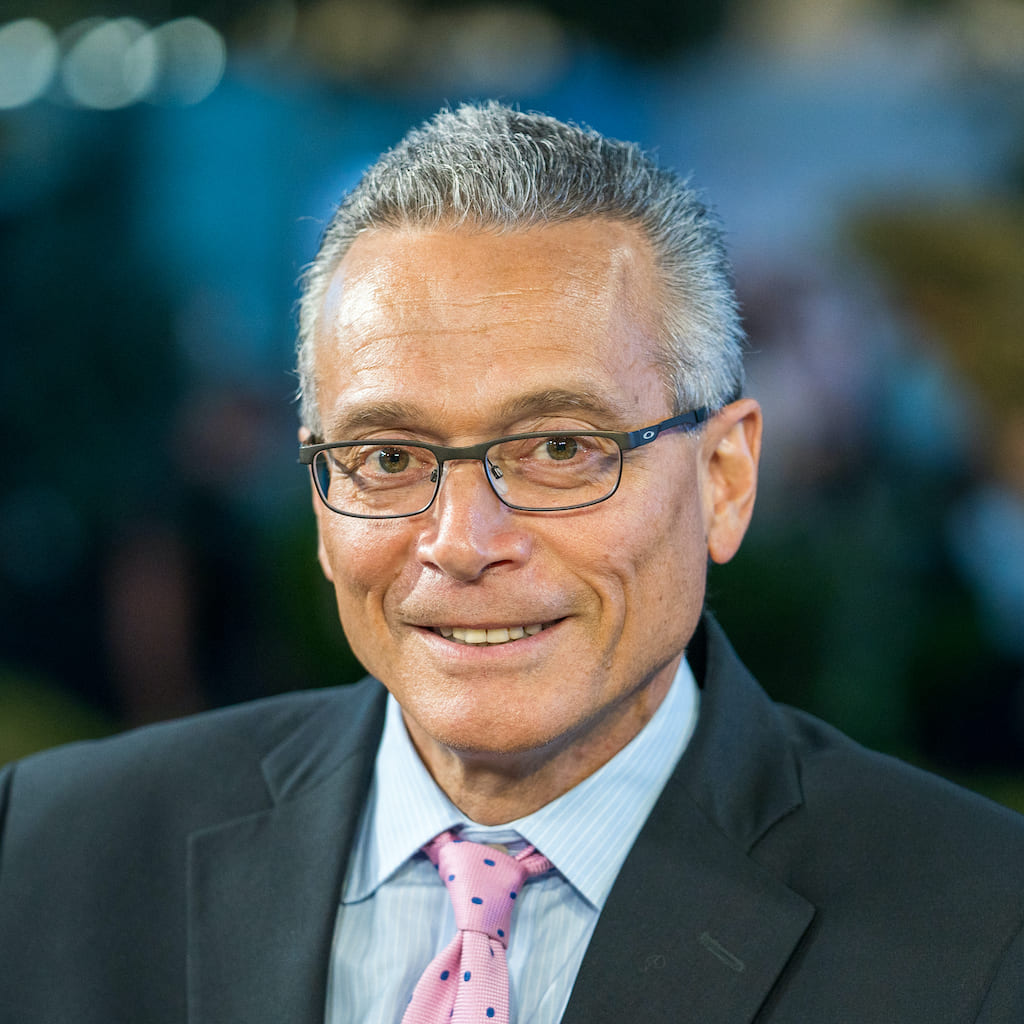
In what may have been the most interesting and eye-opening interview on SiliconANGLEs theCUBE, broadcasting this week from the MIT Chief Development Officer Information Quality Symposium in Cambridge, Massachusetts, Wikibon's Dave Vellante and Social Media Strategist and Author Paul Gillen welcomed Dr. Farzad Mosthashari.
Mostashari is the National Coordinator for Healthcare Transformation with the Centers for Medicare and Medicaid Services (CMS), part of the Department of Health and Human Services. So of course much of the discussion focused on the adoption of Electronic Health Records (EHR).
Though a medical doctor, Mostashari's career has focused on how the medical field and overall healthcare industry can better use data. The traditional paper-based model is outdated and very ineffective. Once a medical professional collects health information (height, weight, medications, diagnoses, etc) the folder is closed and that data is effectively dead. Mostashari gave an example, stating one clinic was completely unaware of how many of their elderly patients had been given a flu vaccination. Once transitioned to EHRs, it was learned only 22 percent had received vaccinations, far lower than what they had originally assumed.
THE EARLY DAYS
Mostashari stated less than 10 percent of hospitals employed EHRs in 2009 when he took the job. Many professionals and private practices required assistance, not only in understanding how to employ EHRs but also with the cost associated with its implementation. The CMS was able, thanks in no small part to the passage of the stimulus bill, to offer that financial and intellectual assistance. In just three years time, hospitals have increased their use of EHRs 5 fold, from 9 to 44 percent. Much of what drove this rapid adoption can be attributed to the air of inevitability associated with this transition.
When asked about what his expectation of the future landscape of healthcare delivery would look like, Mostashari stated, "I expect we will move to the idea the world's knowledge will help me know everything about my patient and about medical knowledge. This will help me take better care of the patient." He sees a future where a single encounter with a patient will then, itself, feed back into the collected world knowledge to somehow help others as well.
The transition to EHRs, along with adoption of several other modalities, will help to shift the current "Do More, Bill More" paradigm in healthcare to one that focuses solely on improving healthcare outcomes, rewarding practitioners for quality of healthcare delivery over quantity of healthcare delivery.
As an example, Mostashari pointed out how 20 percent of Medicare patients are re-admitted into the hospital within 30 days of discharge for the exact same condition. Previously, Medicare would reimburse the hospital for treating the exact same condition again. Now, Medicare is able to charge a readmission adjustment, paying less for repeat care. This regulation has incentivized hospitals and physicians to take better care of patients before their initial discharge. To effect this change, hospitals and healthcare professionals require tailored health IT.
HEALTH REGULATIONS: A VALVE, NOT A BLOCKAGE
Mostashari states the next year will see the most dramatic democratization of health information, allowing patients to have full access to their own health records. To do this, a lot of ignorance surrounding the Health Insurance Portability and Accounting Act (HIPAA) has to be addressed. And physicians are best suited to educate their patients about this. As Mostashari points out, HIPAA is a valve, not a blockage.
One thing Medicare patients have access to today is what is known as 'The Blue Button'. With a simple download to a smartphone or mobile device, a patient and anyone they designate can have immediate access to their medical records for the previous three years. This includes all diagnoses, prescribed medications, procedures, labs, etc. And this information can go with you into each appointment, streamlining the care and the quality of care received.
But chances are this is the first you are hearing of this capability. Mostashari claims there are some 100 million individuals who could have access to their records in this way. He predicts broad word-of-mouth and eventual viral saturation will help in fostering the ubiquity of this application.
While this new model of healthcare delivery is exciting for its potential benefits, it is not without its pitfalls. "What I worry about is that we don't focus on technology for the sake of technology," stated Mostashari. When that is the focus, the endeavor goes into over-cost and can risk becoming a failure. "We have to keep our eye on the prize which is better health, better care."
@thecube
#MITIQ
Forgot Password
Almost there!
We just sent you a verification email. Please verify your account to gain access to
MITChief Data Officer and Information Quality Symposium (CDOIQ) | 2013. If you don’t think you received an email check your
spam folder.
Sign in to MITChief Data Officer and Information Quality Symposium (CDOIQ) | 2013.
In order to sign in, enter the email address you used to registered for the event. Once completed, you will receive an email with a verification link. Open this link to automatically sign into the site.
Register For MITChief Data Officer and Information Quality Symposium (CDOIQ) | 2013
Please fill out the information below. You will recieve an email with a verification link confirming your registration. Click the link to automatically sign into the site.
You’re almost there!
We just sent you a verification email. Please click the verification button in the email. Once your email address is verified, you will have full access to all event content for MITChief Data Officer and Information Quality Symposium (CDOIQ) | 2013.
I want my badge and interests to be visible to all attendees.
Checking this box will display your presense on the attendees list, view your profile and allow other attendees to contact you via 1-1 chat. Read the Privacy Policy. At any time, you can choose to disable this preference.
Select your Interests!
add
Upload your photo
Uploading..
OR
Connect via Twitter
Connect via Linkedin
EDIT PASSWORD
Share
Forgot Password
Almost there!
We just sent you a verification email. Please verify your account to gain access to
MITChief Data Officer and Information Quality Symposium (CDOIQ) | 2013. If you don’t think you received an email check your
spam folder.
Sign in to MITChief Data Officer and Information Quality Symposium (CDOIQ) | 2013.
In order to sign in, enter the email address you used to registered for the event. Once completed, you will receive an email with a verification link. Open this link to automatically sign into the site.
Sign in to gain access to MITChief Data Officer and Information Quality Symposium (CDOIQ) | 2013
Please sign in with LinkedIn to continue to MITChief Data Officer and Information Quality Symposium (CDOIQ) | 2013. Signing in with LinkedIn ensures a professional environment.
Are you sure you want to remove access rights for this user?
Details
Manage Access
email address
Community Invitation
Farzad Mostashari, Department of Health - MIT Information Quality 2013 - #MIT #CDOIQ #theCUBE
In what may have been the most interesting and eye-opening interview on SiliconANGLEs theCUBE, broadcasting this week from the MIT Chief Development Officer Information Quality Symposium in Cambridge, Massachusetts, Wikibon's Dave Vellante and Social Media Strategist and Author Paul Gillen welcomed Dr. Farzad Mosthashari.
Mostashari is the National Coordinator for Healthcare Transformation with the Centers for Medicare and Medicaid Services (CMS), part of the Department of Health and Human Services. So of course much of the discussion focused on the adoption of Electronic Health Records (EHR).
Though a medical doctor, Mostashari's career has focused on how the medical field and overall healthcare industry can better use data. The traditional paper-based model is outdated and very ineffective. Once a medical professional collects health information (height, weight, medications, diagnoses, etc) the folder is closed and that data is effectively dead. Mostashari gave an example, stating one clinic was completely unaware of how many of their elderly patients had been given a flu vaccination. Once transitioned to EHRs, it was learned only 22 percent had received vaccinations, far lower than what they had originally assumed.
THE EARLY DAYS
Mostashari stated less than 10 percent of hospitals employed EHRs in 2009 when he took the job. Many professionals and private practices required assistance, not only in understanding how to employ EHRs but also with the cost associated with its implementation. The CMS was able, thanks in no small part to the passage of the stimulus bill, to offer that financial and intellectual assistance. In just three years time, hospitals have increased their use of EHRs 5 fold, from 9 to 44 percent. Much of what drove this rapid adoption can be attributed to the air of inevitability associated with this transition.
When asked about what his expectation of the future landscape of healthcare delivery would look like, Mostashari stated, "I expect we will move to the idea the world's knowledge will help me know everything about my patient and about medical knowledge. This will help me take better care of the patient." He sees a future where a single encounter with a patient will then, itself, feed back into the collected world knowledge to somehow help others as well.
The transition to EHRs, along with adoption of several other modalities, will help to shift the current "Do More, Bill More" paradigm in healthcare to one that focuses solely on improving healthcare outcomes, rewarding practitioners for quality of healthcare delivery over quantity of healthcare delivery.
As an example, Mostashari pointed out how 20 percent of Medicare patients are re-admitted into the hospital within 30 days of discharge for the exact same condition. Previously, Medicare would reimburse the hospital for treating the exact same condition again. Now, Medicare is able to charge a readmission adjustment, paying less for repeat care. This regulation has incentivized hospitals and physicians to take better care of patients before their initial discharge. To effect this change, hospitals and healthcare professionals require tailored health IT.
HEALTH REGULATIONS: A VALVE, NOT A BLOCKAGE
Mostashari states the next year will see the most dramatic democratization of health information, allowing patients to have full access to their own health records. To do this, a lot of ignorance surrounding the Health Insurance Portability and Accounting Act (HIPAA) has to be addressed. And physicians are best suited to educate their patients about this. As Mostashari points out, HIPAA is a valve, not a blockage.
One thing Medicare patients have access to today is what is known as 'The Blue Button'. With a simple download to a smartphone or mobile device, a patient and anyone they designate can have immediate access to their medical records for the previous three years. This includes all diagnoses, prescribed medications, procedures, labs, etc. And this information can go with you into each appointment, streamlining the care and the quality of care received.
But chances are this is the first you are hearing of this capability. Mostashari claims there are some 100 million individuals who could have access to their records in this way. He predicts broad word-of-mouth and eventual viral saturation will help in fostering the ubiquity of this application.
While this new model of healthcare delivery is exciting for its potential benefits, it is not without its pitfalls. "What I worry about is that we don't focus on technology for the sake of technology," stated Mostashari. When that is the focus, the endeavor goes into over-cost and can risk becoming a failure. "We have to keep our eye on the prize which is better health, better care."
@thecube
#MITIQ