01. Michael Stonebraker, MIT, Visits theCUBE. (00:20)
02. Stonebraker Wins The Turing Award. (00:41)
03. Solving Medical Data Integration Issues. (03:47)
04. Challenges in Data Governance and Integration. (07:28)
05. Tamr Focuses on Variety Issue in Big Data. (12:11)
06. Relational Data Base Systems: One Size Does Not Fit All. (17:48)
07. Comparing the Oracle and Ingress Technology Approach. (26:56)
#theCUBE #MIT #CDOIQ #CDO #MITCDOIQ #SiliconANGLE
--- ---
The data integration debacle; beyond ‘nirvana’ solutions | #MITCDOIQ
by Amber Johnson | Jul 22, 2015
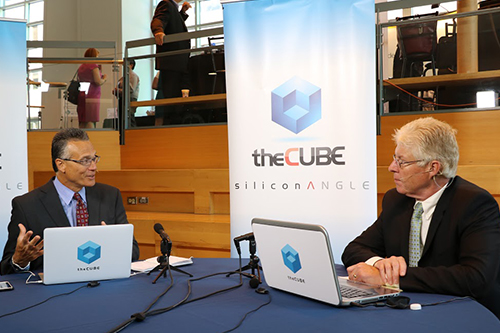
“Data integration is the 800-pound gorilla in the corner, and everyone’s got it in spades,” according to Mike Stonebraker, MIT professor and data scientist. The recent recipient of the Turing Award, which is presented for major contributions of lasting importance to computing, Stonebraker sat down with theCUBE, SiliconANGLE’s Media team, during MIT CDOIQ Symposium.
Stonebraker concluded that many members of the industry believe that introducing and adhering to standards will solve current data integration issues. However, the professor remarked that such expectations were a kind of “nirvana.” For the time being, Stonebraker said he was “in favor of after-the-fact data integration to capture value in the short run.”
Stonebraker gave the example of the Beth Israel Deaconess Medical Center, which has data for “26k intensive care unit patients creating real-time data” from the monitoring equipment, as well as information on prescriptions and notes from doctors and nurses. This hospital is currently working to incorporate imaging as well. The goal of such a system, according to Stonebraker, is to be able to access all of that data at once, even if that information is generated at a different hospital.
Privacy considerations more challenging than technologies
Eventually, Stonebraker envisions, a patient with chest pains would be x-rayed, and his or her physician would be able to run a query on every x-ray worldwide that resembles that patient’s images.
Nevertheless, Stonebraker declared, “Privacy considerations are more challenging than technologies.” He expressed concerns not only with the regulatory body overseeing patient data HIPPA, but also stated that a national record system would be blocked by politics between hospitals.
Stonebraker discussed his view of Big Data as a “marketing buzz word” for three reasons: too much, denoting an issue with “volume”; too fast, marking a problem with “velocity”; or too many, indicative of what Stonebraker calls “variety.” Tamr, a BI and analytics tool that Stonebraker helped create, helps “scale in variety.” Data integration cannot be done using standard techniques, according to Stonebraker. Instead, what Tamr does is isolate source number one and “de-duplicate” using statistical techniques. Additionally, the program sets a “threshold for accuracy,” which ultimately comes down to an “accuracy versus cost” choice.
Stonebraker said Tamr “organizes their human labor differently” so that a duplication would be analyzed by a domain expert in the event a company chooses not to utilize automatic processes. Tamr uses “crowd-sourcing for domain experts” for questions as well. Tamr gets smarter over time and begins to use the parameters previously used for duplications automatically,” he concluded.
@theCUBE
#MITIQ
Forgot Password
Almost there!
We just sent you a verification email. Please verify your account to gain access to
MIT Chief Data Officer and Information Quality Symposium (CDOIQ) 2015 | Cambridge. If you don’t think you received an email check your
spam folder.
Sign in to MIT Chief Data Officer and Information Quality Symposium (CDOIQ) 2015 | Cambridge.
In order to sign in, enter the email address you used to registered for the event. Once completed, you will receive an email with a verification link. Open this link to automatically sign into the site.
Register For MIT Chief Data Officer and Information Quality Symposium (CDOIQ) 2015 | Cambridge
Please fill out the information below. You will recieve an email with a verification link confirming your registration. Click the link to automatically sign into the site.
You’re almost there!
We just sent you a verification email. Please click the verification button in the email. Once your email address is verified, you will have full access to all event content for MIT Chief Data Officer and Information Quality Symposium (CDOIQ) 2015 | Cambridge.
Thanks for confirming your account. Now you can access MIT Chief Data Officer and Information Quality Symposium (CDOIQ) 2015 | Cambridge with this email address.
I want my badge and interests to be visible to all attendees.
Checking this box will display your presense on the attendees list, view your profile and allow other attendees to contact you via 1-1 chat. Read the Privacy Policy. At any time, you can choose to disable this preference.
Select your Interests!
add
Upload your photo
Uploading..
OR
Connect via Twitter
Connect via Linkedin
EDIT PASSWORD
Share
Forgot Password
Almost there!
We just sent you a verification email. Please verify your account to gain access to
MIT Chief Data Officer and Information Quality Symposium (CDOIQ) 2015 | Cambridge. If you don’t think you received an email check your
spam folder.
Sign in to MIT Chief Data Officer and Information Quality Symposium (CDOIQ) 2015 | Cambridge.
In order to sign in, enter the email address you used to registered for the event. Once completed, you will receive an email with a verification link. Open this link to automatically sign into the site.
Sign in to gain access to MIT Chief Data Officer and Information Quality Symposium (CDOIQ) 2015 | Cambridge
Please sign in with LinkedIn to continue to MIT Chief Data Officer and Information Quality Symposium (CDOIQ) 2015 | Cambridge. Signing in with LinkedIn ensures a professional environment.
Are you sure you want to remove access rights for this user?
Details
Manage Access
email address
Community Invitation
Michael Stonebraker, MIT | MIT CDOIQ Symposium 2015
01. Michael Stonebraker, MIT, Visits theCUBE. (00:20)
02. Stonebraker Wins The Turing Award. (00:41)
03. Solving Medical Data Integration Issues. (03:47)
04. Challenges in Data Governance and Integration. (07:28)
05. Tamr Focuses on Variety Issue in Big Data. (12:11)
06. Relational Data Base Systems: One Size Does Not Fit All. (17:48)
07. Comparing the Oracle and Ingress Technology Approach. (26:56)
#theCUBE #MIT #CDOIQ #CDO #MITCDOIQ #SiliconANGLE
--- ---
The data integration debacle; beyond ‘nirvana’ solutions | #MITCDOIQ
by Amber Johnson | Jul 22, 2015
“Data integration is the 800-pound gorilla in the corner, and everyone’s got it in spades,” according to Mike Stonebraker, MIT professor and data scientist. The recent recipient of the Turing Award, which is presented for major contributions of lasting importance to computing, Stonebraker sat down with theCUBE, SiliconANGLE’s Media team, during MIT CDOIQ Symposium.
Stonebraker concluded that many members of the industry believe that introducing and adhering to standards will solve current data integration issues. However, the professor remarked that such expectations were a kind of “nirvana.” For the time being, Stonebraker said he was “in favor of after-the-fact data integration to capture value in the short run.”
Stonebraker gave the example of the Beth Israel Deaconess Medical Center, which has data for “26k intensive care unit patients creating real-time data” from the monitoring equipment, as well as information on prescriptions and notes from doctors and nurses. This hospital is currently working to incorporate imaging as well. The goal of such a system, according to Stonebraker, is to be able to access all of that data at once, even if that information is generated at a different hospital.
Privacy considerations more challenging than technologies
Eventually, Stonebraker envisions, a patient with chest pains would be x-rayed, and his or her physician would be able to run a query on every x-ray worldwide that resembles that patient’s images.
Nevertheless, Stonebraker declared, “Privacy considerations are more challenging than technologies.” He expressed concerns not only with the regulatory body overseeing patient data HIPPA, but also stated that a national record system would be blocked by politics between hospitals.
Stonebraker discussed his view of Big Data as a “marketing buzz word” for three reasons: too much, denoting an issue with “volume”; too fast, marking a problem with “velocity”; or too many, indicative of what Stonebraker calls “variety.” Tamr, a BI and analytics tool that Stonebraker helped create, helps “scale in variety.” Data integration cannot be done using standard techniques, according to Stonebraker. Instead, what Tamr does is isolate source number one and “de-duplicate” using statistical techniques. Additionally, the program sets a “threshold for accuracy,” which ultimately comes down to an “accuracy versus cost” choice.
Stonebraker said Tamr “organizes their human labor differently” so that a duplication would be analyzed by a domain expert in the event a company chooses not to utilize automatic processes. Tamr uses “crowd-sourcing for domain experts” for questions as well. Tamr gets smarter over time and begins to use the parameters previously used for duplications automatically,” he concluded.
@theCUBE
#MITIQ