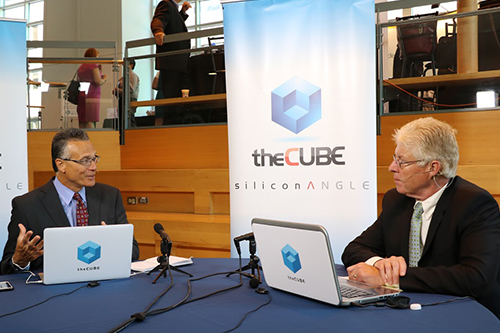
01. Arka Mukherjee, Global IDs, Visits #theCUBE. (00:20)
02. The Founding of Global IDs. (00:39)
03. Addressing the Dated Software Approach. (01:24)
04. Organization of the Data Is the Key Problem. (03:25)
05. Solving the Data Classification Issue. (07:31)
06. The State of Data Quality in Other Companies. (10:32)
07. How Global IDs Is Funded. (14:52)
08. A Software-Led Solution that Scales. (16:11)
09. Handling Structured and Unstructured Data. (18:47)
Track List created with http://www.vinjavideo.com.
--- ---
Is metadata the key to solving today’s data problems? | #MITCDOIQ
by Nelson Williams | Jul 22, 2015
Big Data is the big idea in the tech industry these days, but all that data is worthless if a business can’t manage it. The task of wrangling information falls to companies like Global IDs, who help big businesses extract value from their Big Data.
Arka Mukherjee, founder and CEO of Global IDs, joined Dave Vellante and Paul Gillin of theCUBE, SiliconANGLE’s Media team, to talk about Global IDs and data ecosystems.
The first question was about Global IDs and what the company does. Mukherjee replied that the company was in the business of addressing problems related to data ecosystems. In his view, most companies show a lack of holistic understanding of their data; Global IDs creates a foundation to help understand an organization’s information.
New approaches and metadata
Software designed for the previous style of business is somewhat outdated when it comes to Big Data. The high-volume, high-complexity environment calls for a new approach. Global IDs brings a solution based on a foundational understanding through profiling and discovering data. Once this is done, they can solve other problems in the data ecosystem.
This understanding means a vast amount of metadata, or data about data. To support this need, Global IDs has built the largest metadata repositories in the world. It believes metadata is the key to solving today’s data problems.
A question of scale and quality
The discussion then turned toward what the industry is doing to solve these problems at scale. Mukherjee explained the idea of classification was central to any intelligent data management system. To deal with such a complex challenge, it uses automated agents to break up and then collectively brings together the information ecosystem.
Unfortunately, companies hold a lot of poor-quality data. Few companies measure the quality of their data or use proper metrics to judge data. Most companies lack the experience or the solutions to track the quality of their information. Global IDs gives them the experience necessary to prevent low-quality data from entering the system.
“You have to have a long runway to solve these problems and the patience to make mistakes while solving these problems,” Mukherjee said.
@theCUBE
#MITIQ
Forgot Password
Almost there!
We just sent you a verification email. Please verify your account to gain access to
MIT Chief Data Officer and Information Quality Symposium (CDOIQ) 2015 | Cambridge. If you don’t think you received an email check your
spam folder.
Sign in to MIT Chief Data Officer and Information Quality Symposium (CDOIQ) 2015 | Cambridge.
In order to sign in, enter the email address you used to registered for the event. Once completed, you will receive an email with a verification link. Open this link to automatically sign into the site.
Register For MIT Chief Data Officer and Information Quality Symposium (CDOIQ) 2015 | Cambridge
Please fill out the information below. You will recieve an email with a verification link confirming your registration. Click the link to automatically sign into the site.
You’re almost there!
We just sent you a verification email. Please click the verification button in the email. Once your email address is verified, you will have full access to all event content for MIT Chief Data Officer and Information Quality Symposium (CDOIQ) 2015 | Cambridge.
Thanks for confirming your account. Now you can access MIT Chief Data Officer and Information Quality Symposium (CDOIQ) 2015 | Cambridge with this email address.
I want my badge and interests to be visible to all attendees.
Checking this box will display your presense on the attendees list, view your profile and allow other attendees to contact you via 1-1 chat. Read the Privacy Policy. At any time, you can choose to disable this preference.
Select your Interests!
add
Upload your photo
Uploading..
OR
Connect via Twitter
Connect via Linkedin
EDIT PASSWORD
Share
Forgot Password
Almost there!
We just sent you a verification email. Please verify your account to gain access to
MIT Chief Data Officer and Information Quality Symposium (CDOIQ) 2015 | Cambridge. If you don’t think you received an email check your
spam folder.
Sign in to MIT Chief Data Officer and Information Quality Symposium (CDOIQ) 2015 | Cambridge.
In order to sign in, enter the email address you used to registered for the event. Once completed, you will receive an email with a verification link. Open this link to automatically sign into the site.
Sign in to gain access to MIT Chief Data Officer and Information Quality Symposium (CDOIQ) 2015 | Cambridge
Please sign in with LinkedIn to continue to MIT Chief Data Officer and Information Quality Symposium (CDOIQ) 2015 | Cambridge. Signing in with LinkedIn ensures a professional environment.
Are you sure you want to remove access rights for this user?
Details
Manage Access
email address
Community Invitation
Arka Mukherjee - MIT CDOIQ Symposium 2015 - theCUBE - #MITIQ
01. Arka Mukherjee, Global IDs, Visits #theCUBE. (00:20)
02. The Founding of Global IDs. (00:39)
03. Addressing the Dated Software Approach. (01:24)
04. Organization of the Data Is the Key Problem. (03:25)
05. Solving the Data Classification Issue. (07:31)
06. The State of Data Quality in Other Companies. (10:32)
07. How Global IDs Is Funded. (14:52)
08. A Software-Led Solution that Scales. (16:11)
09. Handling Structured and Unstructured Data. (18:47)
Track List created with http://www.vinjavideo.com.
--- ---
Is metadata the key to solving today’s data problems? | #MITCDOIQ
by Nelson Williams | Jul 22, 2015
Big Data is the big idea in the tech industry these days, but all that data is worthless if a business can’t manage it. The task of wrangling information falls to companies like Global IDs, who help big businesses extract value from their Big Data.
Arka Mukherjee, founder and CEO of Global IDs, joined Dave Vellante and Paul Gillin of theCUBE, SiliconANGLE’s Media team, to talk about Global IDs and data ecosystems.
The first question was about Global IDs and what the company does. Mukherjee replied that the company was in the business of addressing problems related to data ecosystems. In his view, most companies show a lack of holistic understanding of their data; Global IDs creates a foundation to help understand an organization’s information.
New approaches and metadata
Software designed for the previous style of business is somewhat outdated when it comes to Big Data. The high-volume, high-complexity environment calls for a new approach. Global IDs brings a solution based on a foundational understanding through profiling and discovering data. Once this is done, they can solve other problems in the data ecosystem.
This understanding means a vast amount of metadata, or data about data. To support this need, Global IDs has built the largest metadata repositories in the world. It believes metadata is the key to solving today’s data problems.
A question of scale and quality
The discussion then turned toward what the industry is doing to solve these problems at scale. Mukherjee explained the idea of classification was central to any intelligent data management system. To deal with such a complex challenge, it uses automated agents to break up and then collectively brings together the information ecosystem.
Unfortunately, companies hold a lot of poor-quality data. Few companies measure the quality of their data or use proper metrics to judge data. Most companies lack the experience or the solutions to track the quality of their information. Global IDs gives them the experience necessary to prevent low-quality data from entering the system.
“You have to have a long runway to solve these problems and the patience to make mistakes while solving these problems,” Mukherjee said.
@theCUBE
#MITIQ