Enhanced video at http://vinja.tv/65Pqj5yh
01. Jamie Popkins, Gartner visits #TheCube. (00:26)
02. What is Happening in the Transition to new Big Data. (01:05)
03. Are We at a Point Where the Promise of Governance is Possible. (01:40)
04. Is the Role of CEO Becoming More Strategic. (02:52)
05. What is the Practice at Gartner. (03:42)
06. Is the Role of a CEO to Work Themselves Out of a Job. (04:29)
07. The Role of a CEO is to Drive the Growth of the Company. (05:20)
08. Where Should Analytics fit in to the CEO's Function. (06:16)
09. The Results of Gartners Survey. (08:13)
10. Gartners Approach to Big Data Analytics. (09:09)
11. What are the Common Misconceptions of Big Data. (11:28)
12. The Evolution of Big Data and Technology and Data Processing. (12:08)
13. New Big Data Technology. (13:48)
14. Gartners Fall Symposium Unveiling. (14:29)
Track List created with http://www.vinjavideo.com.
--- ---
Data management is sexy again | #MITCDOIQ
by Elizabeth Kays | Jul 27, 2015
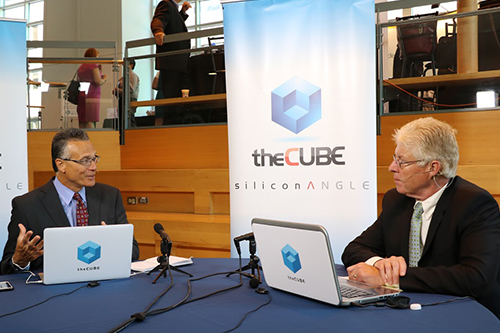
Thanks to the advent of Big Data and on-demand analytics, data management is sexy again. Jamie Popkin, VP & distinguished analyst at Gartner, Inc., joined theCUBE, SiliconANGLE’s Media team, at the MIT CDOIQ Symposium to talk about how this new technology is reshaping the role of data in business.
“I think that most enterprises recognize that data needs an advocate within the enterprise,” Popkin said. “And so the old ways of managing data, the old ways of building applications, cobbling together analytics on an as-needed basis, isn’t cutting it anymore… I think people recognize they need to build a data-governance strategy and they need to really treat information as an asset.”
This is a significant shift from the days of simple storage and management, but companies are not all embracing it at the same rate.
“We think about it in terms of the analytic process,” Popkin said. “There’s descriptive (what happened); there’s diagnostic (why did it happen).” And most companies have established ways to manage these two processes, he explained.
The future: Predictive and prescriptive analytics
“The future is predictive analytics and prescriptive analytics,” he said. The question now is: “How do you take all the data that you have and manage it in a way that you can build predictive and prescriptive analytical applications that become embedded in the business operating model?”
Popkin believes this is what is taking place right now.
Some companies are taking the approach that data and analytics need to be separate areas, with independent CDOs and CAOs, but this may not be a fit for every company. A new survey Gartner will release within the next two months indicates: “There is a wide range of scope. There is a wide range of organizational structure, and that people are really still in an early phase of adoption for it. And what we’re getting out of the survey is some of the richness of the experiences that people are having in different types of CDO roles,” Popkin said.
Embracing a solid information strategy
Regardless of the exact model, Popkin said that a solid information strategy is something enterprises need to embrace sooner rather than later.
“I think in the era of digital business, which is definitely the era that we’re in, you have to use information more strategically,” he stated.
“And those organizations that are still doing some of that basic hygiene, they’re falling behind a little bit. And those that are getting on top of it and creating CDOs and starting to examine how advanced analytics can grow the business strategically, that’s absolutely where the game is right now.”
@theCUBE
#MITIQ
Forgot Password
Almost there!
We just sent you a verification email. Please verify your account to gain access to
MIT Chief Data Officer and Information Quality Symposium (CDOIQ) 2015 | Cambridge. If you don’t think you received an email check your
spam folder.
Sign in to MIT Chief Data Officer and Information Quality Symposium (CDOIQ) 2015 | Cambridge.
In order to sign in, enter the email address you used to registered for the event. Once completed, you will receive an email with a verification link. Open this link to automatically sign into the site.
Register For MIT Chief Data Officer and Information Quality Symposium (CDOIQ) 2015 | Cambridge
Please fill out the information below. You will recieve an email with a verification link confirming your registration. Click the link to automatically sign into the site.
You’re almost there!
We just sent you a verification email. Please click the verification button in the email. Once your email address is verified, you will have full access to all event content for MIT Chief Data Officer and Information Quality Symposium (CDOIQ) 2015 | Cambridge.
Thanks for confirming your account. Now you can access MIT Chief Data Officer and Information Quality Symposium (CDOIQ) 2015 | Cambridge with this email address.
I want my badge and interests to be visible to all attendees.
Checking this box will display your presense on the attendees list, view your profile and allow other attendees to contact you via 1-1 chat. Read the Privacy Policy. At any time, you can choose to disable this preference.
Select your Interests!
add
Upload your photo
Uploading..
OR
Connect via Twitter
Connect via Linkedin
EDIT PASSWORD
Share
Forgot Password
Almost there!
We just sent you a verification email. Please verify your account to gain access to
MIT Chief Data Officer and Information Quality Symposium (CDOIQ) 2015 | Cambridge. If you don’t think you received an email check your
spam folder.
Sign in to MIT Chief Data Officer and Information Quality Symposium (CDOIQ) 2015 | Cambridge.
In order to sign in, enter the email address you used to registered for the event. Once completed, you will receive an email with a verification link. Open this link to automatically sign into the site.
Sign in to gain access to MIT Chief Data Officer and Information Quality Symposium (CDOIQ) 2015 | Cambridge
Please sign in with LinkedIn to continue to MIT Chief Data Officer and Information Quality Symposium (CDOIQ) 2015 | Cambridge. Signing in with LinkedIn ensures a professional environment.
Enhanced video at http://vinja.tv/65Pqj5yh
01. Jamie Popkins, Gartner visits #TheCube. (00:26)
02. What is Happening in the Transition to new Big Data. (01:05)
03. Are We at a Point Where the Promise of Governance is Possible. (01:40)
04. Is the Role of CEO Becoming More Strategic. (02:52)
05. What is the Practice at Gartner. (03:42)
06. Is the Role of a CEO to Work Themselves Out of a Job. (04:29)
07. The Role of a CEO is to Drive the Growth of the Company. (05:20)
08. Where Should Analytics fit in to the CEO's Function. (06:16)
09. The Results of Gartners Survey. (08:13)
10. Gartners Approach to Big Data Analytics. (09:09)
11. What are the Common Misconceptions of Big Data. (11:28)
12. The Evolution of Big Data and Technology and Data Processing. (12:08)
13. New Big Data Technology. (13:48)
14. Gartners Fall Symposium Unveiling. (14:29)
Track List created with http://www.vinjavideo.com.
--- ---
Data management is sexy again | #MITCDOIQ
by Elizabeth Kays | Jul 27, 2015
Thanks to the advent of Big Data and on-demand analytics, data management is sexy again. Jamie Popkin, VP & distinguished analyst at Gartner, Inc., joined theCUBE, SiliconANGLE’s Media team, at the MIT CDOIQ Symposium to talk about how this new technology is reshaping the role of data in business.
“I think that most enterprises recognize that data needs an advocate within the enterprise,” Popkin said. “And so the old ways of managing data, the old ways of building applications, cobbling together analytics on an as-needed basis, isn’t cutting it anymore… I think people recognize they need to build a data-governance strategy and they need to really treat information as an asset.”
This is a significant shift from the days of simple storage and management, but companies are not all embracing it at the same rate.
“We think about it in terms of the analytic process,” Popkin said. “There’s descriptive (what happened); there’s diagnostic (why did it happen).” And most companies have established ways to manage these two processes, he explained.
The future: Predictive and prescriptive analytics
“The future is predictive analytics and prescriptive analytics,” he said. The question now is: “How do you take all the data that you have and manage it in a way that you can build predictive and prescriptive analytical applications that become embedded in the business operating model?”
Popkin believes this is what is taking place right now.
Some companies are taking the approach that data and analytics need to be separate areas, with independent CDOs and CAOs, but this may not be a fit for every company. A new survey Gartner will release within the next two months indicates: “There is a wide range of scope. There is a wide range of organizational structure, and that people are really still in an early phase of adoption for it. And what we’re getting out of the survey is some of the richness of the experiences that people are having in different types of CDO roles,” Popkin said.
Embracing a solid information strategy
Regardless of the exact model, Popkin said that a solid information strategy is something enterprises need to embrace sooner rather than later.
“I think in the era of digital business, which is definitely the era that we’re in, you have to use information more strategically,” he stated.
“And those organizations that are still doing some of that basic hygiene, they’re falling behind a little bit. And those that are getting on top of it and creating CDOs and starting to examine how advanced analytics can grow the business strategically, that’s absolutely where the game is right now.”
@theCUBE
#MITIQ