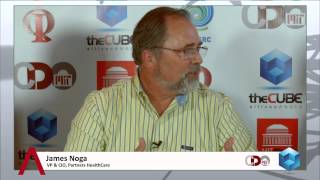
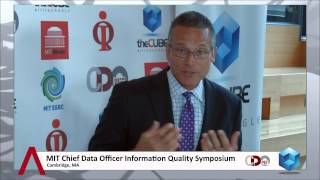
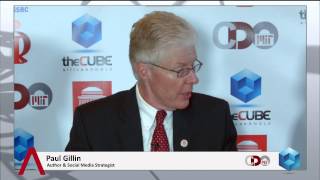
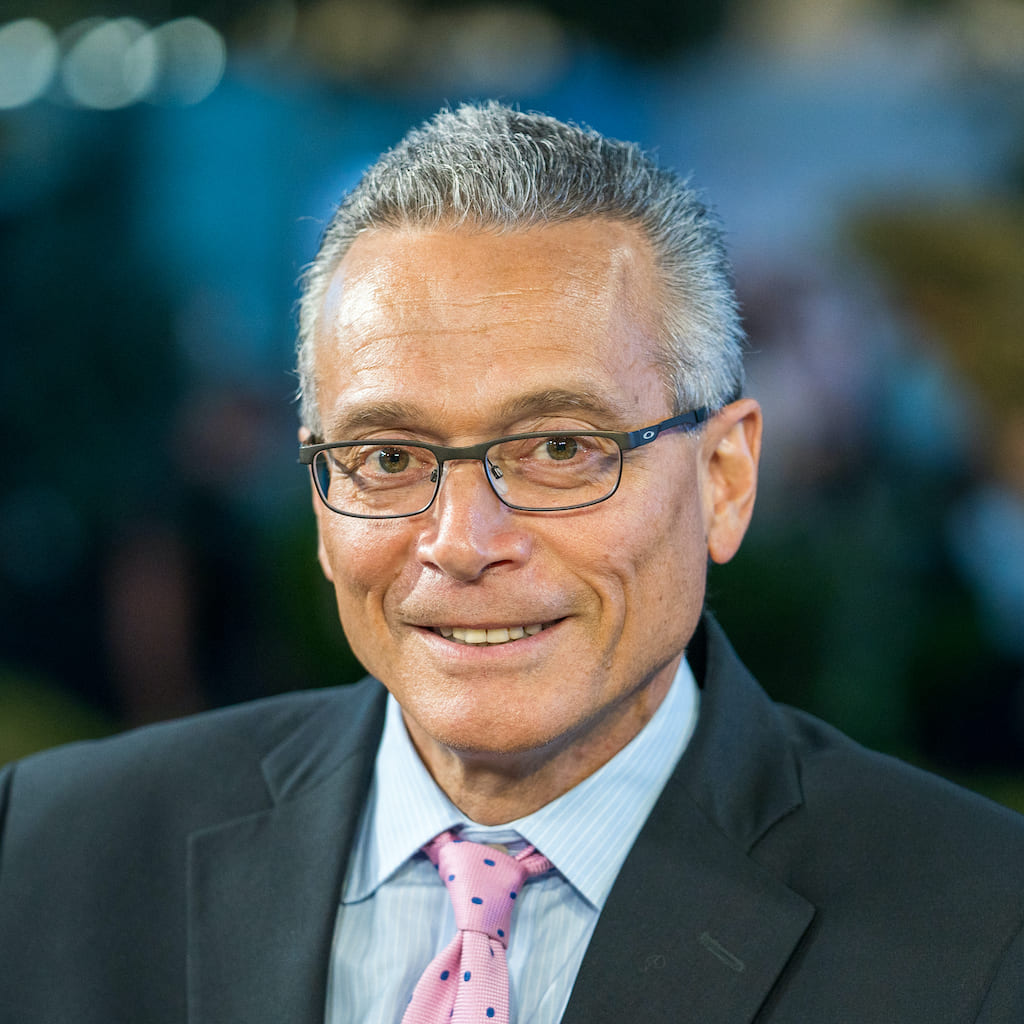
Peter Anlyan, Co-Chair, MIT CDOIQ, at MITCDOIQ 2014 with Dave Vellante and Paul Gillin
8th Annual MIT Chief Data Officer & Information Quality Symposium
@theCUBE
#MITIQ\
The conversations around the emerging Chief Data Officer (CDO) role, what it should entail, and the subsequent interest shown by enterprise organizations led to a pivotal decision by Massachusetts Institute of Technology (MIT) to modify its annual symposium’s original focus from information quality to now include the CDO.
“There’s a lot of talk about what exactly the CDO means, it’s going to be different in every organization,” Peter Anlyan, the Symposium Co-Chair for the MIT CDOIQ event, told theCUBE co-hosts Paul Gillin and Dave Vellante in a live interview.
“We’re conducting a baseline survey to find out, ‘If you’re a CDO, what does that mean in your organization? If there isn’t one, is there a de facto one?’ If you take that info and you wrap information quality around that, and you place that into the context against the backdrop of Big Data, then you have content you can explore in a symposium like this,” Anlyan explained.
“We have a platform that is really different form conferences everywhere. We decided to have the internal MIT experience incorporated in the symposium. We will do that more next year,” he went on. This year’s event had nearly 10 panel titles that included Big Data topics, a handful of those focusing solely on the CDO role. “On the whole, we’re taking a more of a balcony view of the industry. We’re really appealing to leaders in the industry,” said Anlyan.
He further explained the symbiotic relationship between MIT and corporations, saying “It’s the strength of what MIT has to offer. For this to be just an academic conference, I think that is very narrow. We have academia, the industry, and research.”
Read more after the video.
Is there progress in information quality?
Asked if there was progress being made in the field of information quality, Anlyan said it was like “changing a tire while the car is running, it’s what everyone is trying to do. It’s not getting better necessarily when you look to the whole array of organizations to whom this matters. The awareness is generally heightened. I think you’re seeing more activity in businesses that weren’t necessarily technology oriented.”
“I don’t think that people will get on the data quality band wagon until they have to,” he added. Most businesses need to realize it is a competitive advantage, and only then they’ll jump on board.
Forgot Password
Almost there!
We just sent you a verification email. Please verify your account to gain access to
MIT Chief Data Officer and Information Quality Symposium (CDOIQ) | 2014. If you don’t think you received an email check your
spam folder.
Sign in to MIT Chief Data Officer and Information Quality Symposium (CDOIQ) | 2014.
In order to sign in, enter the email address you used to registered for the event. Once completed, you will receive an email with a verification link. Open this link to automatically sign into the site.
Register For MIT Chief Data Officer and Information Quality Symposium (CDOIQ) | 2014
Please fill out the information below. You will recieve an email with a verification link confirming your registration. Click the link to automatically sign into the site.
You’re almost there!
We just sent you a verification email. Please click the verification button in the email. Once your email address is verified, you will have full access to all event content for MIT Chief Data Officer and Information Quality Symposium (CDOIQ) | 2014.
Thanks for confirming your account. Now you can access MIT Chief Data Officer and Information Quality Symposium (CDOIQ) | 2014 with this email address.
I want my badge and interests to be visible to all attendees.
Checking this box will display your presense on the attendees list, view your profile and allow other attendees to contact you via 1-1 chat. Read the Privacy Policy. At any time, you can choose to disable this preference.
Select your Interests!
add
Upload your photo
Uploading..
OR
Connect via Twitter
Connect via Linkedin
EDIT PASSWORD
Share
Forgot Password
Almost there!
We just sent you a verification email. Please verify your account to gain access to
MIT Chief Data Officer and Information Quality Symposium (CDOIQ) | 2014. If you don’t think you received an email check your
spam folder.
Sign in to MIT Chief Data Officer and Information Quality Symposium (CDOIQ) | 2014.
In order to sign in, enter the email address you used to registered for the event. Once completed, you will receive an email with a verification link. Open this link to automatically sign into the site.
Sign in to gain access to MIT Chief Data Officer and Information Quality Symposium (CDOIQ) | 2014
Please sign in with LinkedIn to continue to MIT Chief Data Officer and Information Quality Symposium (CDOIQ) | 2014. Signing in with LinkedIn ensures a professional environment.
Are you sure you want to remove access rights for this user?
Details
Manage Access
email address
Community Invitation
Peter Anlyan, MIT - MIT CDOIQ 2014 - #MITIQ #theCUBE
Peter Anlyan, Co-Chair, MIT CDOIQ, at MITCDOIQ 2014 with Dave Vellante and Paul Gillin
8th Annual MIT Chief Data Officer & Information Quality Symposium
@theCUBE
#MITIQ\
The conversations around the emerging Chief Data Officer (CDO) role, what it should entail, and the subsequent interest shown by enterprise organizations led to a pivotal decision by Massachusetts Institute of Technology (MIT) to modify its annual symposium’s original focus from information quality to now include the CDO.
“There’s a lot of talk about what exactly the CDO means, it’s going to be different in every organization,” Peter Anlyan, the Symposium Co-Chair for the MIT CDOIQ event, told theCUBE co-hosts Paul Gillin and Dave Vellante in a live interview.
“We’re conducting a baseline survey to find out, ‘If you’re a CDO, what does that mean in your organization? If there isn’t one, is there a de facto one?’ If you take that info and you wrap information quality around that, and you place that into the context against the backdrop of Big Data, then you have content you can explore in a symposium like this,” Anlyan explained.
“We have a platform that is really different form conferences everywhere. We decided to have the internal MIT experience incorporated in the symposium. We will do that more next year,” he went on. This year’s event had nearly 10 panel titles that included Big Data topics, a handful of those focusing solely on the CDO role. “On the whole, we’re taking a more of a balcony view of the industry. We’re really appealing to leaders in the industry,” said Anlyan.
He further explained the symbiotic relationship between MIT and corporations, saying “It’s the strength of what MIT has to offer. For this to be just an academic conference, I think that is very narrow. We have academia, the industry, and research.”
Read more after the video.
Is there progress in information quality?
Asked if there was progress being made in the field of information quality, Anlyan said it was like “changing a tire while the car is running, it’s what everyone is trying to do. It’s not getting better necessarily when you look to the whole array of organizations to whom this matters. The awareness is generally heightened. I think you’re seeing more activity in businesses that weren’t necessarily technology oriented.”
“I don’t think that people will get on the data quality band wagon until they have to,” he added. Most businesses need to realize it is a competitive advantage, and only then they’ll jump on board.