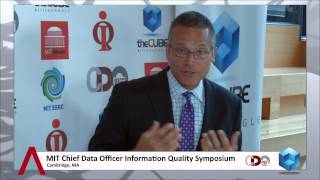
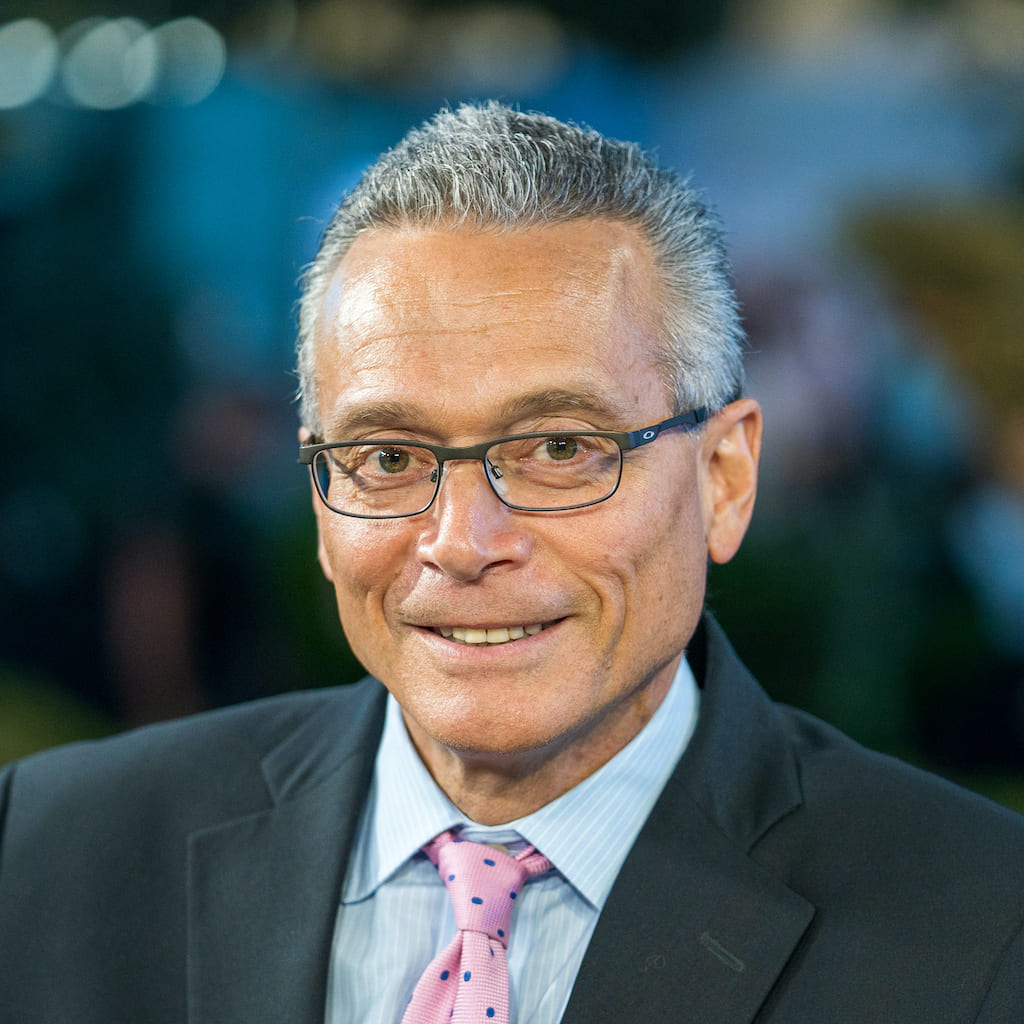
James Noga, Partners Healthcare, at MIT CDOIQ 2014 with Dave Vellante and Jeff Kelly
8th Annual MIT Chief Data Officer & Information Quality Symposium
@theCUBE
#MITIQ
The CIO of a major health care firm speculated last week that the CIO job itself could disappear over the next 10 years, with responsibility accruing to the emerging role of Chief Data Officer.
James, Noga, VP and CIO of Partners HealthCare. , said CIOs will have less responsibility for managing infrastructure complexities as more of those functions move to the cloud. In an interview with Dave Vellante and Jeff Kelly of SiliconANGLE at the MIT Chief Data Officer and Information Quality Symposium, Noga said this kind of change isn’t new.
“In the 1800’s, every manufacturing plant had its own power plant. Yes, we’re still building data centers, but I think you’re going to see less of that,” said Noga.
Noga advises CIO’s to to focus on the ‘optimizations of workflow processes’, offering LEAN and Six Sigma as examples. Although CIO’s are typically enablers of the business strategy, the goal of optimizing the business is going to become more important. Noga said CIO’s are effectively morphing into Chief Operating Officers and that the day is coming when “when a COO is fairly competent in information technology as well as business operations,” with a CDO or CTO reporting to them. The COO and CIO roles are converging he said.
Getting Involved in Business Operations
The challenge for CIOs is to address non-IT issues from a business strategy perspective. Noga recommended that CIO’s actively engage senior leadership, adding that they may even have to push some doors open as opposed to waiting for doors to be opened for them.
“You’re no longer at the end of the line. As decisions are made, you become part of that formation of the strategy rather than a receiver of the strategy,” said Noga.
Advice for CIO’s
Rather than seeing this transition as a threat, Noga thinks that CIO’s should see it as an opportunity for additional influence and visibility. “Maybe [the CIO] will retain the title, but regardless, I think it will be as I’ve described it – more of a COO role,” he said.
Forgot Password
Almost there!
We just sent you a verification email. Please verify your account to gain access to
MIT Chief Data Officer and Information Quality Symposium (CDOIQ) | 2014. If you don’t think you received an email check your
spam folder.
Sign in to MIT Chief Data Officer and Information Quality Symposium (CDOIQ) | 2014.
In order to sign in, enter the email address you used to registered for the event. Once completed, you will receive an email with a verification link. Open this link to automatically sign into the site.
Register For MIT Chief Data Officer and Information Quality Symposium (CDOIQ) | 2014
Please fill out the information below. You will recieve an email with a verification link confirming your registration. Click the link to automatically sign into the site.
You’re almost there!
We just sent you a verification email. Please click the verification button in the email. Once your email address is verified, you will have full access to all event content for MIT Chief Data Officer and Information Quality Symposium (CDOIQ) | 2014.
Thanks for confirming your account. Now you can access MIT Chief Data Officer and Information Quality Symposium (CDOIQ) | 2014 with this email address.
I want my badge and interests to be visible to all attendees.
Checking this box will display your presense on the attendees list, view your profile and allow other attendees to contact you via 1-1 chat. Read the Privacy Policy. At any time, you can choose to disable this preference.
Select your Interests!
add
Upload your photo
Uploading..
OR
Connect via Twitter
Connect via Linkedin
EDIT PASSWORD
Share
Forgot Password
Almost there!
We just sent you a verification email. Please verify your account to gain access to
MIT Chief Data Officer and Information Quality Symposium (CDOIQ) | 2014. If you don’t think you received an email check your
spam folder.
Sign in to MIT Chief Data Officer and Information Quality Symposium (CDOIQ) | 2014.
In order to sign in, enter the email address you used to registered for the event. Once completed, you will receive an email with a verification link. Open this link to automatically sign into the site.
Sign in to gain access to MIT Chief Data Officer and Information Quality Symposium (CDOIQ) | 2014
Please sign in with LinkedIn to continue to MIT Chief Data Officer and Information Quality Symposium (CDOIQ) | 2014. Signing in with LinkedIn ensures a professional environment.
Are you sure you want to remove access rights for this user?
Details
Manage Access
email address
Community Invitation
James Noga - MITCDOIQ 2014 - theCUBE - #MITIQ
James Noga, Partners Healthcare, at MIT CDOIQ 2014 with Dave Vellante and Jeff Kelly
8th Annual MIT Chief Data Officer & Information Quality Symposium
@theCUBE
#MITIQ
The CIO of a major health care firm speculated last week that the CIO job itself could disappear over the next 10 years, with responsibility accruing to the emerging role of Chief Data Officer.
James, Noga, VP and CIO of Partners HealthCare. , said CIOs will have less responsibility for managing infrastructure complexities as more of those functions move to the cloud. In an interview with Dave Vellante and Jeff Kelly of SiliconANGLE at the MIT Chief Data Officer and Information Quality Symposium, Noga said this kind of change isn’t new.
“In the 1800’s, every manufacturing plant had its own power plant. Yes, we’re still building data centers, but I think you’re going to see less of that,” said Noga.
Noga advises CIO’s to to focus on the ‘optimizations of workflow processes’, offering LEAN and Six Sigma as examples. Although CIO’s are typically enablers of the business strategy, the goal of optimizing the business is going to become more important. Noga said CIO’s are effectively morphing into Chief Operating Officers and that the day is coming when “when a COO is fairly competent in information technology as well as business operations,” with a CDO or CTO reporting to them. The COO and CIO roles are converging he said.
Getting Involved in Business Operations
The challenge for CIOs is to address non-IT issues from a business strategy perspective. Noga recommended that CIO’s actively engage senior leadership, adding that they may even have to push some doors open as opposed to waiting for doors to be opened for them.
“You’re no longer at the end of the line. As decisions are made, you become part of that formation of the strategy rather than a receiver of the strategy,” said Noga.
Advice for CIO’s
Rather than seeing this transition as a threat, Noga thinks that CIO’s should see it as an opportunity for additional influence and visibility. “Maybe [the CIO] will retain the title, but regardless, I think it will be as I’ve described it – more of a COO role,” he said.