Yuvi Kochar, Data-centric Digital Transformation Strategist at GameStop talks with John Furrier at Mayfield Fund in Menlo Park, CA as a part of the Mayfield People First Network.
#Mayfield50 #theCUBE #Gamestop
https://siliconangle.com/2019/09/23/qa-data-isnt-new-oil-anymore-new-software-mayfield50/
Q&A: Data isn’t the new oil anymore, it’s the new software
“Data is the new oil” is a popular phrase hailing back to big data’s buzzy years circa 2006. After all, tech’s giants including Facebook Inc. and Google LLC have made billion dollar businesses on user data, developing software to run some of the world’s most sophisticated advertising platforms.
As it turns out, the software-driven opportunities with data are countless. Using predictive analytics on historical data can foretell new trends and likely future events. Analyzing data properly generates valuable insights to design an application. And you don’t need to be rich or particularly tech-savvy to do it.
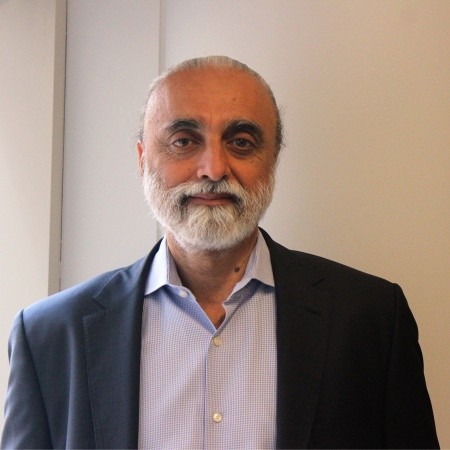
The role of data in and out of the software application “has to be part of the design, because data is the application, and you need to design the application with data in mind,” said Yuvi Kochar (pictured), former data-centric digital transformation strategist at GameStop Inc. and managing director at Kochar Consulting. “And that needs to be thought of upfront and not later. Everybody needs a data monetization strategy. People don’t realize how much asset is sitting in their data and where to monetize it and how to use it.”
Kochar spoke with John Furrier, host of theCUBE, SiliconANGLE Media’s mobile livestreaming studio, during the Mayfield People First Network event in Menlo Park, California. They discussed data-centric development, transformation and data strategy (see the full interview with transcript here). Answers have been condensed for clarity.
Furrier: You did a lot of different things, most notably at The Washington Post. How many years were you there?
Kochar: I spent about 13 years in the corporate office. The Washington Post Co. was a conglomerate, so I was involved with a lot of varied businesses. But, obviously, we were in the same building with The Washington Post, and I had front-row seat to see the digital transformation of the media industry.
Furrier: The application development market has flipped around, where applications are in charge, data’s critical for the application, infrastructure’s now elastic. What are your thoughts on that?
Kochar: We are in a time when cloud-first is becoming old, and we are now moving into data-first. I’m thinking more of applications, which are built data-out instead of data-in, which is, you build process and you capture data, and then you decide, oh, maybe I should build some reporting. Now, you need to start with what’s the data I have got. We were just talking about, everybody needs a data monetization strategy. People don’t realize how much asset is sitting in their data and where to monetize it and how to use it.
Furrier: The world of data is also limited by where the data’s stored, how the data is retrieved, how the data moves around the network. This is a new dynamic. What are your thoughts on data as an element in all that moving around?
Kochar: What you’re talking about is still data analytics. I think that is still very much thinking about data in an old-school kind of way. What’s happening now is we’re teaching algorithms with data. So data is actually the software, right? The asset is now the data, which means how you train your algorithm with your data, and then now, moving towards deploying it on the edge, which is you take an algorithm, you train it, then you deploy it on the edge in an IoT kind of environment, and now you’re doing decision-making.
Furrier: There’s kind of an old guard/new guard. I think the old guard if they don’t innovate and become fresh and adopt modern things are going to die. What is the success formula?
Kochar: The most important thing for large enterprises at least, to battle the incumbent, the new upstarts, is to develop strategies that are leveraging the new technologies but are building on their existing capability, and that’s what I drive at GameStop. The biggest challenge large companies have is an ability to play the field at the speed of the new upstarts.
Furrier: The media business starts changing, online classifieds are dying, search engine marketing is growing. You were there with the Post. Take us through that journey.
...
Here’s the complete video interview, part of SiliconANGLE’s and theCUBE’s coverage of the Mayfield People First Network event:
Forgot Password
Almost there!
We just sent you a verification email. Please verify your account to gain access to
Mayfield People First 2019 | SF Bay Area. If you don’t think you received an email check your
spam folder.
Sign in to Mayfield People First 2019 | SF Bay Area.
In order to sign in, enter the email address you used to registered for the event. Once completed, you will receive an email with a verification link. Open this link to automatically sign into the site.
Register For Mayfield People First 2019 | SF Bay Area
Please fill out the information below. You will recieve an email with a verification link confirming your registration. Click the link to automatically sign into the site.
You’re almost there!
We just sent you a verification email. Please click the verification button in the email. Once your email address is verified, you will have full access to all event content for Mayfield People First 2019 | SF Bay Area.
I want my badge and interests to be visible to all attendees.
Checking this box will display your presense on the attendees list, view your profile and allow other attendees to contact you via 1-1 chat. Read the Privacy Policy. At any time, you can choose to disable this preference.
Select your Interests!
add
Upload your photo
Uploading..
OR
Connect via Twitter
Connect via Linkedin
EDIT PASSWORD
Share
Forgot Password
Almost there!
We just sent you a verification email. Please verify your account to gain access to
Mayfield People First 2019 | SF Bay Area. If you don’t think you received an email check your
spam folder.
Sign in to Mayfield People First 2019 | SF Bay Area.
In order to sign in, enter the email address you used to registered for the event. Once completed, you will receive an email with a verification link. Open this link to automatically sign into the site.
Sign in to gain access to Mayfield People First 2019 | SF Bay Area
Please sign in with LinkedIn to continue to Mayfield People First 2019 | SF Bay Area. Signing in with LinkedIn ensures a professional environment.
Are you sure you want to remove access rights for this user?
Details
Manage Access
email address
Community Invitation
Yuvi Kochar, GameStop | Mayfield People First Network
Yuvi Kochar, Data-centric Digital Transformation Strategist at GameStop talks with John Furrier at Mayfield Fund in Menlo Park, CA as a part of the Mayfield People First Network.
#Mayfield50 #theCUBE #Gamestop
https://siliconangle.com/2019/09/23/qa-data-isnt-new-oil-anymore-new-software-mayfield50/
Q&A: Data isn’t the new oil anymore, it’s the new software
“Data is the new oil” is a popular phrase hailing back to big data’s buzzy years circa 2006. After all, tech’s giants including Facebook Inc. and Google LLC have made billion dollar businesses on user data, developing software to run some of the world’s most sophisticated advertising platforms.
As it turns out, the software-driven opportunities with data are countless. Using predictive analytics on historical data can foretell new trends and likely future events. Analyzing data properly generates valuable insights to design an application. And you don’t need to be rich or particularly tech-savvy to do it.
The role of data in and out of the software application “has to be part of the design, because data is the application, and you need to design the application with data in mind,” said Yuvi Kochar (pictured), former data-centric digital transformation strategist at GameStop Inc. and managing director at Kochar Consulting. “And that needs to be thought of upfront and not later. Everybody needs a data monetization strategy. People don’t realize how much asset is sitting in their data and where to monetize it and how to use it.”
Kochar spoke with John Furrier, host of theCUBE, SiliconANGLE Media’s mobile livestreaming studio, during the Mayfield People First Network event in Menlo Park, California. They discussed data-centric development, transformation and data strategy (see the full interview with transcript here). Answers have been condensed for clarity.
Furrier: You did a lot of different things, most notably at The Washington Post. How many years were you there?
Kochar: I spent about 13 years in the corporate office. The Washington Post Co. was a conglomerate, so I was involved with a lot of varied businesses. But, obviously, we were in the same building with The Washington Post, and I had front-row seat to see the digital transformation of the media industry.
Furrier: The application development market has flipped around, where applications are in charge, data’s critical for the application, infrastructure’s now elastic. What are your thoughts on that?
Kochar: We are in a time when cloud-first is becoming old, and we are now moving into data-first. I’m thinking more of applications, which are built data-out instead of data-in, which is, you build process and you capture data, and then you decide, oh, maybe I should build some reporting. Now, you need to start with what’s the data I have got. We were just talking about, everybody needs a data monetization strategy. People don’t realize how much asset is sitting in their data and where to monetize it and how to use it.
Furrier: The world of data is also limited by where the data’s stored, how the data is retrieved, how the data moves around the network. This is a new dynamic. What are your thoughts on data as an element in all that moving around?
Kochar: What you’re talking about is still data analytics. I think that is still very much thinking about data in an old-school kind of way. What’s happening now is we’re teaching algorithms with data. So data is actually the software, right? The asset is now the data, which means how you train your algorithm with your data, and then now, moving towards deploying it on the edge, which is you take an algorithm, you train it, then you deploy it on the edge in an IoT kind of environment, and now you’re doing decision-making.
Furrier: There’s kind of an old guard/new guard. I think the old guard if they don’t innovate and become fresh and adopt modern things are going to die. What is the success formula?
Kochar: The most important thing for large enterprises at least, to battle the incumbent, the new upstarts, is to develop strategies that are leveraging the new technologies but are building on their existing capability, and that’s what I drive at GameStop. The biggest challenge large companies have is an ability to play the field at the speed of the new upstarts.
Furrier: The media business starts changing, online classifieds are dying, search engine marketing is growing. You were there with the Post. Take us through that journey.
...
Here’s the complete video interview, part of SiliconANGLE’s and theCUBE’s coverage of the Mayfield People First Network event: