Doug Davis, Sr. Technical Staff Member, PM Knative, IBM, sits down with Stu Miniman and Corey Quinn at KubeCon + CloudNativeCon EU 2019 in Barcelona, Spain
#theCUBE #KubeCon #CloudNativeCon
https://siliconangle.com/2019/05/21/qa-dont-assume-serverless-limitations-says-ibm-knative-expert-kubeconeu/
Q&A: Don’t assume serverless has limitations, says IBM Knative expert
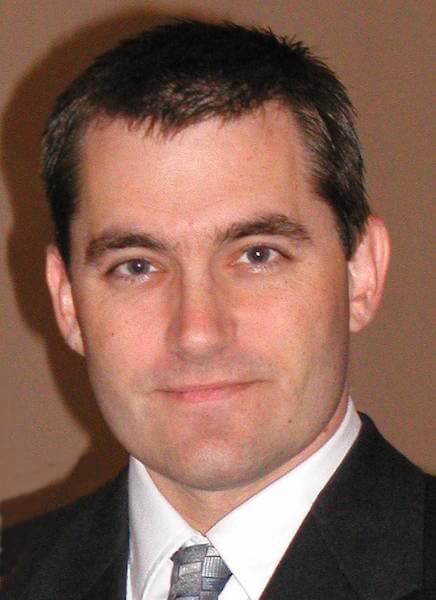
The no limit mentality is especially ripe in the technology industry, where the mantra tends to be ‘fail fast and fail often.’ New IT platforms are constantly being designed to make daily business operations easier. But assuming certain workloads aren’t appropriate or that barriers exist without testing things first can be a fatal mistake, according to Doug Davis (pictured), senior technical staff member at IBM and PM of Knative.
In the case of serverless, a new landscape that assists with applications like Kubernetes and its simplified brother Knative, Davis has trouble believing that it has any current limitations. He’s heard a few negative stories but isn’t quite convinced.
Davis spoke with Stu Miniman (@stu), co-host of theCUBE, SiliconANGLE Media’s mobile livestreaming studio, and guest host Corey Quinn (@QuinnyPig) during the KubeCon + CloudNativeCon event in Barcelona, Spain. They discussed the functions of the Cloud Native Computing Foundation’s Serverless Working Group, how Knative can make processes easier for developers, and if there are any workloads that aren’t appropriate for serverless’ abilities (see the full interview with transcript here). (* Disclosure below.)
[Editor’s Note: The following answers have been condensed for clarity.]
Miniman: Most developers are looking for reduced friction, and they want things to be easier. How does Knative help us move towards that?
Davis: I look at Knative as a simplification of Kubernetes, because as much as everybody loves Kubernetes, it’s kind of complicated. It’s not the easiest thing in the world to use, and it forces you to be an IT expert, which almost goes against the direction we were headed. You don’t want to have to worry about something; you just want to give us your code, right? Kubernetes says you must know about networks and volumes, so, it’s kind of going the wrong way.
Knative tries to give you all the features of Kubernetes but in a simpler platform. The important thing is that if you need to go around Knative because it’s too simplified or opinionated, you can still do that if you need to get to the complicated stuff. And it’s not like you’re entering a different world. It’s the same infrastructure that you can deploy things on. Knative can integrate very nicely with the stuff you deploy through Kubernetes. It’s nice to merge these two worlds.
Miniman: What is the Serverless Working Group?
Davis: The Serverless Working Group was started back in 2017 by the CNCF Technical Oversight Committee [TOC]. They wanted to know what is serverless all about, and they wanted to learn more how to get involved. They started up the Serverless Working Group, and the main mission was to just do investigation. The output of this working group was a white paper describing serverless and the good use cases for when to use it. It also covered common architectures by explaining what goes on in the space.
It also produced a landscape document laying out what’s out there from a proprietor’s perspective, as well as an open-source perspective. At the tail end of the white paper was a set of recommendations for the TOC. What should they do next? It came down to three different things. One was education. They wanted to educate the community about when serverless was appropriate.
The second was what projects should be handled by serverless and how to grow the community. Third was what they should do around improbability. Obviously, when it comes to open-source standards and things like that, serverless is all about events. They recognized that if they could help the processing of events as they move from point A to point B, that might help people in terms of middleware when it came to the routing of events and filtering events.
Quinn: What workloads are not appropriate for serverless in your mind?
...
Watch the complete video interview below, and be sure to check out more of SiliconANGLE’s and theCUBE’s coverage of the KubeCon + CloudNativeCon event. (* Disclosure: The Cloud Native Computing Foundation sponsored this segment of theCUBE. Neither CNCF nor other sponsors have editorial control over content on theCUBE or SiliconANGLE.)
Forgot Password
Almost there!
We just sent you a verification email. Please verify your account to gain access to
KubeCon + CloudNativeCon 2019 | Barcelona. If you don’t think you received an email check your
spam folder.
Sign in to KubeCon + CloudNativeCon 2019 | Barcelona.
In order to sign in, enter the email address you used to registered for the event. Once completed, you will receive an email with a verification link. Open this link to automatically sign into the site.
Register For KubeCon + CloudNativeCon 2019 | Barcelona
Please fill out the information below. You will recieve an email with a verification link confirming your registration. Click the link to automatically sign into the site.
You’re almost there!
We just sent you a verification email. Please click the verification button in the email. Once your email address is verified, you will have full access to all event content for KubeCon + CloudNativeCon 2019 | Barcelona.
I want my badge and interests to be visible to all attendees.
Checking this box will display your presense on the attendees list, view your profile and allow other attendees to contact you via 1-1 chat. Read the Privacy Policy. At any time, you can choose to disable this preference.
Select your Interests!
add
Upload your photo
Uploading..
OR
Connect via Twitter
Connect via Linkedin
EDIT PASSWORD
Share
Forgot Password
Almost there!
We just sent you a verification email. Please verify your account to gain access to
KubeCon + CloudNativeCon 2019 | Barcelona. If you don’t think you received an email check your
spam folder.
Sign in to KubeCon + CloudNativeCon 2019 | Barcelona.
In order to sign in, enter the email address you used to registered for the event. Once completed, you will receive an email with a verification link. Open this link to automatically sign into the site.
Sign in to gain access to KubeCon + CloudNativeCon 2019 | Barcelona
Please sign in with LinkedIn to continue to KubeCon + CloudNativeCon 2019 | Barcelona. Signing in with LinkedIn ensures a professional environment.
Are you sure you want to remove access rights for this user?
Details
Manage Access
email address
Community Invitation
Doug Davis, IBM | KubeCon + CloudNativeCon EU 2019
Doug Davis, Sr. Technical Staff Member, PM Knative, IBM, sits down with Stu Miniman and Corey Quinn at KubeCon + CloudNativeCon EU 2019 in Barcelona, Spain
#theCUBE #KubeCon #CloudNativeCon
https://siliconangle.com/2019/05/21/qa-dont-assume-serverless-limitations-says-ibm-knative-expert-kubeconeu/
Q&A: Don’t assume serverless has limitations, says IBM Knative expert
The no limit mentality is especially ripe in the technology industry, where the mantra tends to be ‘fail fast and fail often.’ New IT platforms are constantly being designed to make daily business operations easier. But assuming certain workloads aren’t appropriate or that barriers exist without testing things first can be a fatal mistake, according to Doug Davis (pictured), senior technical staff member at IBM and PM of Knative.
In the case of serverless, a new landscape that assists with applications like Kubernetes and its simplified brother Knative, Davis has trouble believing that it has any current limitations. He’s heard a few negative stories but isn’t quite convinced.
Davis spoke with Stu Miniman (@stu), co-host of theCUBE, SiliconANGLE Media’s mobile livestreaming studio, and guest host Corey Quinn (@QuinnyPig) during the KubeCon + CloudNativeCon event in Barcelona, Spain. They discussed the functions of the Cloud Native Computing Foundation’s Serverless Working Group, how Knative can make processes easier for developers, and if there are any workloads that aren’t appropriate for serverless’ abilities (see the full interview with transcript here). (* Disclosure below.)
[Editor’s Note: The following answers have been condensed for clarity.]
Miniman: Most developers are looking for reduced friction, and they want things to be easier. How does Knative help us move towards that?
Davis: I look at Knative as a simplification of Kubernetes, because as much as everybody loves Kubernetes, it’s kind of complicated. It’s not the easiest thing in the world to use, and it forces you to be an IT expert, which almost goes against the direction we were headed. You don’t want to have to worry about something; you just want to give us your code, right? Kubernetes says you must know about networks and volumes, so, it’s kind of going the wrong way.
Knative tries to give you all the features of Kubernetes but in a simpler platform. The important thing is that if you need to go around Knative because it’s too simplified or opinionated, you can still do that if you need to get to the complicated stuff. And it’s not like you’re entering a different world. It’s the same infrastructure that you can deploy things on. Knative can integrate very nicely with the stuff you deploy through Kubernetes. It’s nice to merge these two worlds.
Miniman: What is the Serverless Working Group?
Davis: The Serverless Working Group was started back in 2017 by the CNCF Technical Oversight Committee [TOC]. They wanted to know what is serverless all about, and they wanted to learn more how to get involved. They started up the Serverless Working Group, and the main mission was to just do investigation. The output of this working group was a white paper describing serverless and the good use cases for when to use it. It also covered common architectures by explaining what goes on in the space.
It also produced a landscape document laying out what’s out there from a proprietor’s perspective, as well as an open-source perspective. At the tail end of the white paper was a set of recommendations for the TOC. What should they do next? It came down to three different things. One was education. They wanted to educate the community about when serverless was appropriate.
The second was what projects should be handled by serverless and how to grow the community. Third was what they should do around improbability. Obviously, when it comes to open-source standards and things like that, serverless is all about events. They recognized that if they could help the processing of events as they move from point A to point B, that might help people in terms of middleware when it came to the routing of events and filtering events.
Quinn: What workloads are not appropriate for serverless in your mind?
...
Watch the complete video interview below, and be sure to check out more of SiliconANGLE’s and theCUBE’s coverage of the KubeCon + CloudNativeCon event. (* Disclosure: The Cloud Native Computing Foundation sponsored this segment of theCUBE. Neither CNCF nor other sponsors have editorial control over content on theCUBE or SiliconANGLE.)