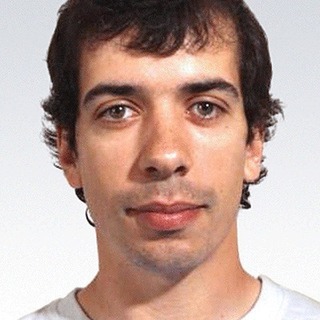
Ricardo Rocha, Computing Engineer, CERN & Lukas Heinrich, Physicist, CERN, sits down with Stu Miniman and Corey Quinn at KubeCon + CloudNativeCon EU 2019 in Barcelona, Spain
#theCUBE #KubeCon #CloudNativeCon
https://siliconangle.com/2019/06/10/from-inventing-the-web-to-colliding-particles-cerns-computer-scientists-manage-data-for-the-universe-kubeconeu-guestoftheweek/
From inventing the web to colliding particles, CERN’s computer scientists manage data for the universe
This article, and hundreds of millions of others, are viewable online across the globe because 30 years ago a computer scientist took a break from his research group’s work in particle physics to tinker with a new way to manage and share information.
That group was the European Organization for Nuclear Research, or CERN; the computer scientist was Tim Berners-Lee. And his proposal for the first hypertext browser essentially laid the groundwork for what ultimately became the modern internet.
While this historic milestone from March 1989 resulted in the creation of the World Wide Web as an automated way to share information between scientists around the globe, CERN’s real claim to fame involved its groundbreaking work in visible and even invisible matter within the universe. Fueled by development of the Large Hadron Collider, or LHC, the world’s largest particle accelerator, CERN has been at the forefront of scientific research that led to discovery of the elusive Higgs Boson particle in 2012.
Behind this heavy scientific lifting is a significant computing organization, one that must handle data at a scale most of us can only imagine. This includes a data center that holds 300,000 cores, according to Ricardo Rocha (pictured, right), computing engineer at CERN.
“That’s not enough, so what we’ve done over the last 15 to 20 years is create this large distributed computing environment around the world,” Rocha said. “We link to many different institutes and research labs, and this doubles our capacity.”
Rocha spoke with Stu Miniman and Corey Quinn, co-hosts of theCUBE, SiliconANGLE Media’s mobile livestreaming studio, during the KubeCon + CloudNativeCon event in Barcelona. He was joined by Lukas Heinrich (left), physicist at CERN, and they discussed the data management process needed for scientific discovery, the role of Kubernetes in the organization’s work, and how CERN shares its findings while contributing to the open-source world (see the full interview with transcript here). (* Disclosure below.)
This week, theCUBE features Lukas Heinrich and Ricardo Rocha as its Guests of the Week.
Uncovering the invisible
Discovery of Higgs Boson was a significant breakthrough because, until then, scientists had been unable to conclusively see a particle’s interaction with the invisible “Higgs field” in which particles acquire mass inside the Universe. The discovery seven years ago this July resulted in a Nobel Prize for the scientists involved, including physicist Peter Higgs.
The discovery was made possible through use of CERN’s LHC. Built in 2008, the particle accelerator employs a 27-kilometer ring of superconducting magnets to boost particle energy. The protons collide 40 million times per second, according to Heinrich, and the resulting data must then be carefully captured for thorough evaluation by CERN scientists.
“We accelerate protons, which are hydrogen nuclei, to very high energy so they almost go with the speed of light,” Heinrich explained. “We essentially run 10,000 core real-time applications just to analyze this data.”
Using Kubernetes for data analysis
At the KubeCon event in Barcelona, Rocha and Heinrich offered attendees a glimpse into how open-source and containerized computing tools, not readily available in 2012, could be used to recreate the data analysis that led to the Nobel Prize-winning Higgs Boson discovery.
Using a Jupyter notebook and Kubernetes on a small cluster within the CERN private cloud, the engineers demonstrated how the application and cluster itself could scale out and meet intensive data analysis needs. They also showed how work within the Kubernetes Multicluster Special Interest Group helped define scheduling policies and leveraged external cloud resources.
“Virtual machines still have a very complex setup to be able to support our diversity of software,” Rocha said. “With containerization, all people have to give us is a building block to run. It’s a standard interface, so we only have to build infrastructure to be able to handle these pieces.”
...
Here’s the complete video interview, part of SiliconANGLE’s and theCUBE’s coverage of the KubeCon + CloudNativeCon event. (* Disclosure: This segment is unsponsored. Red Hat Inc. is the headline sponsor for theCUBE’s live broadcast at KubeCon + CloudNativeCon. Neither Red Hat nor any other sponsors have editorial control over content on theCUBE or SiliconANGLE.)
Forgot Password
Almost there!
We just sent you a verification email. Please verify your account to gain access to
KubeCon + CloudNativeCon 2019 | Barcelona. If you don’t think you received an email check your
spam folder.
Sign in to KubeCon + CloudNativeCon 2019 | Barcelona.
In order to sign in, enter the email address you used to registered for the event. Once completed, you will receive an email with a verification link. Open this link to automatically sign into the site.
Register For KubeCon + CloudNativeCon 2019 | Barcelona
Please fill out the information below. You will recieve an email with a verification link confirming your registration. Click the link to automatically sign into the site.
You’re almost there!
We just sent you a verification email. Please click the verification button in the email. Once your email address is verified, you will have full access to all event content for KubeCon + CloudNativeCon 2019 | Barcelona.
I want my badge and interests to be visible to all attendees.
Checking this box will display your presense on the attendees list, view your profile and allow other attendees to contact you via 1-1 chat. Read the Privacy Policy. At any time, you can choose to disable this preference.
Select your Interests!
add
Upload your photo
Uploading..
OR
Connect via Twitter
Connect via Linkedin
EDIT PASSWORD
Share
Forgot Password
Almost there!
We just sent you a verification email. Please verify your account to gain access to
KubeCon + CloudNativeCon 2019 | Barcelona. If you don’t think you received an email check your
spam folder.
Sign in to KubeCon + CloudNativeCon 2019 | Barcelona.
In order to sign in, enter the email address you used to registered for the event. Once completed, you will receive an email with a verification link. Open this link to automatically sign into the site.
Sign in to gain access to KubeCon + CloudNativeCon 2019 | Barcelona
Please sign in with LinkedIn to continue to KubeCon + CloudNativeCon 2019 | Barcelona. Signing in with LinkedIn ensures a professional environment.
Are you sure you want to remove access rights for this user?
Details
Manage Access
email address
Community Invitation
Lukas Heinrich & Ricardo Rocha, CERN | KubeCon + CloudNativeCon EU 2019
Ricardo Rocha, Computing Engineer, CERN & Lukas Heinrich, Physicist, CERN, sits down with Stu Miniman and Corey Quinn at KubeCon + CloudNativeCon EU 2019 in Barcelona, Spain
#theCUBE #KubeCon #CloudNativeCon
https://siliconangle.com/2019/06/10/from-inventing-the-web-to-colliding-particles-cerns-computer-scientists-manage-data-for-the-universe-kubeconeu-guestoftheweek/
From inventing the web to colliding particles, CERN’s computer scientists manage data for the universe
This article, and hundreds of millions of others, are viewable online across the globe because 30 years ago a computer scientist took a break from his research group’s work in particle physics to tinker with a new way to manage and share information.
That group was the European Organization for Nuclear Research, or CERN; the computer scientist was Tim Berners-Lee. And his proposal for the first hypertext browser essentially laid the groundwork for what ultimately became the modern internet.
While this historic milestone from March 1989 resulted in the creation of the World Wide Web as an automated way to share information between scientists around the globe, CERN’s real claim to fame involved its groundbreaking work in visible and even invisible matter within the universe. Fueled by development of the Large Hadron Collider, or LHC, the world’s largest particle accelerator, CERN has been at the forefront of scientific research that led to discovery of the elusive Higgs Boson particle in 2012.
Behind this heavy scientific lifting is a significant computing organization, one that must handle data at a scale most of us can only imagine. This includes a data center that holds 300,000 cores, according to Ricardo Rocha (pictured, right), computing engineer at CERN.
“That’s not enough, so what we’ve done over the last 15 to 20 years is create this large distributed computing environment around the world,” Rocha said. “We link to many different institutes and research labs, and this doubles our capacity.”
Rocha spoke with Stu Miniman and Corey Quinn, co-hosts of theCUBE, SiliconANGLE Media’s mobile livestreaming studio, during the KubeCon + CloudNativeCon event in Barcelona. He was joined by Lukas Heinrich (left), physicist at CERN, and they discussed the data management process needed for scientific discovery, the role of Kubernetes in the organization’s work, and how CERN shares its findings while contributing to the open-source world (see the full interview with transcript here). (* Disclosure below.)
This week, theCUBE features Lukas Heinrich and Ricardo Rocha as its Guests of the Week.
Uncovering the invisible
Discovery of Higgs Boson was a significant breakthrough because, until then, scientists had been unable to conclusively see a particle’s interaction with the invisible “Higgs field” in which particles acquire mass inside the Universe. The discovery seven years ago this July resulted in a Nobel Prize for the scientists involved, including physicist Peter Higgs.
The discovery was made possible through use of CERN’s LHC. Built in 2008, the particle accelerator employs a 27-kilometer ring of superconducting magnets to boost particle energy. The protons collide 40 million times per second, according to Heinrich, and the resulting data must then be carefully captured for thorough evaluation by CERN scientists.
“We accelerate protons, which are hydrogen nuclei, to very high energy so they almost go with the speed of light,” Heinrich explained. “We essentially run 10,000 core real-time applications just to analyze this data.”
Using Kubernetes for data analysis
At the KubeCon event in Barcelona, Rocha and Heinrich offered attendees a glimpse into how open-source and containerized computing tools, not readily available in 2012, could be used to recreate the data analysis that led to the Nobel Prize-winning Higgs Boson discovery.
Using a Jupyter notebook and Kubernetes on a small cluster within the CERN private cloud, the engineers demonstrated how the application and cluster itself could scale out and meet intensive data analysis needs. They also showed how work within the Kubernetes Multicluster Special Interest Group helped define scheduling policies and leveraged external cloud resources.
“Virtual machines still have a very complex setup to be able to support our diversity of software,” Rocha said. “With containerization, all people have to give us is a building block to run. It’s a standard interface, so we only have to build infrastructure to be able to handle these pieces.”
...
Here’s the complete video interview, part of SiliconANGLE’s and theCUBE’s coverage of the KubeCon + CloudNativeCon event. (* Disclosure: This segment is unsponsored. Red Hat Inc. is the headline sponsor for theCUBE’s live broadcast at KubeCon + CloudNativeCon. Neither Red Hat nor any other sponsors have editorial control over content on theCUBE or SiliconANGLE.)