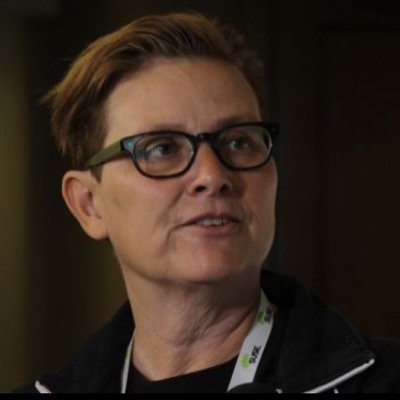
Diane Mueller & Rob Szumski from Red Hat, sit down with John Furrier & Stu Miniman at KubeCon 2018 |
#KubeCon #theCUBE #RedHat
https://siliconangle.com/2018/12/20/this-new-kubernetes-tech-turned-kubecon-talk-into-mob-scene-kubecon/
This new Kubernetes tech turned KubeCon talk into mob scene
What is the maturation of the Kubernetes open-source container-orchestration system good for? Open source has kneaded and Karate-chopped the kinks out of the platform for orchestrating containers (a virtualized method for running distributed applications). So now what? It runs more reliably in enterprises. There’s that. It might also run a whole stack much the same way it runs a containerized app.
This was the talk coming out of the recent “Kubernetes Operators” deep-dive discussion at KubeCon + CloudNativeCon event in Seattle, Washington. A packed room devoured the details as security guards blocked frustrated late arrivals.
Operators are set to be one of the hottest attractions to evolve from Kubernetes so far, according to Diane Mueller (pictured, left), director of community development at Red Hat Inc. “I think the next big thing that we’re really focusing on and that’s a game changer for all the second day operations type things is …. the rise of Kubernetes Operators,” she said.
Mueller and Rob Szumski (pictured, right), principal product manager at Red Hat, spoke with John Furrier (@furrier) and Stu Miniman (@stu), co-hosts of theCUBE, SiliconANGLE Media’s mobile livestreaming studio, during the KubeCon + CloudNativeCon event. They discussed how Kubernetes Operators will do for distributed systems what containers did for apps. (* Disclosure below.)
Like putting a whole distributed system in a container
The CoreOS project introduces Operators to extend the Kubernetes application program interface to manage stateful applications.
“The rise of containers was great, because you could take a single container and package an application and give it to somebody and know that they can run it successfully,” Szumski said. “An operator does that for a distributed system in the exact same way.”
Using all the Kubernetes primitives, and without reinventing service discovery, etc., “you can give somebody an entire Kafka stack or a machine learning stack or whatever it is — these very complex distributed systems — and have them run it without having to be an expert,” Szumski explained.
All of the complex underpinnings are baked into the software. Kubernetes Operators can bring order to multicloud. What users program against when they build an Operator is Kubernetes — not a cloud offering, not Red Hat, OpenShift, etc., Szumski added.
“So you can run MongoDB on-prem, in the cloud, and have it function the exact same by standing up one of these Operators,” he concluded.
Watch the complete video interview below, and be sure to check out more of SiliconANGLE’s and theCUBE’s coverage of the KubeCon + CloudNativeCon event. (* Disclosure: Red Hat Inc. sponsored this segment of theCUBE. Neither Red Hat nor other sponsors have editorial control over content on theCUBE or SiliconANGLE.)
Forgot Password
Almost there!
We just sent you a verification email. Please verify your account to gain access to
KubeCon CloudNativeCon 2018 | Seattle. If you don’t think you received an email check your
spam folder.
In order to sign in, enter the email address you used to registered for the event. Once completed, you will receive an email with a verification link. Open this link to automatically sign into the site.
Register For KubeCon CloudNativeCon 2018 | Seattle
Please fill out the information below. You will recieve an email with a verification link confirming your registration. Click the link to automatically sign into the site.
You’re almost there!
We just sent you a verification email. Please click the verification button in the email. Once your email address is verified, you will have full access to all event content for KubeCon CloudNativeCon 2018 | Seattle.
I want my badge and interests to be visible to all attendees.
Checking this box will display your presense on the attendees list, view your profile and allow other attendees to contact you via 1-1 chat. Read the Privacy Policy. At any time, you can choose to disable this preference.
Select your Interests!
add
Upload your photo
Uploading..
OR
Connect via Twitter
Connect via Linkedin
EDIT PASSWORD
Share
Forgot Password
Almost there!
We just sent you a verification email. Please verify your account to gain access to
KubeCon CloudNativeCon 2018 | Seattle. If you don’t think you received an email check your
spam folder.
In order to sign in, enter the email address you used to registered for the event. Once completed, you will receive an email with a verification link. Open this link to automatically sign into the site.
Sign in to gain access to KubeCon CloudNativeCon 2018 | Seattle
Please sign in with LinkedIn to continue to KubeCon CloudNativeCon 2018 | Seattle. Signing in with LinkedIn ensures a professional environment.
Are you sure you want to remove access rights for this user?
Details
Manage Access
email address
Community Invitation
Diane Mueller & Rob Szumski, Red Hat | KubeCon 2018
Diane Mueller & Rob Szumski from Red Hat, sit down with John Furrier & Stu Miniman at KubeCon 2018 |
#KubeCon #theCUBE #RedHat
https://siliconangle.com/2018/12/20/this-new-kubernetes-tech-turned-kubecon-talk-into-mob-scene-kubecon/
This new Kubernetes tech turned KubeCon talk into mob scene
What is the maturation of the Kubernetes open-source container-orchestration system good for? Open source has kneaded and Karate-chopped the kinks out of the platform for orchestrating containers (a virtualized method for running distributed applications). So now what? It runs more reliably in enterprises. There’s that. It might also run a whole stack much the same way it runs a containerized app.
This was the talk coming out of the recent “Kubernetes Operators” deep-dive discussion at KubeCon + CloudNativeCon event in Seattle, Washington. A packed room devoured the details as security guards blocked frustrated late arrivals.
Operators are set to be one of the hottest attractions to evolve from Kubernetes so far, according to Diane Mueller (pictured, left), director of community development at Red Hat Inc. “I think the next big thing that we’re really focusing on and that’s a game changer for all the second day operations type things is …. the rise of Kubernetes Operators,” she said.
Mueller and Rob Szumski (pictured, right), principal product manager at Red Hat, spoke with John Furrier (@furrier) and Stu Miniman (@stu), co-hosts of theCUBE, SiliconANGLE Media’s mobile livestreaming studio, during the KubeCon + CloudNativeCon event. They discussed how Kubernetes Operators will do for distributed systems what containers did for apps. (* Disclosure below.)
Like putting a whole distributed system in a container
The CoreOS project introduces Operators to extend the Kubernetes application program interface to manage stateful applications.
“The rise of containers was great, because you could take a single container and package an application and give it to somebody and know that they can run it successfully,” Szumski said. “An operator does that for a distributed system in the exact same way.”
Using all the Kubernetes primitives, and without reinventing service discovery, etc., “you can give somebody an entire Kafka stack or a machine learning stack or whatever it is — these very complex distributed systems — and have them run it without having to be an expert,” Szumski explained.
All of the complex underpinnings are baked into the software. Kubernetes Operators can bring order to multicloud. What users program against when they build an Operator is Kubernetes — not a cloud offering, not Red Hat, OpenShift, etc., Szumski added.
“So you can run MongoDB on-prem, in the cloud, and have it function the exact same by standing up one of these Operators,” he concluded.
Watch the complete video interview below, and be sure to check out more of SiliconANGLE’s and theCUBE’s coverage of the KubeCon + CloudNativeCon event. (* Disclosure: Red Hat Inc. sponsored this segment of theCUBE. Neither Red Hat nor other sponsors have editorial control over content on theCUBE or SiliconANGLE.)