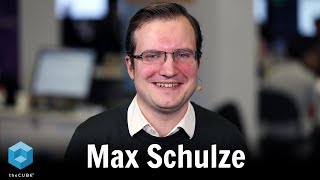
Brent Compton, Sr. Director, Technical Marketing at Red Hat, sits down with John Furrier & Stu Miniman at KubeCon 2018
#KubeCon #theCUBE #CloudNativeCon
https://siliconangle.com/2019/01/18/red-hat-fine-tunes-kubernetes-strategy-to-drive-the-hybrid-cloud-kubecon-cubeconversations/
Red Hat fine-tunes Kubernetes strategy to drive the hybrid cloud
When IBM Corp. acquired Red Hat Inc. in October for $34 billion — a deal voted for approval this week — it gained more than just a successful open-source company. What IBM bought was a set of key enterprise computing tools, many of which revolve around the Kubernetes container management platform, that could propel the company to a position of industry leadership in hybrid cloud computing.
Central to that strategy will be containerized storage and management, deployed in both the public cloud and on-premises environments. Even before IBM’s acquisition, Red Hat’s Paul Cormier, executive vice president and president of products and technologies, viewed his business as the cornerstone of hybrid cloud and modern application deployment.
“The next era of technology is being driven by container-based applications that span multi- and hybrid cloud deployments,” said Cormier in early 2018. “Kubernetes, containers and Linux are at the heart of this transformation.”
Advances in container technology have allowed developers to concentrate more on applications, but the technology remains complex. Kubernetes co-founder Brendan Burns posted a lengthy description last spring of the containerization tool’s complicated future, including a belief that the orchestration layer should be integrated with a serverless infrastructure.
Whether that happens or not, it still all comes down to data and how information is gathered, stored and deployed across the enterprise. For now, this is where Red Hat is clearly focused.
“Although the industry talks about serverless, they’re not yet talking about data-less or storage-less,” said Brent Compton (pictured), senior director of storage, hyperconverged infrastructure and big data architectures at Red Hat. “Data is the sun around which applications and services rotate.”
Compton spoke with John Furrier (@furrier) and Stu Miniman (@stu), co-hosts of theCUBE, SiliconANGLE Media’s mobile livestreaming studio, during the KubeCon + CloudNativeCon event in Seattle, Washington. They discussed how a recent acquisition will complement Red Hat’s hybrid strategy, the future role of OpenShift for containerized environments, innovation designed to streamline Kubernetes management, and the company’s forward-looking approach to a multicloud world. (* Disclosure below.)
This week, theCUBE features Brent Compton as its Guest of the Week.
Acquisition adds to hybrid toolkit
In late November, Red Hat quietly acquired NooBaa Inc., an early stage software company focused on managing data storage across hybrid cloud environments. The Israeli firm gave Red Hat an additional tool for hybrid cloud management, in addition to the Ceph storage service and OpenShift.
NooBaa’s code is not open source, although Red Hat has indicated it will open the technology at some point in the future. Behind the acquisition is a goal to bring a common set of data services for stateless applications, programs not dependent on data from a previous session, across multicloud environments.
“If I’m a developer I’m thinking, ‘Wouldn’t it be nice if I had a common set of data services, including common protocol, to talk to all of those different cloud storage backends,’” Compton explained. “NooBaa plus Ceph are helping stateless apps get to hybrid and multicloud.”
OpenShift, Red Hat’s enterprise container and Kubernetes platform, will also play a key role in the firm’s evolving hybrid model, specifically OpenShift Container Storage, or OCS. Red Hat’s value proposition for OCS is to offer enterprises cost-effective and developer-friendly storage services for containerized apps.
In August, Red Hat took steps to add volume support and enable high availability for storage on its container platform with the introduction of version 3.10 for OCS. By providing a consistent storage experience across the hybrid cloud, OCS lets users centralize support for their containerized environments with a single vendor.
...
Watch the complete video interview below, and be sure to check out more of SiliconANGLE’s and theCUBE’s coverage of the KubeCon + CloudNativeCon event. (* Disclosure: Red Hat Inc. sponsored this segment of theCUBE. Neither Red Hat nor other sponsors have editorial control over content on theCUBE or SiliconANGLE.)
Forgot Password
Almost there!
We just sent you a verification email. Please verify your account to gain access to
KubeCon CloudNativeCon 2018 | Seattle. If you don’t think you received an email check your
spam folder.
In order to sign in, enter the email address you used to registered for the event. Once completed, you will receive an email with a verification link. Open this link to automatically sign into the site.
Register For KubeCon CloudNativeCon 2018 | Seattle
Please fill out the information below. You will recieve an email with a verification link confirming your registration. Click the link to automatically sign into the site.
You’re almost there!
We just sent you a verification email. Please click the verification button in the email. Once your email address is verified, you will have full access to all event content for KubeCon CloudNativeCon 2018 | Seattle.
I want my badge and interests to be visible to all attendees.
Checking this box will display your presense on the attendees list, view your profile and allow other attendees to contact you via 1-1 chat. Read the Privacy Policy. At any time, you can choose to disable this preference.
Select your Interests!
add
Upload your photo
Uploading..
OR
Connect via Twitter
Connect via Linkedin
EDIT PASSWORD
Share
Forgot Password
Almost there!
We just sent you a verification email. Please verify your account to gain access to
KubeCon CloudNativeCon 2018 | Seattle. If you don’t think you received an email check your
spam folder.
In order to sign in, enter the email address you used to registered for the event. Once completed, you will receive an email with a verification link. Open this link to automatically sign into the site.
Sign in to gain access to KubeCon CloudNativeCon 2018 | Seattle
Please sign in with LinkedIn to continue to KubeCon CloudNativeCon 2018 | Seattle. Signing in with LinkedIn ensures a professional environment.
Are you sure you want to remove access rights for this user?
Details
Manage Access
email address
Community Invitation
Brent Compton, Red Hat | KubeCon 2018
Brent Compton, Sr. Director, Technical Marketing at Red Hat, sits down with John Furrier & Stu Miniman at KubeCon 2018
#KubeCon #theCUBE #CloudNativeCon
https://siliconangle.com/2019/01/18/red-hat-fine-tunes-kubernetes-strategy-to-drive-the-hybrid-cloud-kubecon-cubeconversations/
Red Hat fine-tunes Kubernetes strategy to drive the hybrid cloud
When IBM Corp. acquired Red Hat Inc. in October for $34 billion — a deal voted for approval this week — it gained more than just a successful open-source company. What IBM bought was a set of key enterprise computing tools, many of which revolve around the Kubernetes container management platform, that could propel the company to a position of industry leadership in hybrid cloud computing.
Central to that strategy will be containerized storage and management, deployed in both the public cloud and on-premises environments. Even before IBM’s acquisition, Red Hat’s Paul Cormier, executive vice president and president of products and technologies, viewed his business as the cornerstone of hybrid cloud and modern application deployment.
“The next era of technology is being driven by container-based applications that span multi- and hybrid cloud deployments,” said Cormier in early 2018. “Kubernetes, containers and Linux are at the heart of this transformation.”
Advances in container technology have allowed developers to concentrate more on applications, but the technology remains complex. Kubernetes co-founder Brendan Burns posted a lengthy description last spring of the containerization tool’s complicated future, including a belief that the orchestration layer should be integrated with a serverless infrastructure.
Whether that happens or not, it still all comes down to data and how information is gathered, stored and deployed across the enterprise. For now, this is where Red Hat is clearly focused.
“Although the industry talks about serverless, they’re not yet talking about data-less or storage-less,” said Brent Compton (pictured), senior director of storage, hyperconverged infrastructure and big data architectures at Red Hat. “Data is the sun around which applications and services rotate.”
Compton spoke with John Furrier (@furrier) and Stu Miniman (@stu), co-hosts of theCUBE, SiliconANGLE Media’s mobile livestreaming studio, during the KubeCon + CloudNativeCon event in Seattle, Washington. They discussed how a recent acquisition will complement Red Hat’s hybrid strategy, the future role of OpenShift for containerized environments, innovation designed to streamline Kubernetes management, and the company’s forward-looking approach to a multicloud world. (* Disclosure below.)
This week, theCUBE features Brent Compton as its Guest of the Week.
Acquisition adds to hybrid toolkit
In late November, Red Hat quietly acquired NooBaa Inc., an early stage software company focused on managing data storage across hybrid cloud environments. The Israeli firm gave Red Hat an additional tool for hybrid cloud management, in addition to the Ceph storage service and OpenShift.
NooBaa’s code is not open source, although Red Hat has indicated it will open the technology at some point in the future. Behind the acquisition is a goal to bring a common set of data services for stateless applications, programs not dependent on data from a previous session, across multicloud environments.
“If I’m a developer I’m thinking, ‘Wouldn’t it be nice if I had a common set of data services, including common protocol, to talk to all of those different cloud storage backends,’” Compton explained. “NooBaa plus Ceph are helping stateless apps get to hybrid and multicloud.”
OpenShift, Red Hat’s enterprise container and Kubernetes platform, will also play a key role in the firm’s evolving hybrid model, specifically OpenShift Container Storage, or OCS. Red Hat’s value proposition for OCS is to offer enterprises cost-effective and developer-friendly storage services for containerized apps.
In August, Red Hat took steps to add volume support and enable high availability for storage on its container platform with the introduction of version 3.10 for OCS. By providing a consistent storage experience across the hybrid cloud, OCS lets users centralize support for their containerized environments with a single vendor.
...
Watch the complete video interview below, and be sure to check out more of SiliconANGLE’s and theCUBE’s coverage of the KubeCon + CloudNativeCon event. (* Disclosure: Red Hat Inc. sponsored this segment of theCUBE. Neither Red Hat nor other sponsors have editorial control over content on theCUBE or SiliconANGLE.)