Chen Goldberg joins CUBE hosts John Furrier and Stu Miniman live from KubeCon 2017 in Austin Texas
#KubeCon #theCUBE
https://siliconangle.com/2018/01/05/google-found-success-with-kubernetes-but-thats-only-part-of-the-story-kubecon-thecube-womenintech/
Google found success with Kubernetes, but that’s only part of the story
It’s often a common theme in the tech world that the rich get richer. Amazon.com Inc., an already successful online merchandiser, starts a cloud business (Amazon Web Service Inc.) that becomes an enterprise colossus. Apple Inc., a household name in personal computers, decides to enter the smartphone space and ends up poised to become the world’s first trillion-dollar company later this year.
Then there is Google LLC The search giant continues to dominate the ad revenue market thanks to a smart bet on YouTube with its acquisition in 2006. Google is projected to reap more than $40 billion in U.S. digital ad revenue with Facebook a distant second. And Google also gambled that containers could become an important part of the computing world when it began running them in production (under a project named Borg) in the early 2000s.
In 2015, Google released Kubernetes as an open-source endeavor in anticipation that information technology shops would be looking for more consistent ways to run applications and manage workloads. Since then, Kubernetes has grown to become an essential orchestration tool, with more than 70 percent of users relying on it for container management, according to a 451 Research survey.
Yet there is a sense from Google executives that Kubernetes represents only a small part of the cloud-native tale and the company has welcomed major technology players (such as Amazon, Oracle, Microsoft, Red Hat and VMware) into the Cloud Native Computing Foundation, which manages Kubernetes.
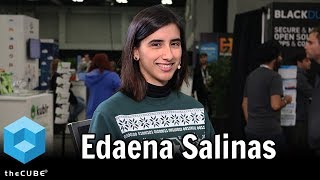
“Our goal is to bring everything we know from Google into the Kubernetes community,” said Chen Goldberg (pictured), director of engineering at Google. “There’s more to that than just bringing it to the open and creating a community. It’s also about culture and values.”
Goldberg stopped by the set of theCUBE, SiliconANGLE Media’s mobile livestreaming studio, during the KubeCon + CloudNativeCon event in Austin, Texas, and spoke with co-hosts John Furrier (@furrier) and Stu Miniman (@stu). They discussed the role of Google’s corporate philosophy in driving open-source projects, the importance of chief executive-level buy-in, keeping Kubernetes relevant across the enterprise, and the value of a robust partner ecosystem. (* Disclosure below.)
This week, theCUBE spotlights Chen Goldberg in our Women in Tech feature.
Empowerment makes a difference
Make no mistake about it. The companies holding hands inside the Kubernetes tent are fierce competitors. But the open-source nature of the container orchestration project has helped drive innovation and ideas for new business among those involved.
This is exactly the kind of empowerment that is an important ingredient in Google’s corporate philosophy. “This is really one of the core values on the engineering culture in Google,” Goldberg said. “Anyone can come up with a great idea.”
As the major players have shifted deployment strategies to Kubernetes, there has been a veritable fountain of new use cases, particularly over the course of the past year. Microsoft acquired Deis, a Kubernetes deployment platform company, and promptly installed its technology on Azure. In June, Oracle declared its support for Kubernetes as an element of its partnership with CoreOS. Amazon rolled out a managed service (Elastic Container Service for Kubernetes) to make it easier for enterprise clients to run Kubernetes on AWS. Even Docker announced a Kubernetes offering as a staging platform equivalent to its own container technology.
Implicit in this spate of activity during 2017 is that not only are engineers and developers raising the Kubernetes flag, but the C-suite has been more than willing to plant the pole. “I’ve been an engineering manager for many years, and in my mind the key to building a strong team is with the alignment of the leadership,” Goldberg said. “Once you have that, you can do whatever you want.”
If there is anything that IT administrators crave today it is consistency. They want to run applications in both private and public clouds with a minimum of hassle. Google’s engineers are mindful of catering to the needs of hybrid IT and, with the emergence of Kubernetes as a container orchestration standard, they are looking across the enterprise stack.
...
Watch the complete video interview below, and be sure to check out more of SiliconANGLE’s and theCUBE’s coverage of the KubeCon + CloudNativeCon event. (* Disclosure: Red Hat Inc. sponsored this segment of theCUBE. Neither Red Hat nor other sponsors have editorial control over content on theCUBE or SiliconANGLE.)
Forgot Password
Almost there!
We just sent you a verification email. Please verify your account to gain access to
KubeCon + CloudNativeCon 2017 | Austin. If you don’t think you received an email check your
spam folder.
Sign in to KubeCon + CloudNativeCon 2017 | Austin.
In order to sign in, enter the email address you used to registered for the event. Once completed, you will receive an email with a verification link. Open this link to automatically sign into the site.
Register For KubeCon + CloudNativeCon 2017 | Austin
Please fill out the information below. You will recieve an email with a verification link confirming your registration. Click the link to automatically sign into the site.
You’re almost there!
We just sent you a verification email. Please click the verification button in the email. Once your email address is verified, you will have full access to all event content for KubeCon + CloudNativeCon 2017 | Austin.
I want my badge and interests to be visible to all attendees.
Checking this box will display your presense on the attendees list, view your profile and allow other attendees to contact you via 1-1 chat. Read the Privacy Policy. At any time, you can choose to disable this preference.
Select your Interests!
add
Upload your photo
Uploading..
OR
Connect via Twitter
Connect via Linkedin
EDIT PASSWORD
Share
Forgot Password
Almost there!
We just sent you a verification email. Please verify your account to gain access to
KubeCon + CloudNativeCon 2017 | Austin. If you don’t think you received an email check your
spam folder.
Sign in to KubeCon + CloudNativeCon 2017 | Austin.
In order to sign in, enter the email address you used to registered for the event. Once completed, you will receive an email with a verification link. Open this link to automatically sign into the site.
Sign in to gain access to KubeCon + CloudNativeCon 2017 | Austin
Please sign in with LinkedIn to continue to KubeCon + CloudNativeCon 2017 | Austin. Signing in with LinkedIn ensures a professional environment.
Are you sure you want to remove access rights for this user?
Details
Manage Access
email address
Community Invitation
Chen Goldberg, Google | KubeCon 2017
Chen Goldberg joins CUBE hosts John Furrier and Stu Miniman live from KubeCon 2017 in Austin Texas
#KubeCon #theCUBE
https://siliconangle.com/2018/01/05/google-found-success-with-kubernetes-but-thats-only-part-of-the-story-kubecon-thecube-womenintech/
Google found success with Kubernetes, but that’s only part of the story
It’s often a common theme in the tech world that the rich get richer. Amazon.com Inc., an already successful online merchandiser, starts a cloud business (Amazon Web Service Inc.) that becomes an enterprise colossus. Apple Inc., a household name in personal computers, decides to enter the smartphone space and ends up poised to become the world’s first trillion-dollar company later this year.
Then there is Google LLC The search giant continues to dominate the ad revenue market thanks to a smart bet on YouTube with its acquisition in 2006. Google is projected to reap more than $40 billion in U.S. digital ad revenue with Facebook a distant second. And Google also gambled that containers could become an important part of the computing world when it began running them in production (under a project named Borg) in the early 2000s.
In 2015, Google released Kubernetes as an open-source endeavor in anticipation that information technology shops would be looking for more consistent ways to run applications and manage workloads. Since then, Kubernetes has grown to become an essential orchestration tool, with more than 70 percent of users relying on it for container management, according to a 451 Research survey.
Yet there is a sense from Google executives that Kubernetes represents only a small part of the cloud-native tale and the company has welcomed major technology players (such as Amazon, Oracle, Microsoft, Red Hat and VMware) into the Cloud Native Computing Foundation, which manages Kubernetes.
“Our goal is to bring everything we know from Google into the Kubernetes community,” said Chen Goldberg (pictured), director of engineering at Google. “There’s more to that than just bringing it to the open and creating a community. It’s also about culture and values.”
Goldberg stopped by the set of theCUBE, SiliconANGLE Media’s mobile livestreaming studio, during the KubeCon + CloudNativeCon event in Austin, Texas, and spoke with co-hosts John Furrier (@furrier) and Stu Miniman (@stu). They discussed the role of Google’s corporate philosophy in driving open-source projects, the importance of chief executive-level buy-in, keeping Kubernetes relevant across the enterprise, and the value of a robust partner ecosystem. (* Disclosure below.)
This week, theCUBE spotlights Chen Goldberg in our Women in Tech feature.
Empowerment makes a difference
Make no mistake about it. The companies holding hands inside the Kubernetes tent are fierce competitors. But the open-source nature of the container orchestration project has helped drive innovation and ideas for new business among those involved.
This is exactly the kind of empowerment that is an important ingredient in Google’s corporate philosophy. “This is really one of the core values on the engineering culture in Google,” Goldberg said. “Anyone can come up with a great idea.”
As the major players have shifted deployment strategies to Kubernetes, there has been a veritable fountain of new use cases, particularly over the course of the past year. Microsoft acquired Deis, a Kubernetes deployment platform company, and promptly installed its technology on Azure. In June, Oracle declared its support for Kubernetes as an element of its partnership with CoreOS. Amazon rolled out a managed service (Elastic Container Service for Kubernetes) to make it easier for enterprise clients to run Kubernetes on AWS. Even Docker announced a Kubernetes offering as a staging platform equivalent to its own container technology.
Implicit in this spate of activity during 2017 is that not only are engineers and developers raising the Kubernetes flag, but the C-suite has been more than willing to plant the pole. “I’ve been an engineering manager for many years, and in my mind the key to building a strong team is with the alignment of the leadership,” Goldberg said. “Once you have that, you can do whatever you want.”
If there is anything that IT administrators crave today it is consistency. They want to run applications in both private and public clouds with a minimum of hassle. Google’s engineers are mindful of catering to the needs of hybrid IT and, with the emergence of Kubernetes as a container orchestration standard, they are looking across the enterprise stack.
...
Watch the complete video interview below, and be sure to check out more of SiliconANGLE’s and theCUBE’s coverage of the KubeCon + CloudNativeCon event. (* Disclosure: Red Hat Inc. sponsored this segment of theCUBE. Neither Red Hat nor other sponsors have editorial control over content on theCUBE or SiliconANGLE.)