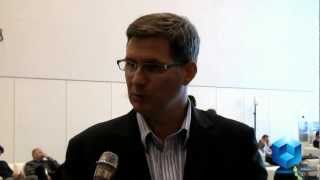
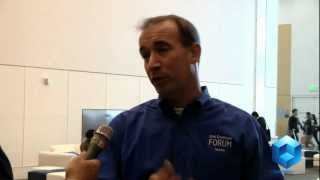
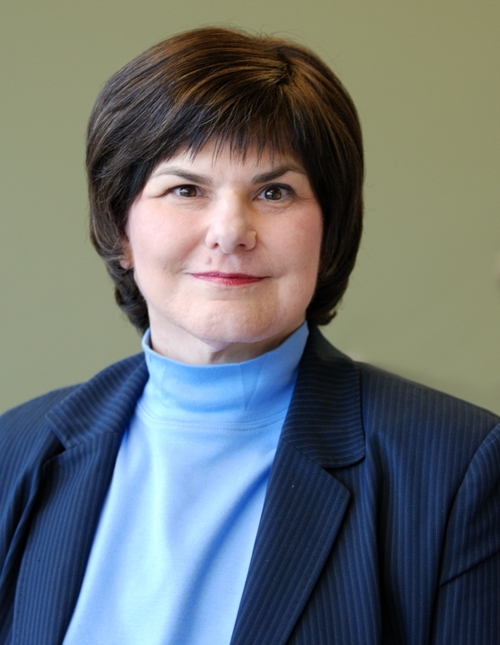
John Furrier speaking with Pauline Nist, GM Enterprise Software Stategy for Intel at Intel Developer Forum, 2012.
At Intel Developer Forum 2012 John Furrier stops to chat with Pauline Nist, the GM of Enterprise Software Strategy for Intel. The discussion began, touching on what's going on at IDF 2012 and her new role at Intel. New technology was the topic of choice at IDF, specifically on the server side. Nist states, "I've been in the datacenter group all this time... and we in the data center group have realized that software is becoming more and more important, whether software defined networks or software defined datacenters. This gave birth to a new group, the Datacenter Software Division which has a dual reporting relationship with Diane Bryant on the datacenter side and Renee James on the software and services side. The goal here is to bring more focus across the board to software in the datacenter and what it can do going forward. Furrier then switches gears to Software led Infrastructures asking Nist to elaborate on her definition of this new concept.
A Software led Infrastructure takes advantage of the fact that we have Zeons everywhere, in nearly 80% of the storage market. They're also moving into network market with Intel's ongoing fabric work. They've come to the realization that with IAM infrastructure everywhere, everything can now be done in software. It's a common platform that lets you perform software defined networking. In the long-term it will grant the ultimate flexibility when reallocating your data.
Nist continues, "The biggest thing about the new software infrastructure is a real strong commitment to open... Choice is the big word." To get to a truly versatile automated cloud environment you need to have set of open standards that are fundamental to the base of it. With this one can still have a variety of vendors but still leaves the consumer with the freedom to pick and choose at various tiers.
New trends and fears are happening around the software movement. In particular, monetization is the big issue. Enterprises are trying to answer the big question that is, How do I make money in open. Redhat is the only pure open player that has definitively shown they can be profitable, which is a large cause for concern. In enterprise, the cloud has changed the game, allowing enterprises to be more efficient. There will be an increase of demand for people who know cloud as well as additional people with the means to integrate them into the old and new portions of the enterprise.
The discussion landed on the topic of security. With GoDaddy's recent security issues in the news and the need for secure cloud technology becoming more prevalent, the demand for innovations in security has been increasing. We have a ways to go to deliver true security in a multi-tenant cloud environment, Nist explains.
Furrier wraps up by asking Nist what is her message to the partners around her software infrastructure. The message can be summed up by Diane Bryant's name change to The Datacenter Group respond's Nist. As the name change shows, were moving to a datacenter focus. "We no longer see ourselves as a component provider; we see ourselves as a datacenter provider. And now a lot of that is moving towards software definitions... We cannot run away from software anymore." Nist
believes it is intrinsic to delivering the ecosystem Intel wants. She is calling for a collaboration of partners including standards, solutions, and management tools in order to keep being very strong.
Forgot Password
Almost there!
We just sent you a verification email. Please verify your account to gain access to
Intel Developer Forum 2012 | San Francisco. If you don’t think you received an email check your
spam folder.
Sign in to Intel Developer Forum 2012 | San Francisco.
In order to sign in, enter the email address you used to registered for the event. Once completed, you will receive an email with a verification link. Open this link to automatically sign into the site.
Register For Intel Developer Forum 2012 | San Francisco
Please fill out the information below. You will recieve an email with a verification link confirming your registration. Click the link to automatically sign into the site.
You’re almost there!
We just sent you a verification email. Please click the verification button in the email. Once your email address is verified, you will have full access to all event content for Intel Developer Forum 2012 | San Francisco.
I want my badge and interests to be visible to all attendees.
Checking this box will display your presense on the attendees list, view your profile and allow other attendees to contact you via 1-1 chat. Read the Privacy Policy. At any time, you can choose to disable this preference.
Select your Interests!
add
Upload your photo
Uploading..
OR
Connect via Twitter
Connect via Linkedin
EDIT PASSWORD
Share
Forgot Password
Almost there!
We just sent you a verification email. Please verify your account to gain access to
Intel Developer Forum 2012 | San Francisco. If you don’t think you received an email check your
spam folder.
Sign in to Intel Developer Forum 2012 | San Francisco.
In order to sign in, enter the email address you used to registered for the event. Once completed, you will receive an email with a verification link. Open this link to automatically sign into the site.
Sign in to gain access to Intel Developer Forum 2012 | San Francisco
Please sign in with LinkedIn to continue to Intel Developer Forum 2012 | San Francisco. Signing in with LinkedIn ensures a professional environment.
Are you sure you want to remove access rights for this user?
Details
Manage Access
email address
Community Invitation
Pauline Nist - Intel Developer Forum 2012 - theCUBE
John Furrier speaking with Pauline Nist, GM Enterprise Software Stategy for Intel at Intel Developer Forum, 2012.
At Intel Developer Forum 2012 John Furrier stops to chat with Pauline Nist, the GM of Enterprise Software Strategy for Intel. The discussion began, touching on what's going on at IDF 2012 and her new role at Intel. New technology was the topic of choice at IDF, specifically on the server side. Nist states, "I've been in the datacenter group all this time... and we in the data center group have realized that software is becoming more and more important, whether software defined networks or software defined datacenters. This gave birth to a new group, the Datacenter Software Division which has a dual reporting relationship with Diane Bryant on the datacenter side and Renee James on the software and services side. The goal here is to bring more focus across the board to software in the datacenter and what it can do going forward. Furrier then switches gears to Software led Infrastructures asking Nist to elaborate on her definition of this new concept.
A Software led Infrastructure takes advantage of the fact that we have Zeons everywhere, in nearly 80% of the storage market. They're also moving into network market with Intel's ongoing fabric work. They've come to the realization that with IAM infrastructure everywhere, everything can now be done in software. It's a common platform that lets you perform software defined networking. In the long-term it will grant the ultimate flexibility when reallocating your data.
Nist continues, "The biggest thing about the new software infrastructure is a real strong commitment to open... Choice is the big word." To get to a truly versatile automated cloud environment you need to have set of open standards that are fundamental to the base of it. With this one can still have a variety of vendors but still leaves the consumer with the freedom to pick and choose at various tiers.
New trends and fears are happening around the software movement. In particular, monetization is the big issue. Enterprises are trying to answer the big question that is, How do I make money in open. Redhat is the only pure open player that has definitively shown they can be profitable, which is a large cause for concern. In enterprise, the cloud has changed the game, allowing enterprises to be more efficient. There will be an increase of demand for people who know cloud as well as additional people with the means to integrate them into the old and new portions of the enterprise.
The discussion landed on the topic of security. With GoDaddy's recent security issues in the news and the need for secure cloud technology becoming more prevalent, the demand for innovations in security has been increasing. We have a ways to go to deliver true security in a multi-tenant cloud environment, Nist explains.
Furrier wraps up by asking Nist what is her message to the partners around her software infrastructure. The message can be summed up by Diane Bryant's name change to The Datacenter Group respond's Nist. As the name change shows, were moving to a datacenter focus. "We no longer see ourselves as a component provider; we see ourselves as a datacenter provider. And now a lot of that is moving towards software definitions... We cannot run away from software anymore." Nist
believes it is intrinsic to delivering the ecosystem Intel wants. She is calling for a collaboration of partners including standards, solutions, and management tools in order to keep being very strong.