01. Srikant Kanthadai, Capgemini, visits #theCUBE!. (00:18)
02. Steve Jones, Capgemini, visits #theCUBE!. (00:35)
03. The Big Data Journey and the Current Trends. (00:45)
04. Data Trends Outside the US. (03:04)
05. Data Governance and Value in the Context of Big Data. (06:57)
06. Fail Fast Methodology and Horizontal Disruption. (12:37)
07. What Do Clients Understand as Data Asset?. (13:36)
08. From Data Swamp to Quality Data. (16:45)
09. How Capgemini Engages with the Customer. (18:42)
Track List created with http://www.vinjavideo.com.
--- ---
Context trumps raw data for quality | #infa16
by Nelson Williams | May 24, 2016
When it comes to business, data is the oil in the gears. It makes everything else run. However, a surprising number of businesses don’t know how to find the true value of their data. Either the company allows the data to fall into an unmanaged swamp or they curate perfect data without any meaning attached. Both are a peril of data without context.
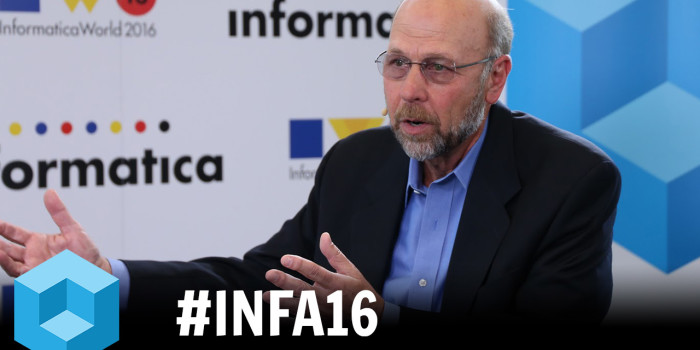
To shed some light on how data and context interact, John Furrier (@furrier) and Peter Burris (@plburris), cohosts of theCUBE, from the SiliconANGLE Media team, visited the Informatica World 2016 conference in San Francisco. There, they met with Srikant Kanthadai, global head of Data Management at Capgemini North America, Inc., and Steve Jones, global VP of Big Data at Capgemini.
Building on contextual quality
The discussion opened up with Kanthadai explaining that Big Data needs quality in the context built on top of the data itself. Bad data can turn good by bringing in the right context. It’s contextual quality companies need, not pure data quality, he said.
“The myth is that you don’t have a data swamp,” Jones said. He described how legacy hardware and processes could hold back a business from using its data properly. He mentioned a cultural difference where Europe, while going all-in on new technology, also took some time to think about where it wanted to get to and the right way to do it.
Defining data assets by outcomes
The ability to understand the totality of data within an organization is essentially zero, Jones said. In terms of valuing data as an individual piece, it’s based on what the company can do with it. “We’ve had 30 years trying to say it’s the data object that has value and that’s never, ever happened,” he said
The reality, Jones continued, is that today, how do you show the business the value of the pieces? When you demonstrate an outcome that shows the value of the data. “There are absolutely quantifiable outcomes,” he said.
Forgot Password
Almost there!
We just sent you a verification email. Please verify your account to gain access to
Informatica World 2016 | San Francisco. If you don’t think you received an email check your
spam folder.
Sign in to Informatica World 2016 | San Francisco.
In order to sign in, enter the email address you used to registered for the event. Once completed, you will receive an email with a verification link. Open this link to automatically sign into the site.
Register For Informatica World 2016 | San Francisco
Please fill out the information below. You will recieve an email with a verification link confirming your registration. Click the link to automatically sign into the site.
You’re almost there!
We just sent you a verification email. Please click the verification button in the email. Once your email address is verified, you will have full access to all event content for Informatica World 2016 | San Francisco.
I want my badge and interests to be visible to all attendees.
Checking this box will display your presense on the attendees list, view your profile and allow other attendees to contact you via 1-1 chat. Read the Privacy Policy. At any time, you can choose to disable this preference.
Select your Interests!
add
Upload your photo
Uploading..
OR
Connect via Twitter
Connect via Linkedin
EDIT PASSWORD
Share
Forgot Password
Almost there!
We just sent you a verification email. Please verify your account to gain access to
Informatica World 2016 | San Francisco. If you don’t think you received an email check your
spam folder.
Sign in to Informatica World 2016 | San Francisco.
In order to sign in, enter the email address you used to registered for the event. Once completed, you will receive an email with a verification link. Open this link to automatically sign into the site.
Sign in to gain access to Informatica World 2016 | San Francisco
Please sign in with LinkedIn to continue to Informatica World 2016 | San Francisco. Signing in with LinkedIn ensures a professional environment.
Are you sure you want to remove access rights for this user?
Details
Manage Access
email address
Community Invitation
Steve Jones & Srikant Kanthadai, Capgemini - #infa16 - #theCUBE
01. Srikant Kanthadai, Capgemini, visits #theCUBE!. (00:18)
02. Steve Jones, Capgemini, visits #theCUBE!. (00:35)
03. The Big Data Journey and the Current Trends. (00:45)
04. Data Trends Outside the US. (03:04)
05. Data Governance and Value in the Context of Big Data. (06:57)
06. Fail Fast Methodology and Horizontal Disruption. (12:37)
07. What Do Clients Understand as Data Asset?. (13:36)
08. From Data Swamp to Quality Data. (16:45)
09. How Capgemini Engages with the Customer. (18:42)
Track List created with http://www.vinjavideo.com.
--- ---
Context trumps raw data for quality | #infa16
by Nelson Williams | May 24, 2016
When it comes to business, data is the oil in the gears. It makes everything else run. However, a surprising number of businesses don’t know how to find the true value of their data. Either the company allows the data to fall into an unmanaged swamp or they curate perfect data without any meaning attached. Both are a peril of data without context.
To shed some light on how data and context interact, John Furrier (@furrier) and Peter Burris (@plburris), cohosts of theCUBE, from the SiliconANGLE Media team, visited the Informatica World 2016 conference in San Francisco. There, they met with Srikant Kanthadai, global head of Data Management at Capgemini North America, Inc., and Steve Jones, global VP of Big Data at Capgemini.
Building on contextual quality
The discussion opened up with Kanthadai explaining that Big Data needs quality in the context built on top of the data itself. Bad data can turn good by bringing in the right context. It’s contextual quality companies need, not pure data quality, he said.
“The myth is that you don’t have a data swamp,” Jones said. He described how legacy hardware and processes could hold back a business from using its data properly. He mentioned a cultural difference where Europe, while going all-in on new technology, also took some time to think about where it wanted to get to and the right way to do it.
Defining data assets by outcomes
The ability to understand the totality of data within an organization is essentially zero, Jones said. In terms of valuing data as an individual piece, it’s based on what the company can do with it. “We’ve had 30 years trying to say it’s the data object that has value and that’s never, ever happened,” he said
The reality, Jones continued, is that today, how do you show the business the value of the pieces? When you demonstrate an outcome that shows the value of the data. “There are absolutely quantifiable outcomes,” he said.