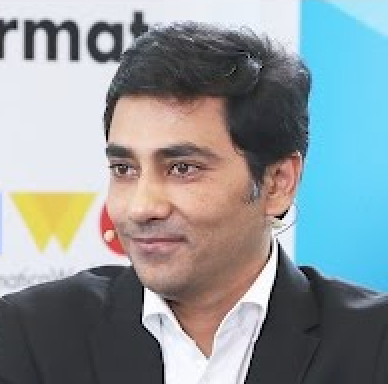
01. Ash Parikh, Informatica, visits #theCUBE!. (00:17)
02. The Data Landscape and Data Trends. (01:01)
03. What Makes Informatica a Modern Company. (02:19)
04. Challenges of Traditional Data Integration and Leveraging Hadoop. (04:51)
05. Top Customer Conversations at Informatica. (07:38)
06. Balancing Open Data with Compliance and Policy. (09:13)
07. Thinking Data Through From Capture to Consumption. (12:44)
08. How Informatica Differs from Stand-Alone Data Preparation Tools. (15:40)
09. Operationalization and Integration is the Key to Data Use. (17:18)
Track List created with http://www.vinjavideo.com.
--- ---
Profiling data into customer value | #infa16
by Gabriel Pesek | May 24, 2016
With the gathering this week for Informatica World 2016 in San Francisco, CA, data in its many forms is getting a close examination for ways to improve utility for enterprises and individuals.
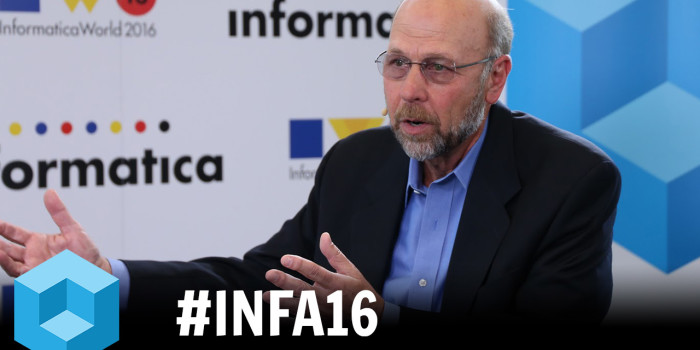
Ash Parikh, VP of Marketing, Enterprise Software – Big Data, IoT, Data Integration, Cloud and Data Security at Informatica Corp., sat down with John Furrier (@furrier) and Peter Burris (@plburris), cohosts of theCUBE, from the SiliconANGLE Media team, to discuss some of the ways in which Informatica is meeting trends in the data world, keeping up with the pace of Big Data and enabling value for customers.
Shared data
Early in the conversation, Parikh gave his evaluation of the Informatica event, with excitement over its growing reach. “What I really love about Informatica World is this: That isn’t this really becoming the de facto data management place? I mean, you have the hype, you have the discussions around what’s new in IoT. … But, truly, this is the place, this is the Mecca, where people who are involved in data management, or really see data as an asset, are truly converging.”
Beyond that convergence of data managers, Parikh saw the event as one that was allowing Informatica to develop its data approaches by listening to the desires of its customers and those of developers. These considerations were key to Informatica’s internal processing and prioritization, he said.
“The way we look at our technologies and solutions anytime we look at our new development, we always wear the hat of ‘how’s my existing customer going to reap benefits from this?’. So for example, Big Data: Is it a new paradigm, or am I going to introduce something completely different to people who’ve been doing something in a traditional manner? There’s never a right or wrong answer.”
Meeting data needs
With that internal development, Parikh noted, there was a thorough consideration of the actual implementation to which it would lead.
“[Data storage] evolves with a pragmatic way of approaching your business,” he said. “There’s a need for data warehouse; there’s a need for Big Data. You bring them both together, and you answer bigger questions. … Once I start going beyond an individual’s benefit, I start looking at the departmental need, and an enterprise’s need, and then I look at unification.”
And beyond that implementation, the meshing of data-management utilities adds further granularity to the proceedings.
“A data warehouse teaches me … about what widgets I sold in the past,” he stated. “Hadoop and Big Data … gives me answers to what [I can] sell my customer in the future. And this is really interesting, because if you’re a CEO of a company, wouldn’t you need answers to both [of] those questions? So you’re really talking about coexistence here. … It’s augmenting what you already have with some of these new-world concepts like Big Data and IoT, etc.”
While the rest of the interview covered topics including the leveraging of metadata, data preparation tools, crowd-sourced assets, and the many processes through which data can be processed to maximize its value, Parikh summed up the main challenges facing his company and other data specialists: “With data big or small, you still need to manage it,” he said. “That’s foundational to what we do. … I need to govern my data well; I need to master it. These things are not going to go away even if it’s the Big Data world.”
Forgot Password
Almost there!
We just sent you a verification email. Please verify your account to gain access to
Informatica World 2016 | San Francisco. If you don’t think you received an email check your
spam folder.
Sign in to Informatica World 2016 | San Francisco.
In order to sign in, enter the email address you used to registered for the event. Once completed, you will receive an email with a verification link. Open this link to automatically sign into the site.
Register For Informatica World 2016 | San Francisco
Please fill out the information below. You will recieve an email with a verification link confirming your registration. Click the link to automatically sign into the site.
You’re almost there!
We just sent you a verification email. Please click the verification button in the email. Once your email address is verified, you will have full access to all event content for Informatica World 2016 | San Francisco.
I want my badge and interests to be visible to all attendees.
Checking this box will display your presense on the attendees list, view your profile and allow other attendees to contact you via 1-1 chat. Read the Privacy Policy. At any time, you can choose to disable this preference.
Select your Interests!
add
Upload your photo
Uploading..
OR
Connect via Twitter
Connect via Linkedin
EDIT PASSWORD
Share
Forgot Password
Almost there!
We just sent you a verification email. Please verify your account to gain access to
Informatica World 2016 | San Francisco. If you don’t think you received an email check your
spam folder.
Sign in to Informatica World 2016 | San Francisco.
In order to sign in, enter the email address you used to registered for the event. Once completed, you will receive an email with a verification link. Open this link to automatically sign into the site.
Sign in to gain access to Informatica World 2016 | San Francisco
Please sign in with LinkedIn to continue to Informatica World 2016 | San Francisco. Signing in with LinkedIn ensures a professional environment.
Are you sure you want to remove access rights for this user?
Details
Manage Access
email address
Community Invitation
Ash Parikh, Informatica - #infa16 - #theCUBE
01. Ash Parikh, Informatica, visits #theCUBE!. (00:17)
02. The Data Landscape and Data Trends. (01:01)
03. What Makes Informatica a Modern Company. (02:19)
04. Challenges of Traditional Data Integration and Leveraging Hadoop. (04:51)
05. Top Customer Conversations at Informatica. (07:38)
06. Balancing Open Data with Compliance and Policy. (09:13)
07. Thinking Data Through From Capture to Consumption. (12:44)
08. How Informatica Differs from Stand-Alone Data Preparation Tools. (15:40)
09. Operationalization and Integration is the Key to Data Use. (17:18)
Track List created with http://www.vinjavideo.com.
--- ---
Profiling data into customer value | #infa16
by Gabriel Pesek | May 24, 2016
With the gathering this week for Informatica World 2016 in San Francisco, CA, data in its many forms is getting a close examination for ways to improve utility for enterprises and individuals.
Ash Parikh, VP of Marketing, Enterprise Software – Big Data, IoT, Data Integration, Cloud and Data Security at Informatica Corp., sat down with John Furrier (@furrier) and Peter Burris (@plburris), cohosts of theCUBE, from the SiliconANGLE Media team, to discuss some of the ways in which Informatica is meeting trends in the data world, keeping up with the pace of Big Data and enabling value for customers.
Shared data
Early in the conversation, Parikh gave his evaluation of the Informatica event, with excitement over its growing reach. “What I really love about Informatica World is this: That isn’t this really becoming the de facto data management place? I mean, you have the hype, you have the discussions around what’s new in IoT. … But, truly, this is the place, this is the Mecca, where people who are involved in data management, or really see data as an asset, are truly converging.”
Beyond that convergence of data managers, Parikh saw the event as one that was allowing Informatica to develop its data approaches by listening to the desires of its customers and those of developers. These considerations were key to Informatica’s internal processing and prioritization, he said.
“The way we look at our technologies and solutions anytime we look at our new development, we always wear the hat of ‘how’s my existing customer going to reap benefits from this?’. So for example, Big Data: Is it a new paradigm, or am I going to introduce something completely different to people who’ve been doing something in a traditional manner? There’s never a right or wrong answer.”
Meeting data needs
With that internal development, Parikh noted, there was a thorough consideration of the actual implementation to which it would lead.
“[Data storage] evolves with a pragmatic way of approaching your business,” he said. “There’s a need for data warehouse; there’s a need for Big Data. You bring them both together, and you answer bigger questions. … Once I start going beyond an individual’s benefit, I start looking at the departmental need, and an enterprise’s need, and then I look at unification.”
And beyond that implementation, the meshing of data-management utilities adds further granularity to the proceedings.
“A data warehouse teaches me … about what widgets I sold in the past,” he stated. “Hadoop and Big Data … gives me answers to what [I can] sell my customer in the future. And this is really interesting, because if you’re a CEO of a company, wouldn’t you need answers to both [of] those questions? So you’re really talking about coexistence here. … It’s augmenting what you already have with some of these new-world concepts like Big Data and IoT, etc.”
While the rest of the interview covered topics including the leveraging of metadata, data preparation tools, crowd-sourced assets, and the many processes through which data can be processed to maximize its value, Parikh summed up the main challenges facing his company and other data specialists: “With data big or small, you still need to manage it,” he said. “That’s foundational to what we do. … I need to govern my data well; I need to master it. These things are not going to go away even if it’s the Big Data world.”