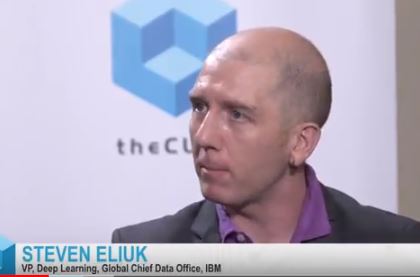
Chris Bannocks, Group Chief Data Officer, ING & Steven Eliuk, Vice President of Deep Learning, Global Chief Data Office, IBM.
#IBMCDO #theCUBE #IBM
https://siliconangle.com/2018/11/20/data-governance-does-more-than-thwart-gdpr-police-a-lot-more-ibmcdo/
Data governance does more than thwart GDPR police — a lot more
Dread of data misuse has spread through all kinds of organizations since the General Data Protection Regulation went live in May. The legislation hasn’t done much to lighten the already drab image of data governance in people’s minds. To get all departments on-board governance missions, companies might lay down the sticks and try a carrot for a change.
“Governance is just a horrible word,” said Chris Bannocks (pictured, left), group chief data officer at ING Bank N.V. “People have really negative connotations associated with it.”
It begins with metadata, or the data about an organization’s data. It isn’t a word that generally excites business people — they may not even know what it means. When they found out it involves applying thousands of labels to tons of data, they might not want to hear anymore. This is where leaders in the organization must explain how much there is to gain from properly governed data, according to Bannocks.
Bannocks and Steven Eliuk (pictured, right), vice president of deep learning, Global Chief Data Office, at IBM, spoke with Rebecca Knight (@knightrm) and Paul Gillin (@pgillin), co-hosts of theCUBE, SiliconANGLE Media’s mobile livestreaming studio, during the IBM CDO Summit in Boston, Massachusetts. They discussed tools and tricks that can lighten a company’s data-governance load. (* Disclosure below.)
‘Do it or else’ is maybe not the best data-governance project name
Data governance isn’t as scary as it sounds. It just means knowing what and where data is, who’s responsible for fixing it if something goes wrong, and being able to measure whether it’s right or wrong in the first place, according to Bannocks.
What many are justifiably scared of, though, is the sheer volume of data that needs to be governed in a large organization. This is where machine-learning tools — like IBM’s automatic metadata generation technology — can help.
Machine learning can help pick out outliers and exceptions so people don’t have to comb through all data, outliers, and exceptions. “You can’t do this across 30,000 elements in any meaningful way or way that really makes sense from a financial perspective [without ML],” Bannocks said.
When people’s jobs get easier through well-governed data, they start to appreciate it more, according to Eliuk. “We’ve seen process times go from 90 days down to a couple days. That’s a huge reduction,” he said.
Aside from reduction in process time, all-around better analytics and business decisions come out of governance.
“We’re talking about quality, and quality means better decisions, and that’s actually all governance is,” Bannocks concluded.
Watch the complete video interview below, and be sure to check out more of SiliconANGLE’s and theCUBE’s coverage of the IBM CDO Summit. (* Disclosure: TheCUBE is a paid media partner for the IBM CDO Summit. Neither IBM, the event sponsor, nor other sponsors have editorial control over content on theCUBE or SiliconANGLE.)
Forgot Password
Almost there!
We just sent you a verification email. Please verify your account to gain access to
IBM Chief Data Officer (CDO) Summit Fall 2018 | Boston . If you don’t think you received an email check your
spam folder.
Sign in to IBM Chief Data Officer (CDO) Summit Fall 2018 | Boston .
In order to sign in, enter the email address you used to registered for the event. Once completed, you will receive an email with a verification link. Open this link to automatically sign into the site.
Register For IBM Chief Data Officer (CDO) Summit Fall 2018 | Boston
Please fill out the information below. You will recieve an email with a verification link confirming your registration. Click the link to automatically sign into the site.
You’re almost there!
We just sent you a verification email. Please click the verification button in the email. Once your email address is verified, you will have full access to all event content for IBM Chief Data Officer (CDO) Summit Fall 2018 | Boston .
I want my badge and interests to be visible to all attendees.
Checking this box will display your presense on the attendees list, view your profile and allow other attendees to contact you via 1-1 chat. Read the Privacy Policy. At any time, you can choose to disable this preference.
Select your Interests!
add
Upload your photo
Uploading..
OR
Connect via Twitter
Connect via Linkedin
EDIT PASSWORD
Share
Forgot Password
Almost there!
We just sent you a verification email. Please verify your account to gain access to
IBM Chief Data Officer (CDO) Summit Fall 2018 | Boston . If you don’t think you received an email check your
spam folder.
Sign in to IBM Chief Data Officer (CDO) Summit Fall 2018 | Boston .
In order to sign in, enter the email address you used to registered for the event. Once completed, you will receive an email with a verification link. Open this link to automatically sign into the site.
Sign in to gain access to IBM Chief Data Officer (CDO) Summit Fall 2018 | Boston
Please sign in with LinkedIn to continue to IBM Chief Data Officer (CDO) Summit Fall 2018 | Boston . Signing in with LinkedIn ensures a professional environment.
Are you sure you want to remove access rights for this user?
Details
Manage Access
email address
Community Invitation
Chris Bannocks, ING & Steven Eliuk, IBM | IBM CDO Fall Summit 2018
Chris Bannocks, Group Chief Data Officer, ING & Steven Eliuk, Vice President of Deep Learning, Global Chief Data Office, IBM.
#IBMCDO #theCUBE #IBM
https://siliconangle.com/2018/11/20/data-governance-does-more-than-thwart-gdpr-police-a-lot-more-ibmcdo/
Data governance does more than thwart GDPR police — a lot more
Dread of data misuse has spread through all kinds of organizations since the General Data Protection Regulation went live in May. The legislation hasn’t done much to lighten the already drab image of data governance in people’s minds. To get all departments on-board governance missions, companies might lay down the sticks and try a carrot for a change.
“Governance is just a horrible word,” said Chris Bannocks (pictured, left), group chief data officer at ING Bank N.V. “People have really negative connotations associated with it.”
It begins with metadata, or the data about an organization’s data. It isn’t a word that generally excites business people — they may not even know what it means. When they found out it involves applying thousands of labels to tons of data, they might not want to hear anymore. This is where leaders in the organization must explain how much there is to gain from properly governed data, according to Bannocks.
Bannocks and Steven Eliuk (pictured, right), vice president of deep learning, Global Chief Data Office, at IBM, spoke with Rebecca Knight (@knightrm) and Paul Gillin (@pgillin), co-hosts of theCUBE, SiliconANGLE Media’s mobile livestreaming studio, during the IBM CDO Summit in Boston, Massachusetts. They discussed tools and tricks that can lighten a company’s data-governance load. (* Disclosure below.)
‘Do it or else’ is maybe not the best data-governance project name
Data governance isn’t as scary as it sounds. It just means knowing what and where data is, who’s responsible for fixing it if something goes wrong, and being able to measure whether it’s right or wrong in the first place, according to Bannocks.
What many are justifiably scared of, though, is the sheer volume of data that needs to be governed in a large organization. This is where machine-learning tools — like IBM’s automatic metadata generation technology — can help.
Machine learning can help pick out outliers and exceptions so people don’t have to comb through all data, outliers, and exceptions. “You can’t do this across 30,000 elements in any meaningful way or way that really makes sense from a financial perspective [without ML],” Bannocks said.
When people’s jobs get easier through well-governed data, they start to appreciate it more, according to Eliuk. “We’ve seen process times go from 90 days down to a couple days. That’s a huge reduction,” he said.
Aside from reduction in process time, all-around better analytics and business decisions come out of governance.
“We’re talking about quality, and quality means better decisions, and that’s actually all governance is,” Bannocks concluded.
Watch the complete video interview below, and be sure to check out more of SiliconANGLE’s and theCUBE’s coverage of the IBM CDO Summit. (* Disclosure: TheCUBE is a paid media partner for the IBM CDO Summit. Neither IBM, the event sponsor, nor other sponsors have editorial control over content on theCUBE or SiliconANGLE.)