John Thomas, Distinguished Engineer, Director, IBM, sits down with Rebecca Knight & Paul Gillan
#IBMCDO #JohnThomas #theCUBE
https://siliconangle.com/2018/11/15/practical-ai-playbook-less-ocean-boiling-more-use-cases-ibmcdo/
Practical AI playbook: Less ocean boiling, more use cases
A few years ago, big-data hype resounded through the tech industry, even as many companies frankly didn’t get it. They had data lakes, but few were fishing anything valuable from them. Then artificial intelligence came along promising to finally drive usable insights. But many remain without a practical playbook; do they throw random AI tools at data and wait for it to go kaboom with insights?
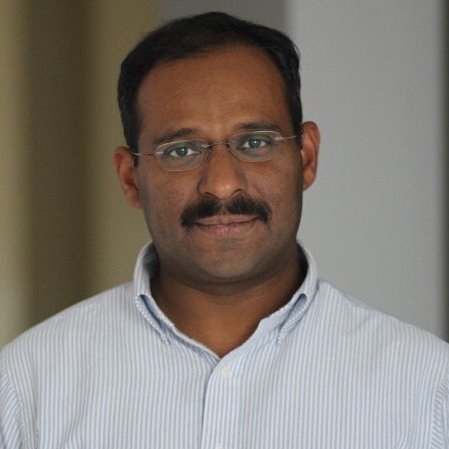
“In my experience, this ‘Oh, I’m going to transform my business in one big boil-the-ocean exercise’ does not work,” said John Thomas (pictured), distinguished engineer and director, analytics, at IBM Corp.
The hype around AI may have inflated people’s sense of what it could accomplish. To be sure, AI is potent and can make a huge difference in how people work and how businesses serve customers and earn revenue, etc. But at this stage, people should take a bite at a time to gauge where in their business AI might be useful, according to Thomas.
“I think we are past the hype cycle, and people are looking at, ‘how do I implement successful use cases?'” Thomas stated.
Thomas spoke with Rebecca Knight (@knightrm) and Paul Gillin (@pgillin), co-hosts of theCUBE, SiliconANGLE Media’s mobile livestreaming studio, during the IBM CDO Summit in Boston, Massachusetts. They discussed practical AI in the enterprise and the idea of AI governance. (* Disclosure below.)
AI governance
Wading into a sea of data and working backward toward a use case is a good way to waste a ton of time. Instead, start with a bounded use case, Thomas suggested.
“Once you have a clear understanding of the use case and success metrics for the use case, do you have the data to support that use case?” he asked.
Companies might possess a portion of the needed data but need to acquire third-party or unstructured data from outside the organization. Once they have the data, they have to ask if an algorithm is properly trained to extract accurate insights. IBM is investing in “AI governance,” which vets AI and machine-learning algorithms for bias.
“We have got actual mechanisms in place that IBM research is developing to look at bias detection,” Thomas said. One is the open-source Python library called AI Fairness 360 — a set of “fairness metrics” for data sets and models, as well as explanations for metrics and algorithms that mitigate bias.
Watch the complete video interview below, and be sure to check out more of SiliconANGLE’s and theCUBE’s coverage of the IBM CDO Summit. (* Disclosure: TheCUBE is a paid media partner for the IBM CDO Summit. Neither IBM, the event sponsor, nor other sponsors have editorial control over content on theCUBE or SiliconANGLE.)
Forgot Password
Almost there!
We just sent you a verification email. Please verify your account to gain access to
IBM Chief Data Officer (CDO) Summit Fall 2018 | Boston . If you don’t think you received an email check your
spam folder.
Sign in to IBM Chief Data Officer (CDO) Summit Fall 2018 | Boston .
In order to sign in, enter the email address you used to registered for the event. Once completed, you will receive an email with a verification link. Open this link to automatically sign into the site.
Register For IBM Chief Data Officer (CDO) Summit Fall 2018 | Boston
Please fill out the information below. You will recieve an email with a verification link confirming your registration. Click the link to automatically sign into the site.
You’re almost there!
We just sent you a verification email. Please click the verification button in the email. Once your email address is verified, you will have full access to all event content for IBM Chief Data Officer (CDO) Summit Fall 2018 | Boston .
I want my badge and interests to be visible to all attendees.
Checking this box will display your presense on the attendees list, view your profile and allow other attendees to contact you via 1-1 chat. Read the Privacy Policy. At any time, you can choose to disable this preference.
Select your Interests!
add
Upload your photo
Uploading..
OR
Connect via Twitter
Connect via Linkedin
EDIT PASSWORD
Share
Forgot Password
Almost there!
We just sent you a verification email. Please verify your account to gain access to
IBM Chief Data Officer (CDO) Summit Fall 2018 | Boston . If you don’t think you received an email check your
spam folder.
Sign in to IBM Chief Data Officer (CDO) Summit Fall 2018 | Boston .
In order to sign in, enter the email address you used to registered for the event. Once completed, you will receive an email with a verification link. Open this link to automatically sign into the site.
Sign in to gain access to IBM Chief Data Officer (CDO) Summit Fall 2018 | Boston
Please sign in with LinkedIn to continue to IBM Chief Data Officer (CDO) Summit Fall 2018 | Boston . Signing in with LinkedIn ensures a professional environment.
Are you sure you want to remove access rights for this user?
Details
Manage Access
email address
Community Invitation
John Thomas, IBM | IBM CDO Fall Summit 2018
John Thomas, Distinguished Engineer, Director, IBM, sits down with Rebecca Knight & Paul Gillan
#IBMCDO #JohnThomas #theCUBE
https://siliconangle.com/2018/11/15/practical-ai-playbook-less-ocean-boiling-more-use-cases-ibmcdo/
Practical AI playbook: Less ocean boiling, more use cases
A few years ago, big-data hype resounded through the tech industry, even as many companies frankly didn’t get it. They had data lakes, but few were fishing anything valuable from them. Then artificial intelligence came along promising to finally drive usable insights. But many remain without a practical playbook; do they throw random AI tools at data and wait for it to go kaboom with insights?
“In my experience, this ‘Oh, I’m going to transform my business in one big boil-the-ocean exercise’ does not work,” said John Thomas (pictured), distinguished engineer and director, analytics, at IBM Corp.
The hype around AI may have inflated people’s sense of what it could accomplish. To be sure, AI is potent and can make a huge difference in how people work and how businesses serve customers and earn revenue, etc. But at this stage, people should take a bite at a time to gauge where in their business AI might be useful, according to Thomas.
“I think we are past the hype cycle, and people are looking at, ‘how do I implement successful use cases?'” Thomas stated.
Thomas spoke with Rebecca Knight (@knightrm) and Paul Gillin (@pgillin), co-hosts of theCUBE, SiliconANGLE Media’s mobile livestreaming studio, during the IBM CDO Summit in Boston, Massachusetts. They discussed practical AI in the enterprise and the idea of AI governance. (* Disclosure below.)
AI governance
Wading into a sea of data and working backward toward a use case is a good way to waste a ton of time. Instead, start with a bounded use case, Thomas suggested.
“Once you have a clear understanding of the use case and success metrics for the use case, do you have the data to support that use case?” he asked.
Companies might possess a portion of the needed data but need to acquire third-party or unstructured data from outside the organization. Once they have the data, they have to ask if an algorithm is properly trained to extract accurate insights. IBM is investing in “AI governance,” which vets AI and machine-learning algorithms for bias.
“We have got actual mechanisms in place that IBM research is developing to look at bias detection,” Thomas said. One is the open-source Python library called AI Fairness 360 — a set of “fairness metrics” for data sets and models, as well as explanations for metrics and algorithms that mitigate bias.
Watch the complete video interview below, and be sure to check out more of SiliconANGLE’s and theCUBE’s coverage of the IBM CDO Summit. (* Disclosure: TheCUBE is a paid media partner for the IBM CDO Summit. Neither IBM, the event sponsor, nor other sponsors have editorial control over content on theCUBE or SiliconANGLE.)