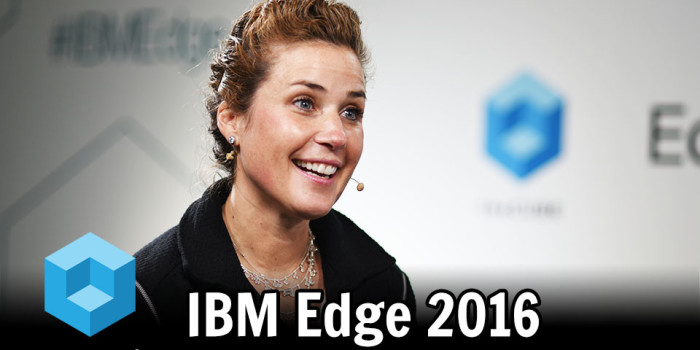
01. Jamie Thomas, IBM Systems, Visits #theCUBE!. (00:20)
02. Give Us The Update On Your Role. (00:30)
03. What's Happening In The World Of R&D. (01:30)
04. Discuss The Idea That One Company Can't Do It All. (03:03)
05. Is It Prevelant That There's A Lot Of Innovation Going On In Micropotesis. (05:45)
06. Unpack The Power In The Cloud. (07:20)
07. What Are The Outcomes For Your Business. (08:50)
08. What Are The Fundamentals Of The Strategy. (09:32)
09. How Is Cognitive In Cloud Affecting R&D. (10:37)
10. How Does IBM Look At The Problem Of Data Storage In Different Places. (11:33)
11. Talk About How Network Has Changed Your Thinking. (14:47)
12. Giving A Shoutout To Blockchain. (16:40)
13. Thoughts On Edge So Far. (21:20)
Track List created with http://www.vinjavideo.com.
--- ---
.How IBM approaches its data strategy for modern workloads | #IBMEdge
by Timothy Walden | Sep 20, 2016
With technology making advances in leaps and bounds, many companies are doing their best to stay ahead of the curve. IBM has a defined plan for its future and has the best minds working around strategy and development.
Jamie Thomas, GM of Strategy and Development at IBM Systems, talked with Dave Vellante (@dvellante) and Stu Miniman (@stu), cohosts of theCUBE, from the SiliconANGLE Media team, during IBM Edge 2016 about IBM’s data strategy.
Collaboration
One of the principles for IBM’s strategy and development department is collaboration, according to Thomas. It’s seen as a vital part of their work process and helps drive “the ability to constantly innovate and change business models,” said Thomas.
IBM’s collaboration with partners and clients has allowed it to create innovative solutions to infrastructure and deliver systems that are creative and “commercially viable for modern workloads,” Thomas stated.
Be open to change
The digital revolution is igniting a change in technology at a pace that can be difficult for businesses to maintain. Everything is about “the new age workload,” said Thomas. IBM’s OpenPOWER architecture delivers a product that not only keeps up with the market but outpaces it, according to Thomas.
IBM’s teams are also encouraged to embrace change. They are always “adopting new ways to develop and we move at a different speed with quality,” said Thomas. IBM delivers a flexible product that gives clients ample agility, he pointed out.
Strong Ecosystems
Another pillar of IBM’s strategy is creating and maintaining a strong ecosystem. Part of doing that meant creating a viable and effective product for the cloud. Its OpenPOWER system “allows people to take advantage of machines that aren’t on premise,” said Thomas, adding that IBM provides an effective processing power for sifting through and managing data.
The IBM ecosystem also revolves around having a strong supply chain. It has partnered with other companies and fine-tuned itsprocess, according to Thomas.
IBM’s strategy for tackling technology of the future starts with managing data today. It works to deliver products that allow for “purchasing flexibility when purchasing infrastructure,” said Thomas.
Forgot Password
Almost there!
We just sent you a verification email. Please verify your account to gain access to
IBM Edge 2016 | Las Vegas. If you don’t think you received an email check your
spam folder.
In order to sign in, enter the email address you used to registered for the event. Once completed, you will receive an email with a verification link. Open this link to automatically sign into the site.
Register For IBM Edge 2016 | Las Vegas
Please fill out the information below. You will recieve an email with a verification link confirming your registration. Click the link to automatically sign into the site.
You’re almost there!
We just sent you a verification email. Please click the verification button in the email. Once your email address is verified, you will have full access to all event content for IBM Edge 2016 | Las Vegas.
I want my badge and interests to be visible to all attendees.
Checking this box will display your presense on the attendees list, view your profile and allow other attendees to contact you via 1-1 chat. Read the Privacy Policy. At any time, you can choose to disable this preference.
Select your Interests!
add
Upload your photo
Uploading..
OR
Connect via Twitter
Connect via Linkedin
EDIT PASSWORD
Share
Forgot Password
Almost there!
We just sent you a verification email. Please verify your account to gain access to
IBM Edge 2016 | Las Vegas. If you don’t think you received an email check your
spam folder.
In order to sign in, enter the email address you used to registered for the event. Once completed, you will receive an email with a verification link. Open this link to automatically sign into the site.
Sign in to gain access to IBM Edge 2016 | Las Vegas
Please sign in with LinkedIn to continue to IBM Edge 2016 | Las Vegas. Signing in with LinkedIn ensures a professional environment.
Are you sure you want to remove access rights for this user?
Details
Manage Access
email address
Community Invitation
Jamie Thomas, IBM Systems - #IBMEdge - #theCUBE
01. Jamie Thomas, IBM Systems, Visits #theCUBE!. (00:20)
02. Give Us The Update On Your Role. (00:30)
03. What's Happening In The World Of R&D. (01:30)
04. Discuss The Idea That One Company Can't Do It All. (03:03)
05. Is It Prevelant That There's A Lot Of Innovation Going On In Micropotesis. (05:45)
06. Unpack The Power In The Cloud. (07:20)
07. What Are The Outcomes For Your Business. (08:50)
08. What Are The Fundamentals Of The Strategy. (09:32)
09. How Is Cognitive In Cloud Affecting R&D. (10:37)
10. How Does IBM Look At The Problem Of Data Storage In Different Places. (11:33)
11. Talk About How Network Has Changed Your Thinking. (14:47)
12. Giving A Shoutout To Blockchain. (16:40)
13. Thoughts On Edge So Far. (21:20)
Track List created with http://www.vinjavideo.com.
--- ---
.How IBM approaches its data strategy for modern workloads | #IBMEdge
by Timothy Walden | Sep 20, 2016
With technology making advances in leaps and bounds, many companies are doing their best to stay ahead of the curve. IBM has a defined plan for its future and has the best minds working around strategy and development.
Jamie Thomas, GM of Strategy and Development at IBM Systems, talked with Dave Vellante (@dvellante) and Stu Miniman (@stu), cohosts of theCUBE, from the SiliconANGLE Media team, during IBM Edge 2016 about IBM’s data strategy.
Collaboration
One of the principles for IBM’s strategy and development department is collaboration, according to Thomas. It’s seen as a vital part of their work process and helps drive “the ability to constantly innovate and change business models,” said Thomas.
IBM’s collaboration with partners and clients has allowed it to create innovative solutions to infrastructure and deliver systems that are creative and “commercially viable for modern workloads,” Thomas stated.
Be open to change
The digital revolution is igniting a change in technology at a pace that can be difficult for businesses to maintain. Everything is about “the new age workload,” said Thomas. IBM’s OpenPOWER architecture delivers a product that not only keeps up with the market but outpaces it, according to Thomas.
IBM’s teams are also encouraged to embrace change. They are always “adopting new ways to develop and we move at a different speed with quality,” said Thomas. IBM delivers a flexible product that gives clients ample agility, he pointed out.
Strong Ecosystems
Another pillar of IBM’s strategy is creating and maintaining a strong ecosystem. Part of doing that meant creating a viable and effective product for the cloud. Its OpenPOWER system “allows people to take advantage of machines that aren’t on premise,” said Thomas, adding that IBM provides an effective processing power for sifting through and managing data.
The IBM ecosystem also revolves around having a strong supply chain. It has partnered with other companies and fine-tuned itsprocess, according to Thomas.
IBM’s strategy for tackling technology of the future starts with managing data today. It works to deliver products that allow for “purchasing flexibility when purchasing infrastructure,” said Thomas.