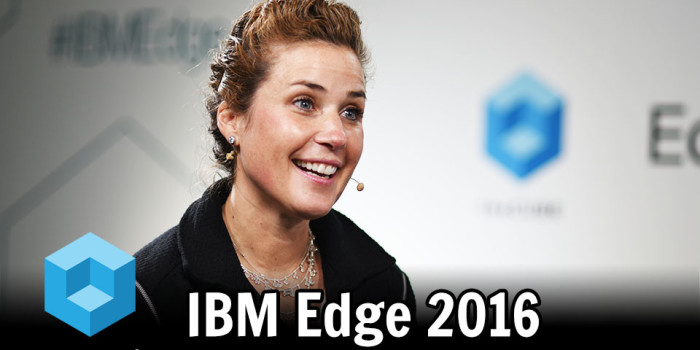
01. Donna Dillenberger, IBM, visits #theCUBE!. (00:18)
02. IBM OpenSource Projects and the Importance of OpenSource to IBM. (00:50)
03. BitCoin and the Evolution to Blockchain Protocol. (02:10)
04. Characteristics of Blockchain: Unhackable?. (04:57)
05. The IBM Business Impact of Blockchain. (07:31)
06. Distributive Architectures Spreading Throughout the Industry. (08:42)
07. The Future of the Hyperscale Players (All Roads Lead to Open Source). (11:02)
08. Companies Contributing to HyperLedger. (13:04)
09. IBM Security, the FIPS Protocol and Zero Knowledge Proof. (14:23)
Track List created with http://www.vinjavideo.com.
--- ---
How IBM mixes analytics with blockchain to secure IoT systems | #IBMEdge
by Nelson Williams | Sep 20, 2016
In business, there is a necessary element of trust. How does a company know its supplier is providing the right goods? What about invoices being received and paid? In this Internet Age, how does a company know the real identity of the person with whom they’re conversing? These are all questions of trust, and the easiest way to be sure of that trust is to have verifiable, corroborated information. Blockchain technologies provide that information.
To learn more about the effects of the blockchain, Dave Vellante (@dvellante) and Stu Miniman (@stu), cohosts of theCUBE, from the SiliconANGLE Media team, spoke to Donna Dillenberger, IBM fellow, Watson Research Center, at IBM, at the IBM Edge 2016 conference in Las Vegas.
Dawn of the Hyperledger Project
The conversation started with an overview of the blockchain concept. Dillenberger explained that the blockchain started with Bitcoin and the need for a protocol that can run on distributed computers. This distributed protocol is the blockchain, and it can be used to record many things just like an accounting ledger. Because the information is verified across a distributed system, it’s very hard to alter or fake records.
Dillenberger pointed out that IBM’s blockchain is different from Bitcoin’s, in part because it does not share the latter’s weaknesses. This new blockchain, called the Hyperledger, provides a flexibility so only the participants of a transaction are involved in verifying that exchange. This level of accountability reduces disputes and builds better relationships with partners and suppliers.
Adding analytics and the Internet of Things
The Hyperledger blockchain does not stand alone. Dillenberger mentioned how IBM can apply analytics to the information, allowing them to find many patterns. Meanwhile, the blockchain itself can be used to verify and corroborate that information. This combines very well with the growing Internet of Things. “It’s like baking; you have all these ingredients and when you put them together you get a great cake,” she said.
RELATED: How one global retail company leverages talent science data | #Inforum16
The most important question, though, is one of identity. Dillenberger stated that in the industry, the current way of proving identity is through multifactor authentication. If that information is on the blockchain, systems can check against the blockchain itself. This means these systems won’t need to hold any of the user’s security information themselves.
Forgot Password
Almost there!
We just sent you a verification email. Please verify your account to gain access to
IBM Edge 2016 | Las Vegas. If you don’t think you received an email check your
spam folder.
In order to sign in, enter the email address you used to registered for the event. Once completed, you will receive an email with a verification link. Open this link to automatically sign into the site.
Register For IBM Edge 2016 | Las Vegas
Please fill out the information below. You will recieve an email with a verification link confirming your registration. Click the link to automatically sign into the site.
You’re almost there!
We just sent you a verification email. Please click the verification button in the email. Once your email address is verified, you will have full access to all event content for IBM Edge 2016 | Las Vegas.
I want my badge and interests to be visible to all attendees.
Checking this box will display your presense on the attendees list, view your profile and allow other attendees to contact you via 1-1 chat. Read the Privacy Policy. At any time, you can choose to disable this preference.
Select your Interests!
add
Upload your photo
Uploading..
OR
Connect via Twitter
Connect via Linkedin
EDIT PASSWORD
Share
Forgot Password
Almost there!
We just sent you a verification email. Please verify your account to gain access to
IBM Edge 2016 | Las Vegas. If you don’t think you received an email check your
spam folder.
In order to sign in, enter the email address you used to registered for the event. Once completed, you will receive an email with a verification link. Open this link to automatically sign into the site.
Sign in to gain access to IBM Edge 2016 | Las Vegas
Please sign in with LinkedIn to continue to IBM Edge 2016 | Las Vegas. Signing in with LinkedIn ensures a professional environment.
Are you sure you want to remove access rights for this user?
Details
Manage Access
email address
Community Invitation
Donna Dillenberger, IBM - #IBMEdge - #theCUBE
01. Donna Dillenberger, IBM, visits #theCUBE!. (00:18)
02. IBM OpenSource Projects and the Importance of OpenSource to IBM. (00:50)
03. BitCoin and the Evolution to Blockchain Protocol. (02:10)
04. Characteristics of Blockchain: Unhackable?. (04:57)
05. The IBM Business Impact of Blockchain. (07:31)
06. Distributive Architectures Spreading Throughout the Industry. (08:42)
07. The Future of the Hyperscale Players (All Roads Lead to Open Source). (11:02)
08. Companies Contributing to HyperLedger. (13:04)
09. IBM Security, the FIPS Protocol and Zero Knowledge Proof. (14:23)
Track List created with http://www.vinjavideo.com.
--- ---
How IBM mixes analytics with blockchain to secure IoT systems | #IBMEdge
by Nelson Williams | Sep 20, 2016
In business, there is a necessary element of trust. How does a company know its supplier is providing the right goods? What about invoices being received and paid? In this Internet Age, how does a company know the real identity of the person with whom they’re conversing? These are all questions of trust, and the easiest way to be sure of that trust is to have verifiable, corroborated information. Blockchain technologies provide that information.
To learn more about the effects of the blockchain, Dave Vellante (@dvellante) and Stu Miniman (@stu), cohosts of theCUBE, from the SiliconANGLE Media team, spoke to Donna Dillenberger, IBM fellow, Watson Research Center, at IBM, at the IBM Edge 2016 conference in Las Vegas.
Dawn of the Hyperledger Project
The conversation started with an overview of the blockchain concept. Dillenberger explained that the blockchain started with Bitcoin and the need for a protocol that can run on distributed computers. This distributed protocol is the blockchain, and it can be used to record many things just like an accounting ledger. Because the information is verified across a distributed system, it’s very hard to alter or fake records.
Dillenberger pointed out that IBM’s blockchain is different from Bitcoin’s, in part because it does not share the latter’s weaknesses. This new blockchain, called the Hyperledger, provides a flexibility so only the participants of a transaction are involved in verifying that exchange. This level of accountability reduces disputes and builds better relationships with partners and suppliers.
Adding analytics and the Internet of Things
The Hyperledger blockchain does not stand alone. Dillenberger mentioned how IBM can apply analytics to the information, allowing them to find many patterns. Meanwhile, the blockchain itself can be used to verify and corroborate that information. This combines very well with the growing Internet of Things. “It’s like baking; you have all these ingredients and when you put them together you get a great cake,” she said.
RELATED: How one global retail company leverages talent science data | #Inforum16
The most important question, though, is one of identity. Dillenberger stated that in the industry, the current way of proving identity is through multifactor authentication. If that information is on the blockchain, systems can check against the blockchain itself. This means these systems won’t need to hold any of the user’s security information themselves.