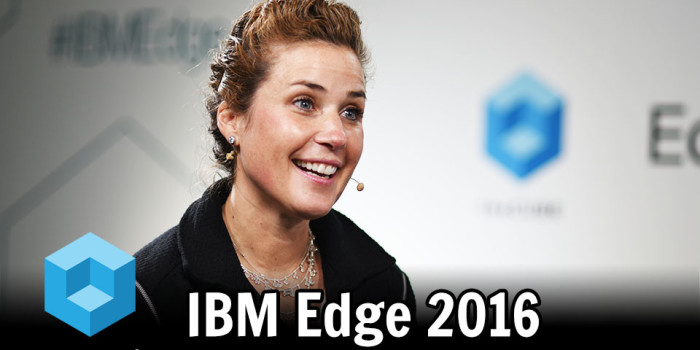
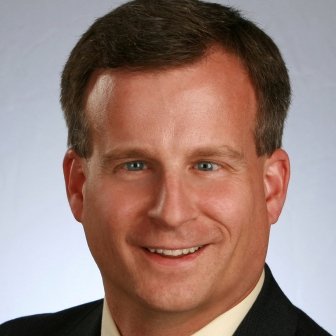
01. Bernie Spang, IBM, visits #theCUBE!. (00:17)
02. Software Defined Infrastructure. (00:30)
03. Software Layer in a Hyper Converged Infrastructure. (02:35)
04. Sharing on the Compute and Storage Layers. (04:35)
05. The Difference is in the Applications. (06:42)
06. Finding a Common Infrastructure?. (09:16)
07. Optimizing Cost-Efficiency for Customers. (10:56)
08. Real-Time and Apache Spark in Software Defined. (12:02)
09. Issues of Compliance and Security. (14:49)
10. Differentiating with Cognitive and Hybrid Cloud. (16:16)
11. The Future of Service Providers. (19:32)
12. EDGE 2016: The Lightbulbs are Going On. (21:51)
Track List created with http://www.vinjavideo.com.
--- ---
The joy of going software-defined across compute and storage systems | #IBMEdge
by Nelson Williams | Sep 22, 2016
The workload of the past is not the workload of the future. Modern business needs more computing, done more quickly, than ever before. That means where a company might have run one storage node in the ancient days, now they’re running a dozen, or a hundred. Coordinating and scheduling workloads across that kind of system is a real issue. A software-defined layer is one solution.
To shed some light on software-defined systems, Dave Vellante (@dvellante) and Stu Miniman (@stu), cohosts of theCUBE, from the SiliconANGLE Media team, went to the IBM Edge 2016 conference in Las Vegas. There, they talked with Bernie Spang, VP of Software-Defined Infrastructure at IBM.
Software-defined and the new generation
The discussion opened up with a definition of software-defined. Spang explained that the term means software that can be deployed on a variety of servers and work with storage media from a number of providers. He mentioned that IBM makes this software available for clients to implement themselves, or by help from partners and the IBM cloud.
Spang then described the need for software-defined systems. He stated that new generation workloads and new generation analytics frameworks are scale-out architectures that span dozens or even thousands of nodes. Because of this, businesses need a software layer that can schedule a workload across these massive compute resources.
Traditional and next-gen applications
Even a new technology has some similarities to the older systems. Spang related that there are two layers; the software layer where work is scheduled and the storage layer, which needs to offer shared access across its nodes to the applications. He understood these new-generation applications are just high-performance and supercomputer workloads.
“It’s just a new generation with a new name on it, Big Data Analytics or Cognitive Computing,” Spang said.
Spang stressed that there’s still a place for traditional IT for traditional applications, one that won’t go away. However, software-defined supports scheduling workloads on bare metal, virtual machines or containers so customers can have a mix of things. Doing it at the software layer gives a business great flexibility to absorb new workloads and technologies.
Forgot Password
Almost there!
We just sent you a verification email. Please verify your account to gain access to
IBM Edge 2016 | Las Vegas. If you don’t think you received an email check your
spam folder.
In order to sign in, enter the email address you used to registered for the event. Once completed, you will receive an email with a verification link. Open this link to automatically sign into the site.
Register For IBM Edge 2016 | Las Vegas
Please fill out the information below. You will recieve an email with a verification link confirming your registration. Click the link to automatically sign into the site.
You’re almost there!
We just sent you a verification email. Please click the verification button in the email. Once your email address is verified, you will have full access to all event content for IBM Edge 2016 | Las Vegas.
I want my badge and interests to be visible to all attendees.
Checking this box will display your presense on the attendees list, view your profile and allow other attendees to contact you via 1-1 chat. Read the Privacy Policy. At any time, you can choose to disable this preference.
Select your Interests!
add
Upload your photo
Uploading..
OR
Connect via Twitter
Connect via Linkedin
EDIT PASSWORD
Share
Forgot Password
Almost there!
We just sent you a verification email. Please verify your account to gain access to
IBM Edge 2016 | Las Vegas. If you don’t think you received an email check your
spam folder.
In order to sign in, enter the email address you used to registered for the event. Once completed, you will receive an email with a verification link. Open this link to automatically sign into the site.
Sign in to gain access to IBM Edge 2016 | Las Vegas
Please sign in with LinkedIn to continue to IBM Edge 2016 | Las Vegas. Signing in with LinkedIn ensures a professional environment.
Are you sure you want to remove access rights for this user?
Details
Manage Access
email address
Community Invitation
Bernie Spang, IBM - #IBMEdge - #theCUBE
01. Bernie Spang, IBM, visits #theCUBE!. (00:17)
02. Software Defined Infrastructure. (00:30)
03. Software Layer in a Hyper Converged Infrastructure. (02:35)
04. Sharing on the Compute and Storage Layers. (04:35)
05. The Difference is in the Applications. (06:42)
06. Finding a Common Infrastructure?. (09:16)
07. Optimizing Cost-Efficiency for Customers. (10:56)
08. Real-Time and Apache Spark in Software Defined. (12:02)
09. Issues of Compliance and Security. (14:49)
10. Differentiating with Cognitive and Hybrid Cloud. (16:16)
11. The Future of Service Providers. (19:32)
12. EDGE 2016: The Lightbulbs are Going On. (21:51)
Track List created with http://www.vinjavideo.com.
--- ---
The joy of going software-defined across compute and storage systems | #IBMEdge
by Nelson Williams | Sep 22, 2016
The workload of the past is not the workload of the future. Modern business needs more computing, done more quickly, than ever before. That means where a company might have run one storage node in the ancient days, now they’re running a dozen, or a hundred. Coordinating and scheduling workloads across that kind of system is a real issue. A software-defined layer is one solution.
To shed some light on software-defined systems, Dave Vellante (@dvellante) and Stu Miniman (@stu), cohosts of theCUBE, from the SiliconANGLE Media team, went to the IBM Edge 2016 conference in Las Vegas. There, they talked with Bernie Spang, VP of Software-Defined Infrastructure at IBM.
Software-defined and the new generation
The discussion opened up with a definition of software-defined. Spang explained that the term means software that can be deployed on a variety of servers and work with storage media from a number of providers. He mentioned that IBM makes this software available for clients to implement themselves, or by help from partners and the IBM cloud.
Spang then described the need for software-defined systems. He stated that new generation workloads and new generation analytics frameworks are scale-out architectures that span dozens or even thousands of nodes. Because of this, businesses need a software layer that can schedule a workload across these massive compute resources.
Traditional and next-gen applications
Even a new technology has some similarities to the older systems. Spang related that there are two layers; the software layer where work is scheduled and the storage layer, which needs to offer shared access across its nodes to the applications. He understood these new-generation applications are just high-performance and supercomputer workloads.
“It’s just a new generation with a new name on it, Big Data Analytics or Cognitive Computing,” Spang said.
Spang stressed that there’s still a place for traditional IT for traditional applications, one that won’t go away. However, software-defined supports scheduling workloads on bare metal, virtual machines or containers so customers can have a mix of things. Doing it at the software layer gives a business great flexibility to absorb new workloads and technologies.