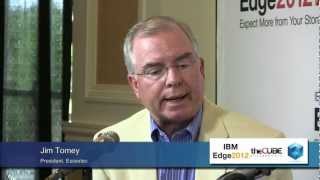
The Cube - IBM Edge 2012 - Clod Barerra, IBM with John McArthur and Dave Vellante
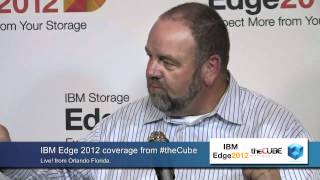
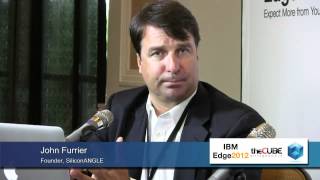
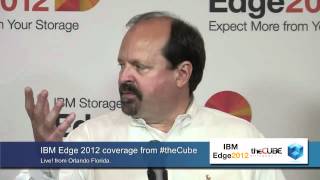
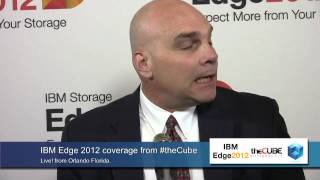
IBM Chief Engineer Clod Barrera dropped in on theCube at IBM Edge 2012 (full video below). He shared a number of thoughts on the current state of storage, architecture, and technology in a brief but informative discussion with theCube panel. IBM has long been a leader in storage integration solutions and through the discussion it was clear that the company persists in that role.
Storage in the wild
Clod began with a discussion surrounding the nature of storage, in that today and as it has been at IBM for some time, storage is less insular, and that the company has been a sort of outlier in those regards. Going back ten years or so, most SAN discussions were self-contained in comparison to an end-to-end approach we see successfully being discussed right now. Storage is becoming more integrated into the systems stack. For example there are countless cloud scenarios where storage solutions are designed to solve specific problems. If you think about it, that is true, there are a number of categories you could put workloads into. Data Analytics has a high performance demand workload. Transaction or Database could be another. Collaboration and Web services, Archiving, Business Apps and Logic present still further categories. IBM meets these needs by focusing solutions around specific problems and that definitely includes storage architecture.
Owning data
Another huge factor in the business today is the dialogue around analytics and whether infrastructure meets the goals of this ambitious undertaking. That introduces factors around facing customer issues to recognize the amounts of data at hand and the obligations to retaining it in a way that is affordable. Economics of owning data is one of the biggest risks to consider, and IBM’s solution sets are poised to answer those questions.
Barrera also touches on Big Data and whether it will finally deliver some of the solutions that business has required for so long. The past data models have not fulfilled the various promises that have come along with them, and Clod feels that Big Data as that solution is yet to be determined. The requirements are there- better speed, better scale, more value – all of these things will be increasingly complex elements of the big picture in alignment with the demands that our society places on technology. Not only will they have to be better, but they have to consistently be improving in significant ways. A clear case study for the value of analytics is in homeland security. The kinds of insights from data analytics can provide vast and significant gains in decision making in this particular field and improve many systems. Challenges in that space, as well as others would include issues such as privacy and the question of cost of keeping all this data.
Advances in data compression
The discussion then shifted to some of the real-time compression technology from IBM. In the past, compression was utilized only around cold compression, in reference to data that wasn’t truly active. The computational overhead in this construct was onerous, being limited by available technology. What IBM is doing now is doing real-time compression on online data as it is being received by the disk array. Apps, middleware, and so on are for all intents and purposes, unaware that this is even happening. Capacity therefore is increased by factors of 2, 2.5, even 4 times standard rates and can be ‘rehydrated’ just as quickly. This is a significant advantage that IBM wields to answer some of the questions that the presence of data represents.
#theCUBE #IBM #SiliconANGLE @IBM
Forgot Password
Almost there!
We just sent you a verification email. Please verify your account to gain access to
IBM Edge 2012 | Orlando. If you don’t think you received an email check your
spam folder.
In order to sign in, enter the email address you used to registered for the event. Once completed, you will receive an email with a verification link. Open this link to automatically sign into the site.
Register For IBM Edge 2012 | Orlando
Please fill out the information below. You will recieve an email with a verification link confirming your registration. Click the link to automatically sign into the site.
You’re almost there!
We just sent you a verification email. Please click the verification button in the email. Once your email address is verified, you will have full access to all event content for IBM Edge 2012 | Orlando.
I want my badge and interests to be visible to all attendees.
Checking this box will display your presense on the attendees list, view your profile and allow other attendees to contact you via 1-1 chat. Read the Privacy Policy. At any time, you can choose to disable this preference.
Select your Interests!
add
Upload your photo
Uploading..
OR
Connect via Twitter
Connect via Linkedin
EDIT PASSWORD
Share
Forgot Password
Almost there!
We just sent you a verification email. Please verify your account to gain access to
IBM Edge 2012 | Orlando. If you don’t think you received an email check your
spam folder.
In order to sign in, enter the email address you used to registered for the event. Once completed, you will receive an email with a verification link. Open this link to automatically sign into the site.
Sign in to gain access to IBM Edge 2012 | Orlando
Please sign in with LinkedIn to continue to IBM Edge 2012 | Orlando. Signing in with LinkedIn ensures a professional environment.
Are you sure you want to remove access rights for this user?
Details
Manage Access
email address
Community Invitation
Clod Barerra, IBM | IBM Edge 2012
The Cube - IBM Edge 2012 - Clod Barerra, IBM with John McArthur and Dave Vellante
IBM Chief Engineer Clod Barrera dropped in on theCube at IBM Edge 2012 (full video below). He shared a number of thoughts on the current state of storage, architecture, and technology in a brief but informative discussion with theCube panel. IBM has long been a leader in storage integration solutions and through the discussion it was clear that the company persists in that role.
Storage in the wild
Clod began with a discussion surrounding the nature of storage, in that today and as it has been at IBM for some time, storage is less insular, and that the company has been a sort of outlier in those regards. Going back ten years or so, most SAN discussions were self-contained in comparison to an end-to-end approach we see successfully being discussed right now. Storage is becoming more integrated into the systems stack. For example there are countless cloud scenarios where storage solutions are designed to solve specific problems. If you think about it, that is true, there are a number of categories you could put workloads into. Data Analytics has a high performance demand workload. Transaction or Database could be another. Collaboration and Web services, Archiving, Business Apps and Logic present still further categories. IBM meets these needs by focusing solutions around specific problems and that definitely includes storage architecture.
Owning data
Another huge factor in the business today is the dialogue around analytics and whether infrastructure meets the goals of this ambitious undertaking. That introduces factors around facing customer issues to recognize the amounts of data at hand and the obligations to retaining it in a way that is affordable. Economics of owning data is one of the biggest risks to consider, and IBM’s solution sets are poised to answer those questions.
Barrera also touches on Big Data and whether it will finally deliver some of the solutions that business has required for so long. The past data models have not fulfilled the various promises that have come along with them, and Clod feels that Big Data as that solution is yet to be determined. The requirements are there- better speed, better scale, more value – all of these things will be increasingly complex elements of the big picture in alignment with the demands that our society places on technology. Not only will they have to be better, but they have to consistently be improving in significant ways. A clear case study for the value of analytics is in homeland security. The kinds of insights from data analytics can provide vast and significant gains in decision making in this particular field and improve many systems. Challenges in that space, as well as others would include issues such as privacy and the question of cost of keeping all this data.
Advances in data compression
The discussion then shifted to some of the real-time compression technology from IBM. In the past, compression was utilized only around cold compression, in reference to data that wasn’t truly active. The computational overhead in this construct was onerous, being limited by available technology. What IBM is doing now is doing real-time compression on online data as it is being received by the disk array. Apps, middleware, and so on are for all intents and purposes, unaware that this is even happening. Capacity therefore is increased by factors of 2, 2.5, even 4 times standard rates and can be ‘rehydrated’ just as quickly. This is a significant advantage that IBM wields to answer some of the questions that the presence of data represents.
#theCUBE #IBM #SiliconANGLE @IBM