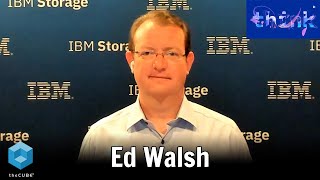
Jamie Thomas, GM, IBM Systems Strategy & Development, IBM sits down with Dave Vellante for IBM Think 2020.
#Think2020 #theCUBE
https://siliconangle.com/2020/05/08/co-creation-drives-development-quantum-computing-think2020/
Co-creation drives development of quantum computing
While the mainstream application of quantum computers is expected to take a few more years, work on developing this technology is happening right now — and in a collaborative way. Commercial enterprises, academics and startups are working with IBM to co-create around quantum and understand the use cases that can be solved in the near future, according to Jamie Thomas (pictured), general manager of systems strategy and development at IBM.
“We found through our long history in IBM that co-creation is really important,” Thomas said. “In terms of our ecosystem, we are really fundamentally focused on key problems around chemistry, material science, financial services. And over the last year, there’s over 200 papers that have been written out there from our network that really embody their work with us on this journey.”
Thomas spoke with Dave Vellante, host of theCUBE, SiliconANGLE Media’s mobile livestreaming studio, during the IBM Think Digital Event Experience. They discussed how people are working together to develop quantum, the use cases surrounding the new technology, and the interest from startups. (* Disclosure below.)
Financial services, and others, embrace quantum technology
One of the most important use cases with quantum computing involves the financial industry and topics like trade settlements and options pricing. Many financial institutions have been announced as part of the IBM network, and JPMorgan Chase & Co. is one of main companies that wrote papers about it, according to Thomas.
“In the world of Monte Carlo simulation, options pricing, risk management, a small change can make a big difference in dollars,” she highlighted. “We are talking about operations that in many cases they could achieve but not in the right amount of time. The ability to use quantum as an accelerator for these kinds of operations is very important.”
Another use case example is in chemistry, where there is a lot of research focused on batteries. The idea is to develop batteries that have more retention in life to be more effective in energy conservation. In addition, pharmaceuticals are advancing research in many different areas with new quantum technology.
“You can think of the quantum computer when it comes online as an accelerator to a supercomputer,” Thomas explained. “Helping speed up research even faster than what we’re able to do with something like the Summit.” Summit is a supercomputer developed by IBM for use at Oak Ridge National Laboratory.
The countless possibilities for applying quantum computing are also attracting startups. About a third of those in IBM’s network are in venture capital startups, and there is a long list of them out there, according to Thomas. They are interested in many different aspects of the technology.
“Many of them are focused on what I would call loosely the programming model, looking at improving algorithms across different industries, making it easier for those that are perhaps more skilled in domains — whether that is chemistry or financial services or mathematics — to use the power of the quantum computer,” Thomas said. “Many of those startups are leveraging our Qiskit, our quantum information science open programming model that we put out there, so it’s open.”
Watch the complete video interview below, and be sure to check out more of SiliconANGLE’s and theCUBE’s coverage of the IBM Think Digital Event Experience. (* Disclosure: TheCUBE is a paid media partner for the IBM Think Digital Event Experience. Neither IBM Corp., the sponsor for theCUBE’s event coverage, nor other sponsors have editorial control over content on theCUBE or SiliconANGLE.)
Forgot Password
Almost there!
We just sent you a verification email. Please verify your account to gain access to
IBM Think 2020 | Digital. If you don’t think you received an email check your
spam folder.
In order to sign in, enter the email address you used to registered for the event. Once completed, you will receive an email with a verification link. Open this link to automatically sign into the site.
Register For IBM Think 2020 | Digital
Please fill out the information below. You will recieve an email with a verification link confirming your registration. Click the link to automatically sign into the site.
You’re almost there!
We just sent you a verification email. Please click the verification button in the email. Once your email address is verified, you will have full access to all event content for IBM Think 2020 | Digital.
I want my badge and interests to be visible to all attendees.
Checking this box will display your presense on the attendees list, view your profile and allow other attendees to contact you via 1-1 chat. Read the Privacy Policy. At any time, you can choose to disable this preference.
Select your Interests!
add
Upload your photo
Uploading..
OR
Connect via Twitter
Connect via Linkedin
EDIT PASSWORD
Share
Forgot Password
Almost there!
We just sent you a verification email. Please verify your account to gain access to
IBM Think 2020 | Digital. If you don’t think you received an email check your
spam folder.
In order to sign in, enter the email address you used to registered for the event. Once completed, you will receive an email with a verification link. Open this link to automatically sign into the site.
Sign in to gain access to IBM Think 2020 | Digital
Please sign in with LinkedIn to continue to IBM Think 2020 | Digital. Signing in with LinkedIn ensures a professional environment.
Are you sure you want to remove access rights for this user?
Details
Manage Access
email address
Community Invitation
Jamie Thomas, IBM | IBM Think 2020
Jamie Thomas, GM, IBM Systems Strategy & Development, IBM sits down with Dave Vellante for IBM Think 2020.
#Think2020 #theCUBE
https://siliconangle.com/2020/05/08/co-creation-drives-development-quantum-computing-think2020/
Co-creation drives development of quantum computing
While the mainstream application of quantum computers is expected to take a few more years, work on developing this technology is happening right now — and in a collaborative way. Commercial enterprises, academics and startups are working with IBM to co-create around quantum and understand the use cases that can be solved in the near future, according to Jamie Thomas (pictured), general manager of systems strategy and development at IBM.
“We found through our long history in IBM that co-creation is really important,” Thomas said. “In terms of our ecosystem, we are really fundamentally focused on key problems around chemistry, material science, financial services. And over the last year, there’s over 200 papers that have been written out there from our network that really embody their work with us on this journey.”
Thomas spoke with Dave Vellante, host of theCUBE, SiliconANGLE Media’s mobile livestreaming studio, during the IBM Think Digital Event Experience. They discussed how people are working together to develop quantum, the use cases surrounding the new technology, and the interest from startups. (* Disclosure below.)
Financial services, and others, embrace quantum technology
One of the most important use cases with quantum computing involves the financial industry and topics like trade settlements and options pricing. Many financial institutions have been announced as part of the IBM network, and JPMorgan Chase & Co. is one of main companies that wrote papers about it, according to Thomas.
“In the world of Monte Carlo simulation, options pricing, risk management, a small change can make a big difference in dollars,” she highlighted. “We are talking about operations that in many cases they could achieve but not in the right amount of time. The ability to use quantum as an accelerator for these kinds of operations is very important.”
Another use case example is in chemistry, where there is a lot of research focused on batteries. The idea is to develop batteries that have more retention in life to be more effective in energy conservation. In addition, pharmaceuticals are advancing research in many different areas with new quantum technology.
“You can think of the quantum computer when it comes online as an accelerator to a supercomputer,” Thomas explained. “Helping speed up research even faster than what we’re able to do with something like the Summit.” Summit is a supercomputer developed by IBM for use at Oak Ridge National Laboratory.
The countless possibilities for applying quantum computing are also attracting startups. About a third of those in IBM’s network are in venture capital startups, and there is a long list of them out there, according to Thomas. They are interested in many different aspects of the technology.
“Many of them are focused on what I would call loosely the programming model, looking at improving algorithms across different industries, making it easier for those that are perhaps more skilled in domains — whether that is chemistry or financial services or mathematics — to use the power of the quantum computer,” Thomas said. “Many of those startups are leveraging our Qiskit, our quantum information science open programming model that we put out there, so it’s open.”
Watch the complete video interview below, and be sure to check out more of SiliconANGLE’s and theCUBE’s coverage of the IBM Think Digital Event Experience. (* Disclosure: TheCUBE is a paid media partner for the IBM Think Digital Event Experience. Neither IBM Corp., the sponsor for theCUBE’s event coverage, nor other sponsors have editorial control over content on theCUBE or SiliconANGLE.)