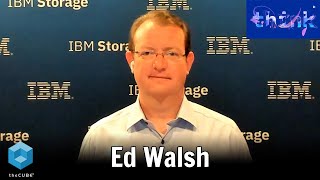
Sriram Raghavan, VP, IBM Research AI sits down with Dave Vellante for IBM Think 2020.
#Think2020 #theCUBE
https://siliconangle.com/2020/05/07/could-neuro-symbolic-ai-become-a-household-phrase-in-2020-think2020/
Could neuro-symbolic AI become a household phrase in 2020?
If the proverb “iron sharpens iron” is indeed true, then an application of that wisdom should also apply to advancing the field of artificial intelligence. That’s at least what some researchers believe to be the future path for moving AI forward, based on the concept that leveraging two approaches that build intelligence can dramatically improve the overall result.
Neuro-symbolic AI combines knowledge driven, logically reasonable concepts with data-powered deep learning neural networks to advance the cause of machine understanding.
“We’re at a point where we need both of them together because you can’t build trustworthy explainable systems only using one and you can’t get away from not using all of the data that you have,” said Sriram Raghavan (pictured), vice president of IBM Research AI at IBM Corp. “Neuro-symbolic AI is going to be the linchpin of how we advance AI.”
Raghavan spoke with Dave Vellante, host of theCUBE, SiliconANGLE Media’s mobile livestreaming studio, during the IBM Think Digital Event Experience. They discussed the concepts behind neuro-symbolic AI, how it fits with IBM’s broader machine intelligence mission, and Raghavan’s work in natural language processing. (* Disclosure below.)
From narrow to broad AI
IBM’s interest in neuro-symbolic AI stems from a former Harvard professor — David Cox — who is director of the MIT-IBM Watson AI Lab. What Cox and Raghavan share is a deep commitment to moving AI faster down the track. IBM’s mission in this regard involves an approach toward evolving the science behind AI and scaling it to the benefit of enterprises around the world.
“It’s going from narrow, bespoke AI — where all you can do is one thing that it’s really trained for and takes a lot of data and lots of compute power — to having the techniques and the innovation for AI to learn from one use case to the other,” Raghavan said. “We call that the journey from narrow to broad AI. A part of our mission as scientists and technologists is to make that happen.”
In addition to neuro-symbolic AI, Raghavan has been focused on natural language processing. IBM has been developing a system based on NLP called Project Debater, billed as the first AI system that can debate humans on complex topics.
In March, the company announced it would integrate Debater into its Watson portfolio offerings, including as Knowledge Studio and Discovery.
“We have a very strong portfolio and focus in NLP,” Raghavan said. “Text is the language of business. I’m working to help machines understand language but in an enterprise context.”
Here’s the complete video interview, part of SiliconANGLE’s and theCUBE’s coverage of the IBM Think Digital Event Experience. (* Disclosure: TheCUBE is a paid media partner for the IBM Think Digital Event Experience. Neither IBM, the sponsor for theCUBE’s event coverage, nor other sponsors have editorial control over content on theCUBE or SiliconANGLE.)
Forgot Password
Almost there!
We just sent you a verification email. Please verify your account to gain access to
IBM Think 2020 | Digital. If you don’t think you received an email check your
spam folder.
In order to sign in, enter the email address you used to registered for the event. Once completed, you will receive an email with a verification link. Open this link to automatically sign into the site.
Register For IBM Think 2020 | Digital
Please fill out the information below. You will recieve an email with a verification link confirming your registration. Click the link to automatically sign into the site.
You’re almost there!
We just sent you a verification email. Please click the verification button in the email. Once your email address is verified, you will have full access to all event content for IBM Think 2020 | Digital.
I want my badge and interests to be visible to all attendees.
Checking this box will display your presense on the attendees list, view your profile and allow other attendees to contact you via 1-1 chat. Read the Privacy Policy. At any time, you can choose to disable this preference.
Select your Interests!
add
Upload your photo
Uploading..
OR
Connect via Twitter
Connect via Linkedin
EDIT PASSWORD
Share
Forgot Password
Almost there!
We just sent you a verification email. Please verify your account to gain access to
IBM Think 2020 | Digital. If you don’t think you received an email check your
spam folder.
In order to sign in, enter the email address you used to registered for the event. Once completed, you will receive an email with a verification link. Open this link to automatically sign into the site.
Sign in to gain access to IBM Think 2020 | Digital
Please sign in with LinkedIn to continue to IBM Think 2020 | Digital. Signing in with LinkedIn ensures a professional environment.
Are you sure you want to remove access rights for this user?
Details
Manage Access
email address
Community Invitation
Sriram Raghavan, IBM Research AI | IBM Think 2020
Sriram Raghavan, VP, IBM Research AI sits down with Dave Vellante for IBM Think 2020.
#Think2020 #theCUBE
https://siliconangle.com/2020/05/07/could-neuro-symbolic-ai-become-a-household-phrase-in-2020-think2020/
Could neuro-symbolic AI become a household phrase in 2020?
If the proverb “iron sharpens iron” is indeed true, then an application of that wisdom should also apply to advancing the field of artificial intelligence. That’s at least what some researchers believe to be the future path for moving AI forward, based on the concept that leveraging two approaches that build intelligence can dramatically improve the overall result.
Neuro-symbolic AI combines knowledge driven, logically reasonable concepts with data-powered deep learning neural networks to advance the cause of machine understanding.
“We’re at a point where we need both of them together because you can’t build trustworthy explainable systems only using one and you can’t get away from not using all of the data that you have,” said Sriram Raghavan (pictured), vice president of IBM Research AI at IBM Corp. “Neuro-symbolic AI is going to be the linchpin of how we advance AI.”
Raghavan spoke with Dave Vellante, host of theCUBE, SiliconANGLE Media’s mobile livestreaming studio, during the IBM Think Digital Event Experience. They discussed the concepts behind neuro-symbolic AI, how it fits with IBM’s broader machine intelligence mission, and Raghavan’s work in natural language processing. (* Disclosure below.)
From narrow to broad AI
IBM’s interest in neuro-symbolic AI stems from a former Harvard professor — David Cox — who is director of the MIT-IBM Watson AI Lab. What Cox and Raghavan share is a deep commitment to moving AI faster down the track. IBM’s mission in this regard involves an approach toward evolving the science behind AI and scaling it to the benefit of enterprises around the world.
“It’s going from narrow, bespoke AI — where all you can do is one thing that it’s really trained for and takes a lot of data and lots of compute power — to having the techniques and the innovation for AI to learn from one use case to the other,” Raghavan said. “We call that the journey from narrow to broad AI. A part of our mission as scientists and technologists is to make that happen.”
In addition to neuro-symbolic AI, Raghavan has been focused on natural language processing. IBM has been developing a system based on NLP called Project Debater, billed as the first AI system that can debate humans on complex topics.
In March, the company announced it would integrate Debater into its Watson portfolio offerings, including as Knowledge Studio and Discovery.
“We have a very strong portfolio and focus in NLP,” Raghavan said. “Text is the language of business. I’m working to help machines understand language but in an enterprise context.”
Here’s the complete video interview, part of SiliconANGLE’s and theCUBE’s coverage of the IBM Think Digital Event Experience. (* Disclosure: TheCUBE is a paid media partner for the IBM Think Digital Event Experience. Neither IBM, the sponsor for theCUBE’s event coverage, nor other sponsors have editorial control over content on theCUBE or SiliconANGLE.)