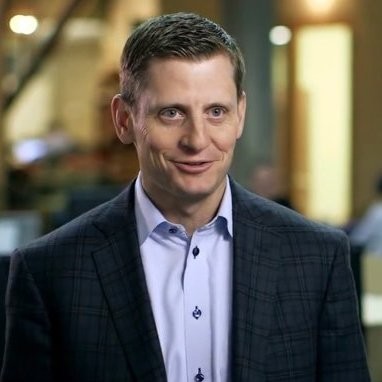
Rob Thomas, General Manager, Data and AI, IBM, sits down with Dave Vellante at IBM Data and AI Forum in Miami, FL
#theCUBE #DataAIForum
https://siliconangle.com/2019/11/05/scaling-the-ladder-ibm-leverages-watson-tools-and-open-source-to-bridge-ai-gaps-dataaiforum-guestoftheweek/
Scaling the ladder: IBM leverages Watson tools and open source to bridge AI gaps
When it comes to artificial intelligence, IBM Corp. is increasingly finding itself having to fill gaps.
There are skills gaps for data scientists who build training models, organizational gaps where companies struggle over how AI should be built and implemented in the enterprise, and credibility gaps as adoption has grown, but many people are still uncertain about its potential or nervous about it taking away jobs.
Yet perhaps the most-significant gap that exists today is the knowledge fundamental to the technology’s future success: What exactly is AI?
This has led the head of IBM’s Watson AI technology group to take the unusual step of unpacking the “black box,” a system or device that performs a function without widespread knowledge around how it actually works inside.
“People overreact to hype on topics like AI; this is not black magic, and this is not some far off thing,” said Rob Thomas (pictured), general manager of IBM Data and Watson AI and IBM. “How do you optimize process to drive greater productivity? We’re talking about the basics: better predictions, better automation, better optimization.”
Thomas spoke with Dave Vellante, host of theCUBE, SiliconANGLE Media’s mobile livestreaming studio, during the IBM Data and AI Forum in Miami, Florida. They discussed efforts to demystify the technology, a step-by-step approach to implement effective AI solutions, the role of data virtualization, and how Watson tools have been integrated into the Red Hat platform (see the full interview with transcript here). (* Disclosure below.)
This week, theCUBE features Rob Thomas as its Guest of the Week.
Data’s critical role
At the IBM gathering in Miami in October, Thomas and a number of company executives devoted time to demystifying AI technology. A clue to how the subject should be approached can be found in Thomas’ own job title, because data sits at the heart of the AI conversation. AI models train on data, and if a user has poor data or starts out with good data but doesn’t recognize information shifts or “drifts” over time, critical analytic mistakes can be easily made.
“Your AI is only as good as your data,” Thomas said. “That’s the fundamental problem. In organizations we work with, 80% of the projects get stopped or slowed down because the company has a data problem.”
To help resolve this issue, IBM recently announced that it would add drift-detection software to Watson OpenScale in an effort to help users more easily detect how far an AI model may have shifted from its original parameters. This tool is designed to assist DevOps teams and data scientists in collaborating more closely so that AI models actually make it into production applications.
This important collaborative step is just one of what Thomas has identified as part of the AI Ladder, the process of gathering, organizing, analyzing and implementing AI throughout an organization. The message here is while a ladder may enable a user to climb higher, it’s still done one step at a time — and that starts with a data strategy.
“We use the AI Ladder as a tool to encourage companies to think about a data strategy,” Thomas said. “I ask every company I visit: Do you have a data strategy? You wouldn’t believe the looks you get when you ask that question.”
Virtualization gains significance
IBM has also been devoting its resources to a couple of intriguing initiatives, one of which deserves more attention, according to Thomas.
This involves the area of data virtualization, the integration of information sources across multiple types and locations while creating one logical data view. Users can query data across many systems without having to copy or replicate it, thus saving time and money.
“One of the greatest inventions out of IBM Research in the last 10 years that hasn’t gotten a lot of attention is data virtualization,” Thomas said. “We don’t have to move the data; we just virtualize data sets into Cloud Pak for Data, and then we can train the model in one place. This is actually breaking down data silos that exist in every organization, and it’s really unique.”
...
(* Disclosure: TheCUBE is a paid media partner for the IBM Data and AI Forum. Neither IBM, the sponsor for theCUBE’s event coverage, nor other sponsors have editorial control over content on theCUBE or SiliconANGLE.)
Forgot Password
Almost there!
We just sent you a verification email. Please verify your account to gain access to
IBM Data and AI Forum 2019 | Miami. If you don’t think you received an email check your
spam folder.
In order to sign in, enter the email address you used to registered for the event. Once completed, you will receive an email with a verification link. Open this link to automatically sign into the site.
Register For IBM Data and AI Forum 2019 | Miami
Please fill out the information below. You will recieve an email with a verification link confirming your registration. Click the link to automatically sign into the site.
You’re almost there!
We just sent you a verification email. Please click the verification button in the email. Once your email address is verified, you will have full access to all event content for IBM Data and AI Forum 2019 | Miami.
I want my badge and interests to be visible to all attendees.
Checking this box will display your presense on the attendees list, view your profile and allow other attendees to contact you via 1-1 chat. Read the Privacy Policy. At any time, you can choose to disable this preference.
Select your Interests!
add
Upload your photo
Uploading..
OR
Connect via Twitter
Connect via Linkedin
EDIT PASSWORD
Share
Forgot Password
Almost there!
We just sent you a verification email. Please verify your account to gain access to
IBM Data and AI Forum 2019 | Miami. If you don’t think you received an email check your
spam folder.
In order to sign in, enter the email address you used to registered for the event. Once completed, you will receive an email with a verification link. Open this link to automatically sign into the site.
Sign in to gain access to IBM Data and AI Forum 2019 | Miami
Please sign in with LinkedIn to continue to IBM Data and AI Forum 2019 | Miami. Signing in with LinkedIn ensures a professional environment.
Are you sure you want to remove access rights for this user?
Details
Manage Access
email address
Community Invitation
Rob Thomas, IBM | IBM Data and AI Forum
Rob Thomas, General Manager, Data and AI, IBM, sits down with Dave Vellante at IBM Data and AI Forum in Miami, FL
#theCUBE #DataAIForum
https://siliconangle.com/2019/11/05/scaling-the-ladder-ibm-leverages-watson-tools-and-open-source-to-bridge-ai-gaps-dataaiforum-guestoftheweek/
Scaling the ladder: IBM leverages Watson tools and open source to bridge AI gaps
When it comes to artificial intelligence, IBM Corp. is increasingly finding itself having to fill gaps.
There are skills gaps for data scientists who build training models, organizational gaps where companies struggle over how AI should be built and implemented in the enterprise, and credibility gaps as adoption has grown, but many people are still uncertain about its potential or nervous about it taking away jobs.
Yet perhaps the most-significant gap that exists today is the knowledge fundamental to the technology’s future success: What exactly is AI?
This has led the head of IBM’s Watson AI technology group to take the unusual step of unpacking the “black box,” a system or device that performs a function without widespread knowledge around how it actually works inside.
“People overreact to hype on topics like AI; this is not black magic, and this is not some far off thing,” said Rob Thomas (pictured), general manager of IBM Data and Watson AI and IBM. “How do you optimize process to drive greater productivity? We’re talking about the basics: better predictions, better automation, better optimization.”
Thomas spoke with Dave Vellante, host of theCUBE, SiliconANGLE Media’s mobile livestreaming studio, during the IBM Data and AI Forum in Miami, Florida. They discussed efforts to demystify the technology, a step-by-step approach to implement effective AI solutions, the role of data virtualization, and how Watson tools have been integrated into the Red Hat platform (see the full interview with transcript here). (* Disclosure below.)
This week, theCUBE features Rob Thomas as its Guest of the Week.
Data’s critical role
At the IBM gathering in Miami in October, Thomas and a number of company executives devoted time to demystifying AI technology. A clue to how the subject should be approached can be found in Thomas’ own job title, because data sits at the heart of the AI conversation. AI models train on data, and if a user has poor data or starts out with good data but doesn’t recognize information shifts or “drifts” over time, critical analytic mistakes can be easily made.
“Your AI is only as good as your data,” Thomas said. “That’s the fundamental problem. In organizations we work with, 80% of the projects get stopped or slowed down because the company has a data problem.”
To help resolve this issue, IBM recently announced that it would add drift-detection software to Watson OpenScale in an effort to help users more easily detect how far an AI model may have shifted from its original parameters. This tool is designed to assist DevOps teams and data scientists in collaborating more closely so that AI models actually make it into production applications.
This important collaborative step is just one of what Thomas has identified as part of the AI Ladder, the process of gathering, organizing, analyzing and implementing AI throughout an organization. The message here is while a ladder may enable a user to climb higher, it’s still done one step at a time — and that starts with a data strategy.
“We use the AI Ladder as a tool to encourage companies to think about a data strategy,” Thomas said. “I ask every company I visit: Do you have a data strategy? You wouldn’t believe the looks you get when you ask that question.”
Virtualization gains significance
IBM has also been devoting its resources to a couple of intriguing initiatives, one of which deserves more attention, according to Thomas.
This involves the area of data virtualization, the integration of information sources across multiple types and locations while creating one logical data view. Users can query data across many systems without having to copy or replicate it, thus saving time and money.
“One of the greatest inventions out of IBM Research in the last 10 years that hasn’t gotten a lot of attention is data virtualization,” Thomas said. “We don’t have to move the data; we just virtualize data sets into Cloud Pak for Data, and then we can train the model in one place. This is actually breaking down data silos that exist in every organization, and it’s really unique.”
...
(* Disclosure: TheCUBE is a paid media partner for the IBM Data and AI Forum. Neither IBM, the sponsor for theCUBE’s event coverage, nor other sponsors have editorial control over content on theCUBE or SiliconANGLE.)