01. Paul Teich, Tirias Research. (00:18)
02. Dana Gardner, Interarbor Solution. (00:47)
03. HPE Simplifying their Message. (01:21)
04. HPE's Ecosystem Approach and New Partnerships. (02:32)
05. Why Partnerships HAVE to Work. (04:54)
06. Comments: Automation and the Future of the IT Professional. (06:00)
07. Can HPE Achieve the Automation and Simplicity it Promises?. (10:30)
08. HPE's New Business Model Driven by Partnership. (13:18)
09. The Dividing Line Between Public and Private Clouds. (16:21)
Track List created with http://www.vinjavideo.com.
--- ---
Will automation and machine learning eliminate human intelligence in IT? | #HPEDiscover
by GABRIEL PESEK
In the move toward automation, machine-learning and predictive analytics, many are seeing dark times ahead for the human component of the IT workforce. Others, however, are seeing it as a time for the IT workers to become more powerful than ever before.
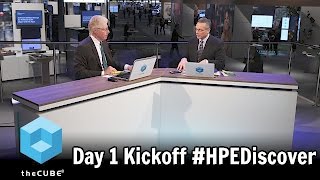
At the HPE Discover EU event in London, Dana Gardner, president and principal analyst at Interarbor Solutions LLC, and Paul Teich, principal analyst at TIRIAS Research, sat down with Dave Vellante (@dvellante) and Paul Gillin (@pgillin), co-hosts of theCUBE*, from the SiliconANGLE Media team, to talk about the changing state of tech in a variety of areas. (*Disclosure below)
Partners and competition
In the initial consideration, Teich felt that HPE had been doing “a credible job at trying to simplify their message” and “creating a set of overarching themes for … a bag of parts. They’re a huge company; they have a very extensive portfolio. What we haven’t seen in previous years is what ties that all together. Trying to be everything to everyone has its limits,” he noted.
What Gardner found interesting was the move by HPE to spin-merge some of its properties, a move that allows it to retain “ownership, and ultimately control, of the companies that they’re putting these assets into,” he explained. “It speaks to the idea that it’s an ecosystem that can support a hybrid-cloud environment, not one provider.”
That ecosystem drew more attention as the conversation continued, particularly its quality of enabling “interdependence, rather than one monolithic decision coming from one board,” as Gardner put it. With that interdependence comes a set of checks and balances between the partners that may help HPE operate in the best interests of the collective on a long-term scale.
As Teich noted in reference to heterogeneous architecture, “Even within one vendor’s product line, there are going to be relationships with [other vendors],” which he anticipated will serve to disrupt the traditional infrastructure of the past few decades and alter the nature of market competition in fundamental ways.
IT’s relevance
The main focus of the interview centered on the modern role of IT, especially in response to theories that IT departments were being pushed into obsolescence by new developments in automation, something which both guests felt was unlikely, at best. “I don’t think that IT is going away. I think they’re becoming more indispensable; they’re elevating in their value to the organization; and if HPE knows what it’s doing, it’ll become the best friend of that new IT organization,” Gardner stated.
“What’s happening is that the skillset has to move up the stack,” Teich said, exploring the ways in which continuous education and improvement of skillsets makes those staff indispensable, not only for persistence of operations but in staying “ahead of the wave” of developments in machine intelligence and deep learning.
“Think of IT as becoming the master of the algorithm, and the algorithm is deciding which workloads run where, across a continuum of public to private and multi-cloud,” Gardner explained. “It can’t be done at a micro-services level by human decisions; it has to be an algorithm run by AI and machine-learning brought to bear,” he said, with the people in charge of determining those algorithms being a key part of a company’s strengths.
Forgot Password
Almost there!
We just sent you a verification email. Please verify your account to gain access to
HPE Discover 2016 | London. If you don’t think you received an email check your
spam folder.
In order to sign in, enter the email address you used to registered for the event. Once completed, you will receive an email with a verification link. Open this link to automatically sign into the site.
Register For HPE Discover 2016 | London
Please fill out the information below. You will recieve an email with a verification link confirming your registration. Click the link to automatically sign into the site.
You’re almost there!
We just sent you a verification email. Please click the verification button in the email. Once your email address is verified, you will have full access to all event content for HPE Discover 2016 | London.
I want my badge and interests to be visible to all attendees.
Checking this box will display your presense on the attendees list, view your profile and allow other attendees to contact you via 1-1 chat. Read the Privacy Policy. At any time, you can choose to disable this preference.
Select your Interests!
add
Upload your photo
Uploading..
OR
Connect via Twitter
Connect via Linkedin
EDIT PASSWORD
Share
Forgot Password
Almost there!
We just sent you a verification email. Please verify your account to gain access to
HPE Discover 2016 | London. If you don’t think you received an email check your
spam folder.
In order to sign in, enter the email address you used to registered for the event. Once completed, you will receive an email with a verification link. Open this link to automatically sign into the site.
Sign in to gain access to HPE Discover 2016 | London
Please sign in with LinkedIn to continue to HPE Discover 2016 | London. Signing in with LinkedIn ensures a professional environment.
Are you sure you want to remove access rights for this user?
Details
Manage Access
email address
Community Invitation
Dana Gardner, Interarbor Solution & Paul Teich, Trias Research - HPE Discover 2016 - #HPEDiscover
01. Paul Teich, Tirias Research. (00:18)
02. Dana Gardner, Interarbor Solution. (00:47)
03. HPE Simplifying their Message. (01:21)
04. HPE's Ecosystem Approach and New Partnerships. (02:32)
05. Why Partnerships HAVE to Work. (04:54)
06. Comments: Automation and the Future of the IT Professional. (06:00)
07. Can HPE Achieve the Automation and Simplicity it Promises?. (10:30)
08. HPE's New Business Model Driven by Partnership. (13:18)
09. The Dividing Line Between Public and Private Clouds. (16:21)
Track List created with http://www.vinjavideo.com.
--- ---
Will automation and machine learning eliminate human intelligence in IT? | #HPEDiscover
by GABRIEL PESEK
In the move toward automation, machine-learning and predictive analytics, many are seeing dark times ahead for the human component of the IT workforce. Others, however, are seeing it as a time for the IT workers to become more powerful than ever before.
At the HPE Discover EU event in London, Dana Gardner, president and principal analyst at Interarbor Solutions LLC, and Paul Teich, principal analyst at TIRIAS Research, sat down with Dave Vellante (@dvellante) and Paul Gillin (@pgillin), co-hosts of theCUBE*, from the SiliconANGLE Media team, to talk about the changing state of tech in a variety of areas. (*Disclosure below)
Partners and competition
In the initial consideration, Teich felt that HPE had been doing “a credible job at trying to simplify their message” and “creating a set of overarching themes for … a bag of parts. They’re a huge company; they have a very extensive portfolio. What we haven’t seen in previous years is what ties that all together. Trying to be everything to everyone has its limits,” he noted.
What Gardner found interesting was the move by HPE to spin-merge some of its properties, a move that allows it to retain “ownership, and ultimately control, of the companies that they’re putting these assets into,” he explained. “It speaks to the idea that it’s an ecosystem that can support a hybrid-cloud environment, not one provider.”
That ecosystem drew more attention as the conversation continued, particularly its quality of enabling “interdependence, rather than one monolithic decision coming from one board,” as Gardner put it. With that interdependence comes a set of checks and balances between the partners that may help HPE operate in the best interests of the collective on a long-term scale.
As Teich noted in reference to heterogeneous architecture, “Even within one vendor’s product line, there are going to be relationships with [other vendors],” which he anticipated will serve to disrupt the traditional infrastructure of the past few decades and alter the nature of market competition in fundamental ways.
IT’s relevance
The main focus of the interview centered on the modern role of IT, especially in response to theories that IT departments were being pushed into obsolescence by new developments in automation, something which both guests felt was unlikely, at best. “I don’t think that IT is going away. I think they’re becoming more indispensable; they’re elevating in their value to the organization; and if HPE knows what it’s doing, it’ll become the best friend of that new IT organization,” Gardner stated.
“What’s happening is that the skillset has to move up the stack,” Teich said, exploring the ways in which continuous education and improvement of skillsets makes those staff indispensable, not only for persistence of operations but in staying “ahead of the wave” of developments in machine intelligence and deep learning.
“Think of IT as becoming the master of the algorithm, and the algorithm is deciding which workloads run where, across a continuum of public to private and multi-cloud,” Gardner explained. “It can’t be done at a micro-services level by human decisions; it has to be an algorithm run by AI and machine-learning brought to bear,” he said, with the people in charge of determining those algorithms being a key part of a company’s strengths.