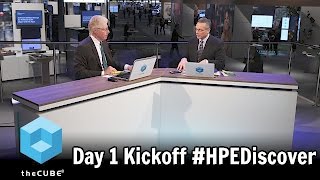
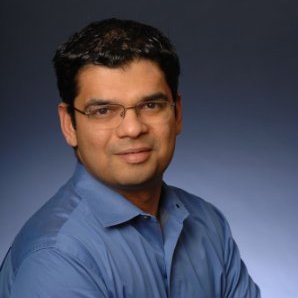
01. Milan Shetti, HPE, Visits #theCUBE!. (00:20)
02. How Are Things Going For You. (00:41)
03. Where Do You See The Role Of Storage Now. (01:40)
04. What Should Customers Take Away From The Demo Of The Machine. (04:31)
05. Is Shortening Reboot Time A Compelling Use Case. (07:25)
06. How Are You Improving The Dramatic Performance. (08:47)
07. Are We Going To See A Device Called The Machine. (09:32)
08. What Will This Do For Cost. (11:16)
09. Are IBM And HP Competitors. (12:47)
10. Does Persistent Memory Compete With Flash. (13:52)
Track List created with http://www.vinjavideo.com.
--- ---
The storage story behind The Machine, HPE’s reborn computer | #HPEDiscover
by GABRIEL PESEK
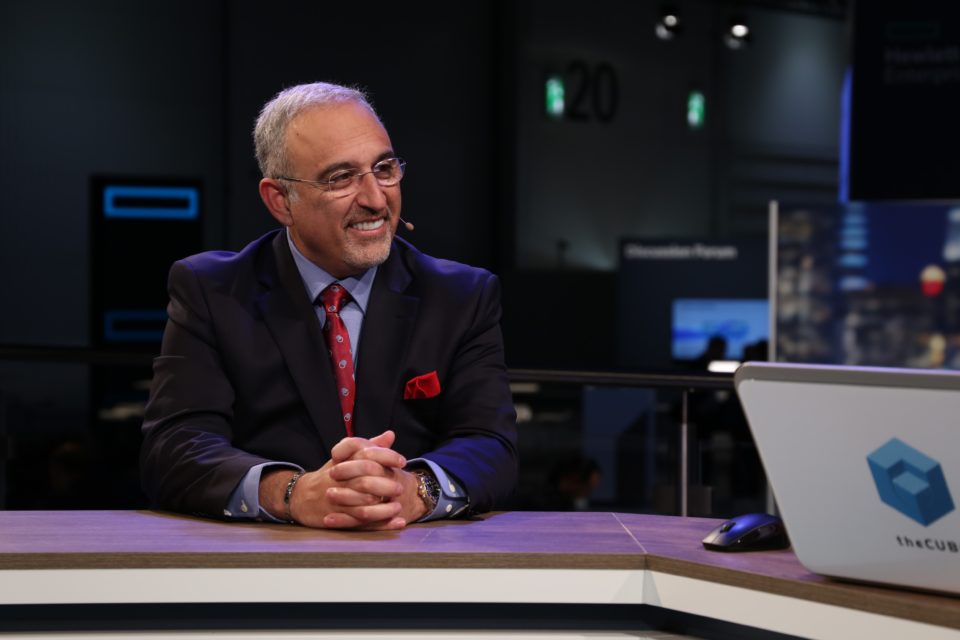
Unveiled Monday at HPE Discover EU in London, The Machine is a reborn computer that flips conventional IT architecture on its head. To discuss how storage is impacted by Hewlett Packard Enterprise Co.’s groundbreaking efforts to significantly speed up data retrieval, Milan Shetti, CTO of the Data Center Infrastructure Group at HPE, joined Dave Vellante (@dvellante) and Paul Gillin (@pgillin), co-hosts of theCUBE*, from the SiliconANGLE Media team.
Shetti’s expectation is that in the near future, the interactions between storage and computing would be focused in three “topologies.” The first two of these cover fairly traditional forms, under the groupings of rack and stack and direct external attachment to computers.
The third would be memory-driven computing, with the idea that “the working set [of data] … is really small,” so by putting it into a centralized place and allowing simultaneous access by multiple computing devices, each application would theoretically need less computing power.
“Storage will actually exist in all three places,” Shetti stated, but from the perspective of his division at HPE, that third place will be the one driving innovation.
Enter HPE’s The Machine, a computing architecture intended to drive computer functionality with data and memory rather than processors.
“What we wanted to show with The Machine initially was that when persistent memory comes in … what the world would look like if you never have to be afraid of reboots,” Shetti explained. “The way you would handle things would be very different.”
Faster links
Part of this change was motivated by the rising utility of containers in services and applications, and the delays that were being discovered in larger environments relying on that arrangement. As Shetti noted, data proximity to containers is a factor to be considered in the timing of reboots, accessibility and other qualities of operation.
“When you’re scaling services, and when you’re thousands and thousands of machines … there are large outages … because the limits of the cloud infrastructure erupts very fast,” he said.
One benefit mentioned in making this new shift would be that less infrastructure would be required to accomplish the same regular tasks, decreasing resource consumption, while decoupling the servicing of hardware from servicing of the applications would bring its own host of improvements.
Looking at the rise of Internet of Things dependencies, Shetti acknowledged that there simply was not enough bandwidth availability to shuttle their data back and forth from central data locations, necessitating improvement of edge computing. Speaking for HPE, he shared his company’s belief “that the center of the universe is going to be not compute … [but] data and memory,” with expectations that the new architecture would do for persistent memory what smartphones did for flash storage.
Forgot Password
Almost there!
We just sent you a verification email. Please verify your account to gain access to
HPE Discover 2016 | London. If you don’t think you received an email check your
spam folder.
In order to sign in, enter the email address you used to registered for the event. Once completed, you will receive an email with a verification link. Open this link to automatically sign into the site.
Register For HPE Discover 2016 | London
Please fill out the information below. You will recieve an email with a verification link confirming your registration. Click the link to automatically sign into the site.
You’re almost there!
We just sent you a verification email. Please click the verification button in the email. Once your email address is verified, you will have full access to all event content for HPE Discover 2016 | London.
I want my badge and interests to be visible to all attendees.
Checking this box will display your presense on the attendees list, view your profile and allow other attendees to contact you via 1-1 chat. Read the Privacy Policy. At any time, you can choose to disable this preference.
Select your Interests!
add
Upload your photo
Uploading..
OR
Connect via Twitter
Connect via Linkedin
EDIT PASSWORD
Share
Forgot Password
Almost there!
We just sent you a verification email. Please verify your account to gain access to
HPE Discover 2016 | London. If you don’t think you received an email check your
spam folder.
In order to sign in, enter the email address you used to registered for the event. Once completed, you will receive an email with a verification link. Open this link to automatically sign into the site.
Sign in to gain access to HPE Discover 2016 | London
Please sign in with LinkedIn to continue to HPE Discover 2016 | London. Signing in with LinkedIn ensures a professional environment.
Are you sure you want to remove access rights for this user?
Details
Manage Access
email address
Community Invitation
Milan Shetti, HPE - #HPEdiscover - #theCUBE
01. Milan Shetti, HPE, Visits #theCUBE!. (00:20)
02. How Are Things Going For You. (00:41)
03. Where Do You See The Role Of Storage Now. (01:40)
04. What Should Customers Take Away From The Demo Of The Machine. (04:31)
05. Is Shortening Reboot Time A Compelling Use Case. (07:25)
06. How Are You Improving The Dramatic Performance. (08:47)
07. Are We Going To See A Device Called The Machine. (09:32)
08. What Will This Do For Cost. (11:16)
09. Are IBM And HP Competitors. (12:47)
10. Does Persistent Memory Compete With Flash. (13:52)
Track List created with http://www.vinjavideo.com.
--- ---
The storage story behind The Machine, HPE’s reborn computer | #HPEDiscover
by GABRIEL PESEK
Unveiled Monday at HPE Discover EU in London, The Machine is a reborn computer that flips conventional IT architecture on its head. To discuss how storage is impacted by Hewlett Packard Enterprise Co.’s groundbreaking efforts to significantly speed up data retrieval, Milan Shetti, CTO of the Data Center Infrastructure Group at HPE, joined Dave Vellante (@dvellante) and Paul Gillin (@pgillin), co-hosts of theCUBE*, from the SiliconANGLE Media team.
Shetti’s expectation is that in the near future, the interactions between storage and computing would be focused in three “topologies.” The first two of these cover fairly traditional forms, under the groupings of rack and stack and direct external attachment to computers.
The third would be memory-driven computing, with the idea that “the working set [of data] … is really small,” so by putting it into a centralized place and allowing simultaneous access by multiple computing devices, each application would theoretically need less computing power.
“Storage will actually exist in all three places,” Shetti stated, but from the perspective of his division at HPE, that third place will be the one driving innovation.
Enter HPE’s The Machine, a computing architecture intended to drive computer functionality with data and memory rather than processors.
“What we wanted to show with The Machine initially was that when persistent memory comes in … what the world would look like if you never have to be afraid of reboots,” Shetti explained. “The way you would handle things would be very different.”
Faster links
Part of this change was motivated by the rising utility of containers in services and applications, and the delays that were being discovered in larger environments relying on that arrangement. As Shetti noted, data proximity to containers is a factor to be considered in the timing of reboots, accessibility and other qualities of operation.
“When you’re scaling services, and when you’re thousands and thousands of machines … there are large outages … because the limits of the cloud infrastructure erupts very fast,” he said.
One benefit mentioned in making this new shift would be that less infrastructure would be required to accomplish the same regular tasks, decreasing resource consumption, while decoupling the servicing of hardware from servicing of the applications would bring its own host of improvements.
Looking at the rise of Internet of Things dependencies, Shetti acknowledged that there simply was not enough bandwidth availability to shuttle their data back and forth from central data locations, necessitating improvement of edge computing. Speaking for HPE, he shared his company’s belief “that the center of the universe is going to be not compute … [but] data and memory,” with expectations that the new architecture would do for persistent memory what smartphones did for flash storage.