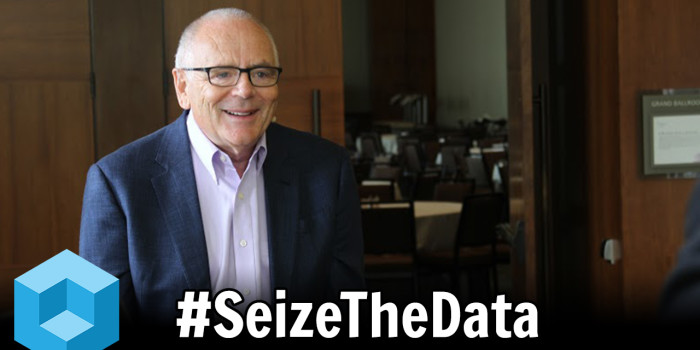
01. Steve Spear, Author Of The High-Velocity Edge, Visits #theCUBE!. (00:19)
02. Tell Us About The Story Of Toyota. (01:10)
03. Talk About The Gains That Toyota Was Making. (04:36)
04. How Do You Operationalize Knowing What Customers Want. (06:39)
05. Do You Get A Lot Of Questions On Tesla. (10:29)
06. What Does All This Have To Do With Analytics. (11:06)
Track List created with http://www.vinjavideo.com.
--- ---
Why Toyota needs analytics to uncover its own success | #SeizeTheData
by Heather Johnson | Sep 1, 2016
Auto manufacturer Toyota Motor Corp. didn’t start out as the leader in economy cars. But by the 1970s, the public recognized Toyota as the premier manufacturer of quality cars at a low cost.
Steve Spear, author of The High-Velocity Edge, sat down with Dave Vellante (@dvellante) and Paul Gillin (@pgillin), cohosts of theCUBE, from the SiliconANGLE Media team, during the HPE Big Data Conference to discuss what he learned from Toyota and how it ties with analytics.
Spear said that up through the mid-1990s, no auto manufacturer could compete with Toyota. Spear asked executives how a company could replicate its success. They didn’t have an answer. Not because they wouldn’t disclose secrets, but because they really didn’t know.
Analytics: Adjusting and adapting
After years of research, Spear concluded that productivity, reliability and speed of product cycle were three areas where Toyota excelled. When fuel efficiency became a hot topic, it dominated that goal too. “Toyota’s first hook was ‘affordable reliability,” said Spear. “It introduced new product and new brands, such as Lexus, more successfully than others.”
What does this have to do with analytics? Understanding.
“With the Toyota model, it’s not that you design something right, it’s that you design things and you know deeply that what you’ve designed is wrong,” said Spear. “In order to get it right, you need to understand what’s wrong about it and use customer feedback to help you get to what’s right. Analytics can help you gain much greater precision of where things are misfiring so you can adjust and adapt.”
Forgot Password
Almost there!
We just sent you a verification email. Please verify your account to gain access to
HPE Vertica Big Data Conference 2016 | Boston. If you don’t think you received an email check your
spam folder.
Sign in to HPE Vertica Big Data Conference 2016 | Boston.
In order to sign in, enter the email address you used to registered for the event. Once completed, you will receive an email with a verification link. Open this link to automatically sign into the site.
Register For HPE Vertica Big Data Conference 2016 | Boston
Please fill out the information below. You will recieve an email with a verification link confirming your registration. Click the link to automatically sign into the site.
You’re almost there!
We just sent you a verification email. Please click the verification button in the email. Once your email address is verified, you will have full access to all event content for HPE Vertica Big Data Conference 2016 | Boston.
I want my badge and interests to be visible to all attendees.
Checking this box will display your presense on the attendees list, view your profile and allow other attendees to contact you via 1-1 chat. Read the Privacy Policy. At any time, you can choose to disable this preference.
Select your Interests!
add
Upload your photo
Uploading..
OR
Connect via Twitter
Connect via Linkedin
EDIT PASSWORD
Share
Forgot Password
Almost there!
We just sent you a verification email. Please verify your account to gain access to
HPE Vertica Big Data Conference 2016 | Boston. If you don’t think you received an email check your
spam folder.
Sign in to HPE Vertica Big Data Conference 2016 | Boston.
In order to sign in, enter the email address you used to registered for the event. Once completed, you will receive an email with a verification link. Open this link to automatically sign into the site.
Sign in to gain access to HPE Vertica Big Data Conference 2016 | Boston
Please sign in with LinkedIn to continue to HPE Vertica Big Data Conference 2016 | Boston. Signing in with LinkedIn ensures a professional environment.
Are you sure you want to remove access rights for this user?
Details
Manage Access
email address
Community Invitation
Steve Spear, Author - HPE Big Data Conference 2016 #SeizeTheData #theCUBE
01. Steve Spear, Author Of The High-Velocity Edge, Visits #theCUBE!. (00:19)
02. Tell Us About The Story Of Toyota. (01:10)
03. Talk About The Gains That Toyota Was Making. (04:36)
04. How Do You Operationalize Knowing What Customers Want. (06:39)
05. Do You Get A Lot Of Questions On Tesla. (10:29)
06. What Does All This Have To Do With Analytics. (11:06)
Track List created with http://www.vinjavideo.com.
--- ---
Why Toyota needs analytics to uncover its own success | #SeizeTheData
by Heather Johnson | Sep 1, 2016
Auto manufacturer Toyota Motor Corp. didn’t start out as the leader in economy cars. But by the 1970s, the public recognized Toyota as the premier manufacturer of quality cars at a low cost.
Steve Spear, author of The High-Velocity Edge, sat down with Dave Vellante (@dvellante) and Paul Gillin (@pgillin), cohosts of theCUBE, from the SiliconANGLE Media team, during the HPE Big Data Conference to discuss what he learned from Toyota and how it ties with analytics.
Spear said that up through the mid-1990s, no auto manufacturer could compete with Toyota. Spear asked executives how a company could replicate its success. They didn’t have an answer. Not because they wouldn’t disclose secrets, but because they really didn’t know.
Analytics: Adjusting and adapting
After years of research, Spear concluded that productivity, reliability and speed of product cycle were three areas where Toyota excelled. When fuel efficiency became a hot topic, it dominated that goal too. “Toyota’s first hook was ‘affordable reliability,” said Spear. “It introduced new product and new brands, such as Lexus, more successfully than others.”
What does this have to do with analytics? Understanding.
“With the Toyota model, it’s not that you design something right, it’s that you design things and you know deeply that what you’ve designed is wrong,” said Spear. “In order to get it right, you need to understand what’s wrong about it and use customer feedback to help you get to what’s right. Analytics can help you gain much greater precision of where things are misfiring so you can adjust and adapt.”