A discussion on the impact of the advancement of computer science regarding space exploration and real time compute capability in space. Topics include the HPE Spaceborne computer on the International Space Station and the impact of Exascale computing to future research and exploration.
#ExascaleDay #theCUBE #HPE
https://siliconangle.com/2020/10/16/spaceborne-2-supercomputer-offers-free-availability-for-commercial-research-in-space-exascaleday/
Spaceborne 2 supercomputer offers free availability for commercial research in space
November 2, 2020, will mark 20 years since the first crew arrived at the International Space Station. The ISS has been continually inhabited since that time, with astronauts overseeing research not only for the National Aeronautics and Space Administration and other United States government agencies, but also for academic institutions and commercial business.
“We have four or five instruments looking down, measuring all kinds of things in the atmosphere, doing Earth observation data, astrophysics research, measuring cosmic rays … all kinds of things,” said Bryan Dansberry (pictured, left), education specialist at NASA Johnson Space Center. “Plus inside the station, you’ve got racks and racks of experiments. Typically, more than 50 experiments are going on at any one time,”
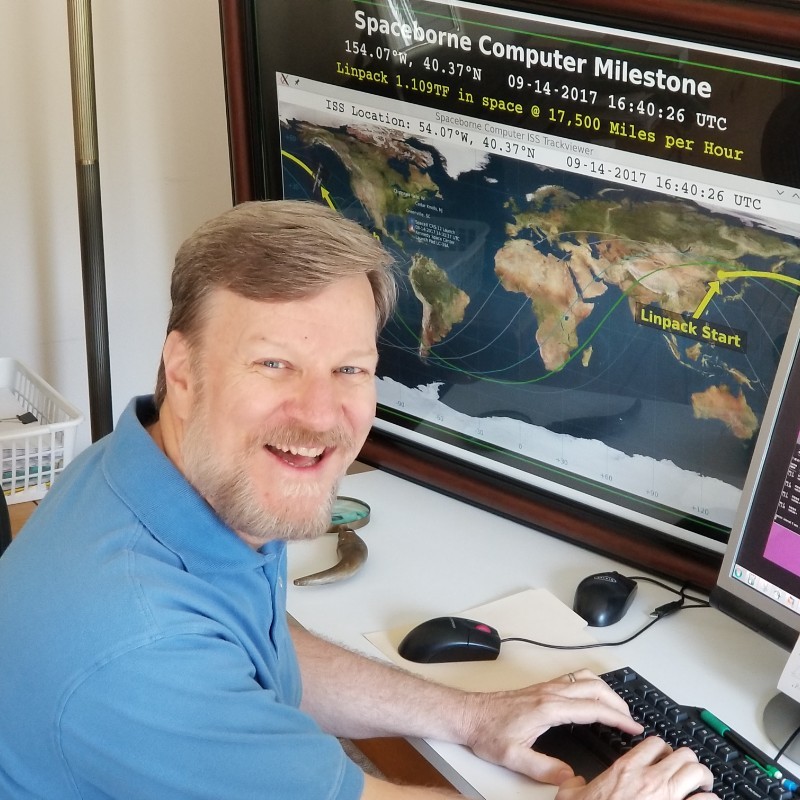
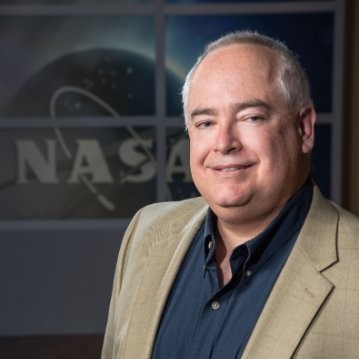
Dansberry and Mark R. Fernandez (pictured, right), principal investigator for the Spaceborne Computer-2 project at Hewlett Packard Enterprise, spoke with Dave Vellante, host of theCUBE, SiliconANGLE Media’s livestreaming studio, during Exascale Day 2020. They discussed the upcoming deployment of the Spaceborne Computer-2 project on the ISS and the benefits exascale computing will have on space research and missions to colonize other planets. (* Disclosure below.)
Spaceborne brings edge computing to outer space
“All of these experiments begin with data collection, whether that’s videos or samples or mold growing,” said Fernandez. But … “the purpose of exploration is insight not data collection. [After] collecting that data, we must process it or turn it into information and insight. And the faster we can do that, the faster we get our results and the better things are.”
In the past, data has been e-sent back down to Earth for processing, eating up a lot of bandwidth and limiting research efficiency. Or data was loaded onto hard drives and transported back to Earth via SpaceX vehicles — which also means delay.
The Space Station is only 250 miles above Earth. Go any farther (such as the moon or Mars) and physical shuttling becomes impractical and latency is a major problem.
“You’ve got to take those computational capabilities with you,” said Fernandez, positing a scenario where having data and processing power available in space could save lives. “If you’re a Mars explorer and you look out the window and there’s a big red cloud coming at you that looks like a tornado, you might want to do some Mars dust storm modeling right then and there to figure out what’s the safest thing to do.”
So, NASA enlisted HPE to investigate the possibilities of processing data in space.
“In 2017, we were able to put a teraflop system on the International Space Station to prove that we could do a trillion calculations a second in space,” Fernandez said. The teraflop system was HPE’s Spaceborne-1 supercomputer, which proved that edge computing in space was practical.
Fernandez, Dansberry, and their teams are now collaborating on Spaceborne-2 and encouraging commercial businesses to start planning to take advantage of its computational capabilities. “HPE has figured out that the economics are there,” Fernandez said. “We need to bring the customers through Spaceborne-2 in order for them to learn that we are not only reliable but current state of the art and that we can benefit them and all of humanity.”
HPE offers US researchers free access to Spaceborne-2
Spaceborne is not only the smartest and fastest computer in space, it is also “the most energy-efficient computer in existence,” thanks to free energy from solar power and cooling courtesy of the freezing temperatures in space, according to Fernandez.
With HPE partners NASA and the ISS National Lab footing the costs of transporting Spaceborne-2 into space, HPE is sharing the wealth by offering free use for U.S.-based research teams. Information on submitting a project can be found at the ISS website, or email spaceborne@hpe.com with ideas.
“All those that think they might be wanting to do an experiment on Spaceborne on the ISS in the future can take advantage of that,” Fernandez concluded.
Watch the complete video interview below, and be sure to check out more of SiliconANGLE’s and theCUBE’s coverage of Exascale Day 2020. (* Disclosure: TheCUBE is a paid media partner for Exascale Day 2020. Neither Hewlett Packard Enterprise, the sponsor for theCUBE’s event coverage, nor other sponsors have editorial control over content on theCUBE or SiliconANGLE.)
Forgot Password
Almost there!
We just sent you a verification email. Please verify your account to gain access to
Exascale Day 2020 | Digital. If you don’t think you received an email check your
spam folder.
In order to sign in, enter the email address you used to registered for the event. Once completed, you will receive an email with a verification link. Open this link to automatically sign into the site.
Register For Exascale Day 2020 | Digital
Please fill out the information below. You will recieve an email with a verification link confirming your registration. Click the link to automatically sign into the site.
You’re almost there!
We just sent you a verification email. Please click the verification button in the email. Once your email address is verified, you will have full access to all event content for Exascale Day 2020 | Digital.
I want my badge and interests to be visible to all attendees.
Checking this box will display your presense on the attendees list, view your profile and allow other attendees to contact you via 1-1 chat. Read the Privacy Policy. At any time, you can choose to disable this preference.
Select your Interests!
add
Upload your photo
Uploading..
OR
Connect via Twitter
Connect via Linkedin
EDIT PASSWORD
Share
Forgot Password
Almost there!
We just sent you a verification email. Please verify your account to gain access to
Exascale Day 2020 | Digital. If you don’t think you received an email check your
spam folder.
In order to sign in, enter the email address you used to registered for the event. Once completed, you will receive an email with a verification link. Open this link to automatically sign into the site.
Sign in to gain access to Exascale Day 2020 | Digital
Please sign in with LinkedIn to continue to Exascale Day 2020 | Digital. Signing in with LinkedIn ensures a professional environment.
Are you sure you want to remove access rights for this user?
Details
Manage Access
email address
Community Invitation
Computer Science & Space Exploration | Exascale Day
A discussion on the impact of the advancement of computer science regarding space exploration and real time compute capability in space. Topics include the HPE Spaceborne computer on the International Space Station and the impact of Exascale computing to future research and exploration.
#ExascaleDay #theCUBE #HPE
https://siliconangle.com/2020/10/16/spaceborne-2-supercomputer-offers-free-availability-for-commercial-research-in-space-exascaleday/
Spaceborne 2 supercomputer offers free availability for commercial research in space
November 2, 2020, will mark 20 years since the first crew arrived at the International Space Station. The ISS has been continually inhabited since that time, with astronauts overseeing research not only for the National Aeronautics and Space Administration and other United States government agencies, but also for academic institutions and commercial business.
“We have four or five instruments looking down, measuring all kinds of things in the atmosphere, doing Earth observation data, astrophysics research, measuring cosmic rays … all kinds of things,” said Bryan Dansberry (pictured, left), education specialist at NASA Johnson Space Center. “Plus inside the station, you’ve got racks and racks of experiments. Typically, more than 50 experiments are going on at any one time,”
Dansberry and Mark R. Fernandez (pictured, right), principal investigator for the Spaceborne Computer-2 project at Hewlett Packard Enterprise, spoke with Dave Vellante, host of theCUBE, SiliconANGLE Media’s livestreaming studio, during Exascale Day 2020. They discussed the upcoming deployment of the Spaceborne Computer-2 project on the ISS and the benefits exascale computing will have on space research and missions to colonize other planets. (* Disclosure below.)
Spaceborne brings edge computing to outer space
“All of these experiments begin with data collection, whether that’s videos or samples or mold growing,” said Fernandez. But … “the purpose of exploration is insight not data collection. [After] collecting that data, we must process it or turn it into information and insight. And the faster we can do that, the faster we get our results and the better things are.”
In the past, data has been e-sent back down to Earth for processing, eating up a lot of bandwidth and limiting research efficiency. Or data was loaded onto hard drives and transported back to Earth via SpaceX vehicles — which also means delay.
The Space Station is only 250 miles above Earth. Go any farther (such as the moon or Mars) and physical shuttling becomes impractical and latency is a major problem.
“You’ve got to take those computational capabilities with you,” said Fernandez, positing a scenario where having data and processing power available in space could save lives. “If you’re a Mars explorer and you look out the window and there’s a big red cloud coming at you that looks like a tornado, you might want to do some Mars dust storm modeling right then and there to figure out what’s the safest thing to do.”
So, NASA enlisted HPE to investigate the possibilities of processing data in space.
“In 2017, we were able to put a teraflop system on the International Space Station to prove that we could do a trillion calculations a second in space,” Fernandez said. The teraflop system was HPE’s Spaceborne-1 supercomputer, which proved that edge computing in space was practical.
Fernandez, Dansberry, and their teams are now collaborating on Spaceborne-2 and encouraging commercial businesses to start planning to take advantage of its computational capabilities. “HPE has figured out that the economics are there,” Fernandez said. “We need to bring the customers through Spaceborne-2 in order for them to learn that we are not only reliable but current state of the art and that we can benefit them and all of humanity.”
HPE offers US researchers free access to Spaceborne-2
Spaceborne is not only the smartest and fastest computer in space, it is also “the most energy-efficient computer in existence,” thanks to free energy from solar power and cooling courtesy of the freezing temperatures in space, according to Fernandez.
With HPE partners NASA and the ISS National Lab footing the costs of transporting Spaceborne-2 into space, HPE is sharing the wealth by offering free use for U.S.-based research teams. Information on submitting a project can be found at the ISS website, or email spaceborne@hpe.com with ideas.
“All those that think they might be wanting to do an experiment on Spaceborne on the ISS in the future can take advantage of that,” Fernandez concluded.
Watch the complete video interview below, and be sure to check out more of SiliconANGLE’s and theCUBE’s coverage of Exascale Day 2020. (* Disclosure: TheCUBE is a paid media partner for Exascale Day 2020. Neither Hewlett Packard Enterprise, the sponsor for theCUBE’s event coverage, nor other sponsors have editorial control over content on theCUBE or SiliconANGLE.)