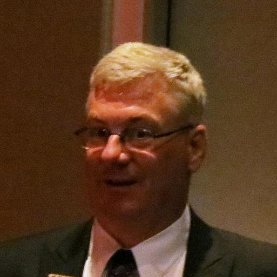
Randy Meyer, HPE & Paul Shellard, University of Cambridge, sit with Dave Vellante & Peter Burris for HPE Discover 2017 in Madrid, Spain.
#HPEDiscover #theCUBE
https://siliconangle.com/2017/12/04/scientists-mapping-the-universe-take-on-the-ultimate-big-data-challenge-hpediscovereu/
Scientists mapping the Universe take on the ultimate big data challenge
Nearly every enterprise has plenty of data to process, but a group of scientists in England may be facing the ultimate challenge. They are researchers with the Centre for Theoretical Cosmology, known as COSMOS, at the University of Cambridge, and their database is only 14 billion years of information gathered from the Universe.
“It’s a very data-driven science, and so we have to try and keep up with this flood of new data, which is getting larger and larger,” said Paul Shellard (pictured, right), director of COSMOS. “We’re kind of in a new age of exploration, and we’ve only got a tiny fraction of the Universe mapped so far.”
Shellard stopped by the set of theCUBE, SiliconANGLE Media’s mobile livestreaming studio, and spoke with co-hosts Dave Vellante (@dvellante) and Peter Burris (@plburris) during the HPE Discover EU event in Madrid, Spain. He was joined by Randy Meyer (pictured, left), vice president and general manager of mission-critical systems at Hewlett Packard Enterprise Co., and they discussed the challenges of managing huge data sets and how HPE’s new supercomputer is helping researchers. (* Disclosure below.)
Support for Stephen Hawking’s work
COSMOS is famed theoretician Stephen Hawking’s institute and also a customer of HPE. The institute’s scientific researchers are using HPE’s new Superdome Flex, a computer that can store up to 40 terabytes of data in high-speed memory. This allows data crunching, in this case 14 billion years of data, to be processed much more quickly than with a standard storage system.
“There’s a whole different side to what you can do with in-memory compute, and it’s all in this high-performance computing space,” Meyer said. “This is the world’s largest pattern recognition problem.”
The HPE supercomputer has freed COSMOS scientists to focus on the weightier problems of gravitational waves and black holes, rather than get bogged down in software development and bug-fixing. “You don’t have to be an advanced programmer to get going,” Shellard explained. “You can more or less develop your pipeline on a laptop, take it to the Superdome, and then scale it up to these huge memory problems.”
Watch the complete video interview below, and be sure to check out more of SiliconANGLE’s and theCUBE’s coverage of the HPE Discover EU event. (* Disclosure: TheCUBE is a paid media partner for the HPE Discover EU event. Neither Hewlett Packard Enterprise Co., the event sponsor, nor other sponsors have editorial control over content on theCUBE or SiliconANGLE.)
Forgot Password
Almost there!
We just sent you a verification email. Please verify your account to gain access to
HPE Discover 2017 | Madrid. If you don’t think you received an email check your
spam folder.
In order to sign in, enter the email address you used to registered for the event. Once completed, you will receive an email with a verification link. Open this link to automatically sign into the site.
Register For HPE Discover 2017 | Madrid
Please fill out the information below. You will recieve an email with a verification link confirming your registration. Click the link to automatically sign into the site.
You’re almost there!
We just sent you a verification email. Please click the verification button in the email. Once your email address is verified, you will have full access to all event content for HPE Discover 2017 | Madrid.
I want my badge and interests to be visible to all attendees.
Checking this box will display your presense on the attendees list, view your profile and allow other attendees to contact you via 1-1 chat. Read the Privacy Policy. At any time, you can choose to disable this preference.
Select your Interests!
add
Upload your photo
Uploading..
OR
Connect via Twitter
Connect via Linkedin
EDIT PASSWORD
Share
Forgot Password
Almost there!
We just sent you a verification email. Please verify your account to gain access to
HPE Discover 2017 | Madrid. If you don’t think you received an email check your
spam folder.
In order to sign in, enter the email address you used to registered for the event. Once completed, you will receive an email with a verification link. Open this link to automatically sign into the site.
Sign in to gain access to HPE Discover 2017 | Madrid
Please sign in with LinkedIn to continue to HPE Discover 2017 | Madrid. Signing in with LinkedIn ensures a professional environment.
Are you sure you want to remove access rights for this user?
Details
Manage Access
email address
Community Invitation
Randy Meyer, HPE & Paul Shellard, University of Cambridge | HPE Discover 2017 Madrid
Randy Meyer, HPE & Paul Shellard, University of Cambridge, sit with Dave Vellante & Peter Burris for HPE Discover 2017 in Madrid, Spain.
#HPEDiscover #theCUBE
https://siliconangle.com/2017/12/04/scientists-mapping-the-universe-take-on-the-ultimate-big-data-challenge-hpediscovereu/
Scientists mapping the Universe take on the ultimate big data challenge
Nearly every enterprise has plenty of data to process, but a group of scientists in England may be facing the ultimate challenge. They are researchers with the Centre for Theoretical Cosmology, known as COSMOS, at the University of Cambridge, and their database is only 14 billion years of information gathered from the Universe.
“It’s a very data-driven science, and so we have to try and keep up with this flood of new data, which is getting larger and larger,” said Paul Shellard (pictured, right), director of COSMOS. “We’re kind of in a new age of exploration, and we’ve only got a tiny fraction of the Universe mapped so far.”
Shellard stopped by the set of theCUBE, SiliconANGLE Media’s mobile livestreaming studio, and spoke with co-hosts Dave Vellante (@dvellante) and Peter Burris (@plburris) during the HPE Discover EU event in Madrid, Spain. He was joined by Randy Meyer (pictured, left), vice president and general manager of mission-critical systems at Hewlett Packard Enterprise Co., and they discussed the challenges of managing huge data sets and how HPE’s new supercomputer is helping researchers. (* Disclosure below.)
Support for Stephen Hawking’s work
COSMOS is famed theoretician Stephen Hawking’s institute and also a customer of HPE. The institute’s scientific researchers are using HPE’s new Superdome Flex, a computer that can store up to 40 terabytes of data in high-speed memory. This allows data crunching, in this case 14 billion years of data, to be processed much more quickly than with a standard storage system.
“There’s a whole different side to what you can do with in-memory compute, and it’s all in this high-performance computing space,” Meyer said. “This is the world’s largest pattern recognition problem.”
The HPE supercomputer has freed COSMOS scientists to focus on the weightier problems of gravitational waves and black holes, rather than get bogged down in software development and bug-fixing. “You don’t have to be an advanced programmer to get going,” Shellard explained. “You can more or less develop your pipeline on a laptop, take it to the Superdome, and then scale it up to these huge memory problems.”
Watch the complete video interview below, and be sure to check out more of SiliconANGLE’s and theCUBE’s coverage of the HPE Discover EU event. (* Disclosure: TheCUBE is a paid media partner for the HPE Discover EU event. Neither Hewlett Packard Enterprise Co., the event sponsor, nor other sponsors have editorial control over content on theCUBE or SiliconANGLE.)