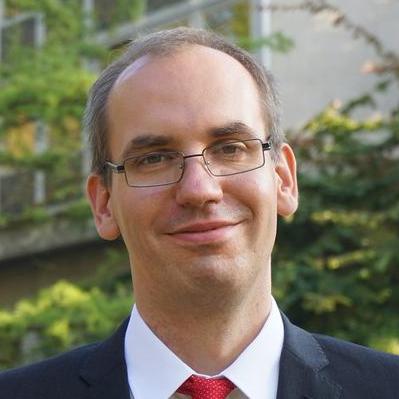
Sharad Singhal, The Machine & Matthias Becker, University of Bonn, sit with Dave Vellante & Peter Burris for HPE Discover 2017 in Madrid, Spain.
#HPEDiscover #theCUBE
https://siliconangle.com/2017/12/19/ultra-fast-hpe-machine-raises-new-hope-alzheimers-cure-hpediscovereu/
Ultra-fast HPE Machine raises new hope for Alzheimer’s cure
It’s one thing to develop a new computer game with really cool graphics and simulated action, but it’s another to apply processing power to save human lives. So when medical research scientists at the German Center for Neurodegenerative Diseases went looking for a computer that could handle an unfathomable amount of data from 36,000 volunteers for a 30-year study on Alzheimer’s disease, it was a struggle. Then they found The Machine.
Memory-driven computing architecture developed by Hewlett Packard Enterprise Corp. is being billed as not only the world’s largest single-memory computer at 160 terabytes, but it may well be the fastest, too. Medical scientists brought in The Machine, as the platform is called, to see if it could handle in real time the enormous amount of data being generated for the Alzheimer’s study. It could.
“Prior work was taking up to six days for processing. They were able to cut that to 22 minutes, and in the end we were able to shrink the time down to just 13 seconds,” said Matthias Becker (pictured, left), postdoctoral researcher at the University of Bonn.
Becker stopped by the set of theCUBE, SiliconANGLE Media’s mobile livestreaming studio, and spoke with co-hosts Dave Vellante (@dvellante) and Peter Burris (@plburris) during the HPE Discover EU event in Madrid, Spain. He was joined by Sharad Singhal, director of machine applications and software at HPE, and they discussed The Machine’s memory-driven architecture and the tremendous amount of data generated by the study. (* Disclosure below.)
Memory equal to 160 million books
The Machine represents an approach that turns the traditional computing model upside down. Rather than placing processors at the machine’s center and supporting those with a small measure of memory, The Machine has 160 terabytes of memory (equivalent to 160 million books), all addressable from any processing core with 40 computing nodes around it.
“Although we call it memory-driven computing, it’s really data-driven computing,” Singhal said. “The data is now at the center of this computing architecture as opposed to the processor, and any processor can reach into any part of that data directly as if it was doing addressing in local memory.”
The ambitious study is collecting information related to volunteers’ blood samples, living environment, imaging data from the brain, and even MRIs. It’s a lot of data, but scientists are hopeful that by analyzing multiple hypotheses rapidly in real time, they can identify biomarkers for a disease that is the only leading cause of death in the U.S. that cannot be prevented, slowed or cured.
“The idea is to identify Alzheimer’s long before the first symptoms are shown,” Becker said. “Right now, there’s no improvement in sight.”
Watch the complete video interview below, and be sure to check out more of SiliconANGLE’s and theCUBE’s coverage of the HPE Discover EU event. (* Disclosure: TheCUBE is a paid media partner for the HPE Discover EU event. Neither Hewlett Packard Enterprise Co., the event sponsor, nor other sponsors have editorial control over content on theCUBE or SiliconANGLE.)
Forgot Password
Almost there!
We just sent you a verification email. Please verify your account to gain access to
HPE Discover 2017 | Madrid. If you don’t think you received an email check your
spam folder.
In order to sign in, enter the email address you used to registered for the event. Once completed, you will receive an email with a verification link. Open this link to automatically sign into the site.
Register For HPE Discover 2017 | Madrid
Please fill out the information below. You will recieve an email with a verification link confirming your registration. Click the link to automatically sign into the site.
You’re almost there!
We just sent you a verification email. Please click the verification button in the email. Once your email address is verified, you will have full access to all event content for HPE Discover 2017 | Madrid.
I want my badge and interests to be visible to all attendees.
Checking this box will display your presense on the attendees list, view your profile and allow other attendees to contact you via 1-1 chat. Read the Privacy Policy. At any time, you can choose to disable this preference.
Select your Interests!
add
Upload your photo
Uploading..
OR
Connect via Twitter
Connect via Linkedin
EDIT PASSWORD
Share
Forgot Password
Almost there!
We just sent you a verification email. Please verify your account to gain access to
HPE Discover 2017 | Madrid. If you don’t think you received an email check your
spam folder.
In order to sign in, enter the email address you used to registered for the event. Once completed, you will receive an email with a verification link. Open this link to automatically sign into the site.
Sign in to gain access to HPE Discover 2017 | Madrid
Please sign in with LinkedIn to continue to HPE Discover 2017 | Madrid. Signing in with LinkedIn ensures a professional environment.
Are you sure you want to remove access rights for this user?
Details
Manage Access
email address
Community Invitation
Sharad Singhal, The Machine & Matthias Becker, University of Bonn | HPE Discover Madrid 2017
Sharad Singhal, The Machine & Matthias Becker, University of Bonn, sit with Dave Vellante & Peter Burris for HPE Discover 2017 in Madrid, Spain.
#HPEDiscover #theCUBE
https://siliconangle.com/2017/12/19/ultra-fast-hpe-machine-raises-new-hope-alzheimers-cure-hpediscovereu/
Ultra-fast HPE Machine raises new hope for Alzheimer’s cure
It’s one thing to develop a new computer game with really cool graphics and simulated action, but it’s another to apply processing power to save human lives. So when medical research scientists at the German Center for Neurodegenerative Diseases went looking for a computer that could handle an unfathomable amount of data from 36,000 volunteers for a 30-year study on Alzheimer’s disease, it was a struggle. Then they found The Machine.
Memory-driven computing architecture developed by Hewlett Packard Enterprise Corp. is being billed as not only the world’s largest single-memory computer at 160 terabytes, but it may well be the fastest, too. Medical scientists brought in The Machine, as the platform is called, to see if it could handle in real time the enormous amount of data being generated for the Alzheimer’s study. It could.
“Prior work was taking up to six days for processing. They were able to cut that to 22 minutes, and in the end we were able to shrink the time down to just 13 seconds,” said Matthias Becker (pictured, left), postdoctoral researcher at the University of Bonn.
Becker stopped by the set of theCUBE, SiliconANGLE Media’s mobile livestreaming studio, and spoke with co-hosts Dave Vellante (@dvellante) and Peter Burris (@plburris) during the HPE Discover EU event in Madrid, Spain. He was joined by Sharad Singhal, director of machine applications and software at HPE, and they discussed The Machine’s memory-driven architecture and the tremendous amount of data generated by the study. (* Disclosure below.)
Memory equal to 160 million books
The Machine represents an approach that turns the traditional computing model upside down. Rather than placing processors at the machine’s center and supporting those with a small measure of memory, The Machine has 160 terabytes of memory (equivalent to 160 million books), all addressable from any processing core with 40 computing nodes around it.
“Although we call it memory-driven computing, it’s really data-driven computing,” Singhal said. “The data is now at the center of this computing architecture as opposed to the processor, and any processor can reach into any part of that data directly as if it was doing addressing in local memory.”
The ambitious study is collecting information related to volunteers’ blood samples, living environment, imaging data from the brain, and even MRIs. It’s a lot of data, but scientists are hopeful that by analyzing multiple hypotheses rapidly in real time, they can identify biomarkers for a disease that is the only leading cause of death in the U.S. that cannot be prevented, slowed or cured.
“The idea is to identify Alzheimer’s long before the first symptoms are shown,” Becker said. “Right now, there’s no improvement in sight.”
Watch the complete video interview below, and be sure to check out more of SiliconANGLE’s and theCUBE’s coverage of the HPE Discover EU event. (* Disclosure: TheCUBE is a paid media partner for the HPE Discover EU event. Neither Hewlett Packard Enterprise Co., the event sponsor, nor other sponsors have editorial control over content on theCUBE or SiliconANGLE.)