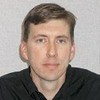
Dave Vellante, Chief Analyst, Wikibon and John Furrier, Founder, SiliconANGLE spoke with Jeff Cortley, VP, Solutions and Product Management of Alcatel-Lucent in the Cube at Gen 8 2012.
Cortley is an OEM customer of HP and Gen 8 who sells to telecom companies. Additionally, Alcatel-Lucent is in a category of a network equipment provider that manufactures and develops all the communications infrastructure that service providers such as cable companies, wireless network operators, fixed line data operators and large enterprises require to build, operate and manage a network.
Customers report that the big pressure points are the consumption of data, video and the smart phone phenomenon. Increasing the speed of mobile access and convergence across different devices are big drivers. Cortley states, "There is a lot of value in what the operators can provide in terms of putting things on the customer's bill, validating their identity and preferences, etc. So you can do mashups between an over the top application and a traditional communication application and create a lot of new services." Being able to federate the data between a cloud operator and a more traditional network data center environment will lead to a lot of hybrid deployment topologies or configurations where some of an application will exist in the cloud and some will be of a more traditional infrastructure. Cortley discusses how this will affect his SLA environment, "SLA really constitutes a number of different attributes, so there is basically zero down time. So these are mission critical applications and if there is an outage a lot of times it makes the Wall Street Journal...it affects people's jobs." He adds that there are SLA's related to how quickly they respond and restore when there is a problem..
Alcatel-Lucent sells to customers by differentiating the capabilities they are offering. The operator is performing a business case in terms of the generated revenue based on the capabilites of the technology offered. Cortley continues, "It really becomes a total cost of ownership and the compute platform and the Gen 8 infrastructure is an overall part of our system.. So, when we can show faster time to revenue, lower costs of the total cost of ownership, simplification in terms of manageability, etc. Those are all element."
The innovation around the energy in regards to space, power and cooling is key. Multiple racks of equipment can require a lot of variation in terms of thermal properties or CPU utilization. Cortley explains, "The more visibility that you have about the real time performance of the application, the better you can tune that dynamically, and again reduce the amount of server machines that are required to run of system to support that number."
Applications in this industry are moving from the central office to the data center. Previously there was a strong demarcation between systems that ran in the network and business systems that ran in CIO. Applications are looking to pull real time information from the network such as a user's presence. Cortley continues, "Some of our systems are deployed in a central office type of environment. Some of them are deployed in an IT environment.. So the flexibility we get of being able to deploy the same software on either server architecture or blade architecture, DC power/AC power, etc. We've got all those types out in the marketplace."
Forgot Password
Almost there!
We just sent you a verification email. Please verify your account to gain access to
HP Gen8 2012 | Las Vegas. If you don’t think you received an email check your
spam folder.
In order to sign in, enter the email address you used to registered for the event. Once completed, you will receive an email with a verification link. Open this link to automatically sign into the site.
Register For HP Gen8 2012 | Las Vegas
Please fill out the information below. You will recieve an email with a verification link confirming your registration. Click the link to automatically sign into the site.
You’re almost there!
We just sent you a verification email. Please click the verification button in the email. Once your email address is verified, you will have full access to all event content for HP Gen8 2012 | Las Vegas.
I want my badge and interests to be visible to all attendees.
Checking this box will display your presense on the attendees list, view your profile and allow other attendees to contact you via 1-1 chat. Read the Privacy Policy. At any time, you can choose to disable this preference.
Select your Interests!
add
Upload your photo
Uploading..
OR
Connect via Twitter
Connect via Linkedin
EDIT PASSWORD
Share
Forgot Password
Almost there!
We just sent you a verification email. Please verify your account to gain access to
HP Gen8 2012 | Las Vegas. If you don’t think you received an email check your
spam folder.
In order to sign in, enter the email address you used to registered for the event. Once completed, you will receive an email with a verification link. Open this link to automatically sign into the site.
Sign in to gain access to HP Gen8 2012 | Las Vegas
Please sign in with LinkedIn to continue to HP Gen8 2012 | Las Vegas. Signing in with LinkedIn ensures a professional environment.
Are you sure you want to remove access rights for this user?
Details
Manage Access
email address
Community Invitation
Jeff Cortley - Gen8 2012 - theCUBE
Dave Vellante, Chief Analyst, Wikibon and John Furrier, Founder, SiliconANGLE spoke with Jeff Cortley, VP, Solutions and Product Management of Alcatel-Lucent in the Cube at Gen 8 2012.
Cortley is an OEM customer of HP and Gen 8 who sells to telecom companies. Additionally, Alcatel-Lucent is in a category of a network equipment provider that manufactures and develops all the communications infrastructure that service providers such as cable companies, wireless network operators, fixed line data operators and large enterprises require to build, operate and manage a network.
Customers report that the big pressure points are the consumption of data, video and the smart phone phenomenon. Increasing the speed of mobile access and convergence across different devices are big drivers. Cortley states, "There is a lot of value in what the operators can provide in terms of putting things on the customer's bill, validating their identity and preferences, etc. So you can do mashups between an over the top application and a traditional communication application and create a lot of new services." Being able to federate the data between a cloud operator and a more traditional network data center environment will lead to a lot of hybrid deployment topologies or configurations where some of an application will exist in the cloud and some will be of a more traditional infrastructure. Cortley discusses how this will affect his SLA environment, "SLA really constitutes a number of different attributes, so there is basically zero down time. So these are mission critical applications and if there is an outage a lot of times it makes the Wall Street Journal...it affects people's jobs." He adds that there are SLA's related to how quickly they respond and restore when there is a problem..
Alcatel-Lucent sells to customers by differentiating the capabilities they are offering. The operator is performing a business case in terms of the generated revenue based on the capabilites of the technology offered. Cortley continues, "It really becomes a total cost of ownership and the compute platform and the Gen 8 infrastructure is an overall part of our system.. So, when we can show faster time to revenue, lower costs of the total cost of ownership, simplification in terms of manageability, etc. Those are all element."
The innovation around the energy in regards to space, power and cooling is key. Multiple racks of equipment can require a lot of variation in terms of thermal properties or CPU utilization. Cortley explains, "The more visibility that you have about the real time performance of the application, the better you can tune that dynamically, and again reduce the amount of server machines that are required to run of system to support that number."
Applications in this industry are moving from the central office to the data center. Previously there was a strong demarcation between systems that ran in the network and business systems that ran in CIO. Applications are looking to pull real time information from the network such as a user's presence. Cortley continues, "Some of our systems are deployed in a central office type of environment. Some of them are deployed in an IT environment.. So the flexibility we get of being able to deploy the same software on either server architecture or blade architecture, DC power/AC power, etc. We've got all those types out in the marketplace."