The software-defined data center is a broad topic that extends beyond infrastructure to people and processes, but while the underlying technologies have garnered plenty of attention lately, the operational aspects of making the jump from legacy environments tend to get less buzz.
That is especially true when it comes to professional support, an essential safety net for enterprise CIOs embarking on new initiatives that is also undergoing massive changes as organizations move to new service delivery models. Alastair Winner, the vice president of technology services support for servers and networking at Hewlett-Packard, returned to SiliconANGLE's theCUBE at the company's recent Discover summit to share the insider's perspective on the trends disrupting his line of work and what his unit is doing to respond.
The right service for the job
HP is pursuing a "multi-threaded" support strategy that covers the full industry gamut from small- and medium-sized businesses (SMBs) through traditional enterprises to the Internet giants spearheading the hyperscale movement, Winner said. As the fastest growing segment of the server market, that last space is the biggest priority.
The hyperscale market has very different needs from those of HP's traditional support organization, he said. Whereas corporate customers typically expect the firm to all but manage their infrastructure on their behalf, "these guys are very self-sufficient and each one we deal with has a different set of capabilities and requirements so we have to be quite customized in the way we approach the solution," he noted.
The differences in requirements reflect two distinct approaches to infrastructure management, Winner said. Whereas enterprises tend to concentrate on avoiding hardware failures, hyperscale companies like Google and Facebook recognize outages as inevitable and therefore focus on mitigating the service impact of a component failure rather than preventing them entirely.
However, the hyperscale model isn't appropriate to most enterprises, he cautioned. "The customization of servers will only happen in that very high end. There is a cost associated with that, and many of the features Google or Facebook don't require the enterprise customers do," he explained. For the most part, professional support falls into the latter category.
Intertwined with HP's push to serve the complex needs of Internet giants are parallel efforts to simplify the switch for enterprises, according to Winner. HP is doing that by tackling one layer of the stack at a time.
In software-defined networking side, for example, HP offers a suite of "transformation services" to help enterprises adopt roadmaps that best meet their specific requirements. "The CIOs and the IT teams are brought into this [process] as something they absolutely need to do," he said. "We need to help them find the right path for their business to adapt."
In the compute layer, HP provides an analytics service that collects sensory data from customers' servers, turns that output into useful insights and relays back the results to CIOs to give them increased visibility into their environments.
Winner said that's only the beginning. He says HP will ultimately diversify its analytics strategy into new areas and share information collected from hyperscale customers with enterprise CIOs to drive best practices. Massively scalable software-defined data centers are the future, he said. Having a differentiated [hyperscale service provider] services is absolutely critical as [these concepts] start to move into the enterprise."
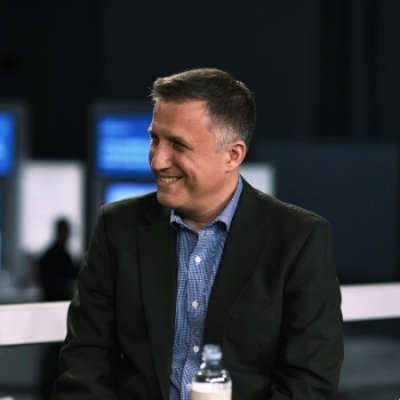
Alastair Winner, HP Technology Support Services, with John Furrier and Dave Vellante at HP Discover Las Vegas 2014
Forgot Password
Almost there!
We just sent you a verification email. Please verify your account to gain access to
HP Discover 2014 | Las Vegas. If you don’t think you received an email check your
spam folder.
In order to sign in, enter the email address you used to registered for the event. Once completed, you will receive an email with a verification link. Open this link to automatically sign into the site.
Register For HP Discover 2014 | Las Vegas
Please fill out the information below. You will recieve an email with a verification link confirming your registration. Click the link to automatically sign into the site.
You’re almost there!
We just sent you a verification email. Please click the verification button in the email. Once your email address is verified, you will have full access to all event content for HP Discover 2014 | Las Vegas.
I want my badge and interests to be visible to all attendees.
Checking this box will display your presense on the attendees list, view your profile and allow other attendees to contact you via 1-1 chat. Read the Privacy Policy. At any time, you can choose to disable this preference.
Select your Interests!
add
Upload your photo
Uploading..
OR
Connect via Twitter
Connect via Linkedin
EDIT PASSWORD
Share
Forgot Password
Almost there!
We just sent you a verification email. Please verify your account to gain access to
HP Discover 2014 | Las Vegas. If you don’t think you received an email check your
spam folder.
In order to sign in, enter the email address you used to registered for the event. Once completed, you will receive an email with a verification link. Open this link to automatically sign into the site.
Sign in to gain access to HP Discover 2014 | Las Vegas
Please sign in with LinkedIn to continue to HP Discover 2014 | Las Vegas. Signing in with LinkedIn ensures a professional environment.
Are you sure you want to remove access rights for this user?
Details
Manage Access
email address
Community Invitation
Alastair Winner - HP Discover Las Vegas 2014 - theCUBE - #HPDiscover
The software-defined data center is a broad topic that extends beyond infrastructure to people and processes, but while the underlying technologies have garnered plenty of attention lately, the operational aspects of making the jump from legacy environments tend to get less buzz.
That is especially true when it comes to professional support, an essential safety net for enterprise CIOs embarking on new initiatives that is also undergoing massive changes as organizations move to new service delivery models. Alastair Winner, the vice president of technology services support for servers and networking at Hewlett-Packard, returned to SiliconANGLE's theCUBE at the company's recent Discover summit to share the insider's perspective on the trends disrupting his line of work and what his unit is doing to respond.
The right service for the job
HP is pursuing a "multi-threaded" support strategy that covers the full industry gamut from small- and medium-sized businesses (SMBs) through traditional enterprises to the Internet giants spearheading the hyperscale movement, Winner said. As the fastest growing segment of the server market, that last space is the biggest priority.
The hyperscale market has very different needs from those of HP's traditional support organization, he said. Whereas corporate customers typically expect the firm to all but manage their infrastructure on their behalf, "these guys are very self-sufficient and each one we deal with has a different set of capabilities and requirements so we have to be quite customized in the way we approach the solution," he noted.
The differences in requirements reflect two distinct approaches to infrastructure management, Winner said. Whereas enterprises tend to concentrate on avoiding hardware failures, hyperscale companies like Google and Facebook recognize outages as inevitable and therefore focus on mitigating the service impact of a component failure rather than preventing them entirely.
However, the hyperscale model isn't appropriate to most enterprises, he cautioned. "The customization of servers will only happen in that very high end. There is a cost associated with that, and many of the features Google or Facebook don't require the enterprise customers do," he explained. For the most part, professional support falls into the latter category.
Intertwined with HP's push to serve the complex needs of Internet giants are parallel efforts to simplify the switch for enterprises, according to Winner. HP is doing that by tackling one layer of the stack at a time.
In software-defined networking side, for example, HP offers a suite of "transformation services" to help enterprises adopt roadmaps that best meet their specific requirements. "The CIOs and the IT teams are brought into this [process] as something they absolutely need to do," he said. "We need to help them find the right path for their business to adapt."
In the compute layer, HP provides an analytics service that collects sensory data from customers' servers, turns that output into useful insights and relays back the results to CIOs to give them increased visibility into their environments.
Winner said that's only the beginning. He says HP will ultimately diversify its analytics strategy into new areas and share information collected from hyperscale customers with enterprise CIOs to drive best practices. Massively scalable software-defined data centers are the future, he said. Having a differentiated [hyperscale service provider] services is absolutely critical as [these concepts] start to move into the enterprise."
Alastair Winner, HP Technology Support Services, with John Furrier and Dave Vellante at HP Discover Las Vegas 2014