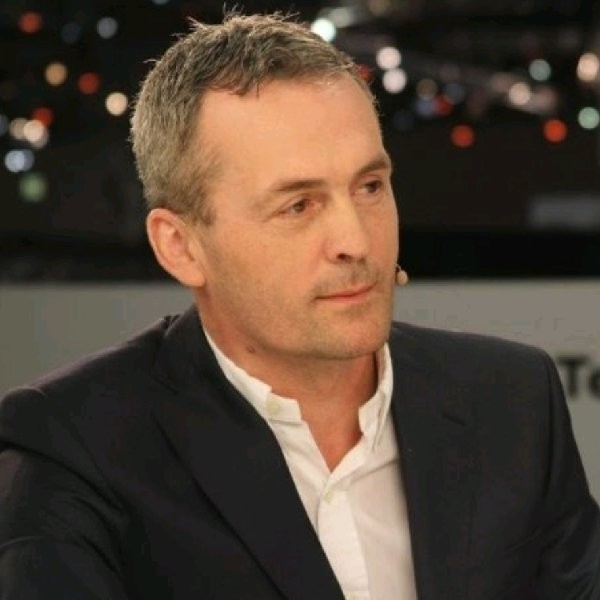
Seamus Dunne, HP, at HP Discover Barcelona 2013 with John Furrier and Dave Vellante
Broadcasting all the way from Barcelona, theCUBE co-hosts John Furrier and Dave Vellante intercepted Seamus Dunne, VP of Technology Services with HP, to talk about the hybrid cloud hype and the financial implications of owning versus renting technology.
Introducing their line of work, Seamus declared: "Largely, in our services business we've been focusing on data center, doing a lot of stuff dealing with the flexible capacity service, taking the public cloud agility and flexibility and, using financial instruments and service capabilities, offer you the same capability in your own data center."
From Dunne's experience, a lot of customers wonder why is it so difficult to go to the public cloud; there's a certain hesitation, especially from the Enterprises, because of the trickiness of setting up and because it is not very easy to manage it all.
Furrier was intrigued by the user experience and wanted to know of the biggest issues he encountered with the customers. "Specifically, what makes hybrid cloud different than AWS?" he asked.
What makes HP's hybrid cloud different from AWS?
"The thing that most customers say to us is 'Help Me'," said Seamus. In early stages, customers can put some of their workloads on the public cloud, but sometimes they have to stay on-premise. If they want to take it off-premise, there's issues like latency and security to deal with, so basically the customers need help in figuring out what their strategy is. After they receive help with that, they usually ask for continuous support regarding the hybrid cloud.
"We are leaders in providing data center support, so we're putting that whole Enterprise-grade help and support in one package, right across every deployment in our hybrid cloud," said Dunne.
Furrier quoted Meg Whitman, the CEO of HP: "We build it, we back it and we service it", asking Dunne to take the viewers through all these stages, explaining the process.
"If we take on-premise, we can help you with your strategy, writing the life-cycle: deploying it, develop your strategy, putting everything in place and supporting it. We've built centers of excellence and gathered experts around our on-premise cloud system. We also have our public cloud team, developing an enterprise-grade public cloud. Our next step is unifying that help and support experience. Even though it's different deployments and different hybrid IT, we're going to help you manage it, govern it, support it, preventing it from falling, knowing which workloads to put on the cloud and how to manage the whole thing," boasted Dunne.
"It's basically the cloud broker model," noted Vellante. "What does that concept mean to HP and for the customer?"
"The cloud broker is only a small element of what I am describing. We are not simply going to recommend a solution and step away; we're going to stay with you." Dunne explained that the customers are pretty knowledgeable when it comes to finding a broker and choosing a solution, but most of them are simply more confident when they know that somebody is going to be next to them in case anything goes wrong in the process or, even better, advise them before anything happens.
more at: http://siliconangle.com/blog/2013/12/12/hp-mantra-building-backing-servicing-hpdiscover/
@thecube
#hpdiscover
Forgot Password
Almost there!
We just sent you a verification email. Please verify your account to gain access to
HP Discover 2013 | Barcelona. If you don’t think you received an email check your
spam folder.
In order to sign in, enter the email address you used to registered for the event. Once completed, you will receive an email with a verification link. Open this link to automatically sign into the site.
Register For HP Discover 2013 | Barcelona
Please fill out the information below. You will recieve an email with a verification link confirming your registration. Click the link to automatically sign into the site.
You’re almost there!
We just sent you a verification email. Please click the verification button in the email. Once your email address is verified, you will have full access to all event content for HP Discover 2013 | Barcelona.
I want my badge and interests to be visible to all attendees.
Checking this box will display your presense on the attendees list, view your profile and allow other attendees to contact you via 1-1 chat. Read the Privacy Policy. At any time, you can choose to disable this preference.
Select your Interests!
add
Upload your photo
Uploading..
OR
Connect via Twitter
Connect via Linkedin
EDIT PASSWORD
Share
Forgot Password
Almost there!
We just sent you a verification email. Please verify your account to gain access to
HP Discover 2013 | Barcelona. If you don’t think you received an email check your
spam folder.
In order to sign in, enter the email address you used to registered for the event. Once completed, you will receive an email with a verification link. Open this link to automatically sign into the site.
Sign in to gain access to HP Discover 2013 | Barcelona
Please sign in with LinkedIn to continue to HP Discover 2013 | Barcelona. Signing in with LinkedIn ensures a professional environment.
Are you sure you want to remove access rights for this user?
Details
Manage Access
email address
Community Invitation
Seamus Dunne - HP Discover Barcelona 2013 - theCUBE - #HPDiscover
Seamus Dunne, HP, at HP Discover Barcelona 2013 with John Furrier and Dave Vellante
Broadcasting all the way from Barcelona, theCUBE co-hosts John Furrier and Dave Vellante intercepted Seamus Dunne, VP of Technology Services with HP, to talk about the hybrid cloud hype and the financial implications of owning versus renting technology.
Introducing their line of work, Seamus declared: "Largely, in our services business we've been focusing on data center, doing a lot of stuff dealing with the flexible capacity service, taking the public cloud agility and flexibility and, using financial instruments and service capabilities, offer you the same capability in your own data center."
From Dunne's experience, a lot of customers wonder why is it so difficult to go to the public cloud; there's a certain hesitation, especially from the Enterprises, because of the trickiness of setting up and because it is not very easy to manage it all.
Furrier was intrigued by the user experience and wanted to know of the biggest issues he encountered with the customers. "Specifically, what makes hybrid cloud different than AWS?" he asked.
What makes HP's hybrid cloud different from AWS?
"The thing that most customers say to us is 'Help Me'," said Seamus. In early stages, customers can put some of their workloads on the public cloud, but sometimes they have to stay on-premise. If they want to take it off-premise, there's issues like latency and security to deal with, so basically the customers need help in figuring out what their strategy is. After they receive help with that, they usually ask for continuous support regarding the hybrid cloud.
"We are leaders in providing data center support, so we're putting that whole Enterprise-grade help and support in one package, right across every deployment in our hybrid cloud," said Dunne.
Furrier quoted Meg Whitman, the CEO of HP: "We build it, we back it and we service it", asking Dunne to take the viewers through all these stages, explaining the process.
"If we take on-premise, we can help you with your strategy, writing the life-cycle: deploying it, develop your strategy, putting everything in place and supporting it. We've built centers of excellence and gathered experts around our on-premise cloud system. We also have our public cloud team, developing an enterprise-grade public cloud. Our next step is unifying that help and support experience. Even though it's different deployments and different hybrid IT, we're going to help you manage it, govern it, support it, preventing it from falling, knowing which workloads to put on the cloud and how to manage the whole thing," boasted Dunne.
"It's basically the cloud broker model," noted Vellante. "What does that concept mean to HP and for the customer?"
"The cloud broker is only a small element of what I am describing. We are not simply going to recommend a solution and step away; we're going to stay with you." Dunne explained that the customers are pretty knowledgeable when it comes to finding a broker and choosing a solution, but most of them are simply more confident when they know that somebody is going to be next to them in case anything goes wrong in the process or, even better, advise them before anything happens.
more at: http://siliconangle.com/blog/2013/12/12/hp-mantra-building-backing-servicing-hpdiscover/
@thecube
#hpdiscover