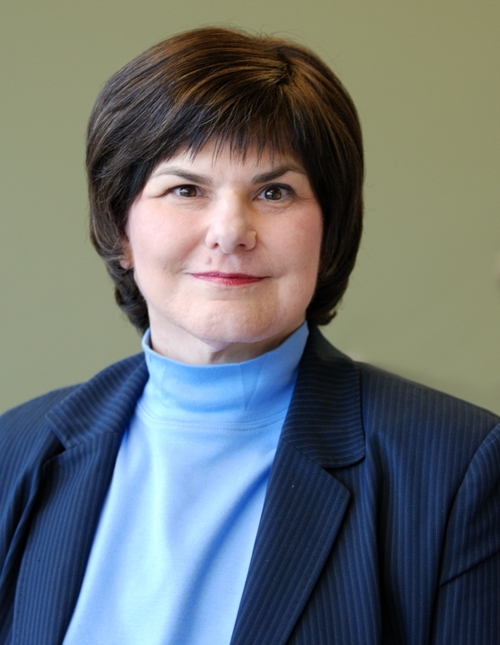
Just about the only thing that Intel Data Center Group General Manager Pauline Nist worries about in the future of IT is that the Internet is facing a capacity crisis. And with the huge growth in traffic from mobile devices, and the carriers promising 4G and 5G service, she only expects the problem to get worse.
"It's not getting fiber to my home that concerns me, it's whose handling the backhaul and what capacity they have," she says.
The public network is already showing signs of maxing out. "Remember in March Madness when they had to cap the number of people who could watch a game, and you had to wait for somebody to drop off before you could log in?" As consumer demand for video over the Internet including movies and TV grows, the issue will only get worse.
And the carriers cannot afford to simply upgrade the entire network. Unless they can find a way to recover the cost of upgrades, they will be left with two choices -- "they will either have to throttle user data rates or increase prices to pay for network upgrades."
Meanwhile, business is moving from batch to near real-time and wants to transfer more data faster across the public network to multiple locations. Nist definitely sees a trend there. In retail, for instance, moving inventory from batch to near real-time will, for instance, allow stores to change prices across their entire inventory in an hour rather than needing weeks. It can allow them to react to demand changes, drop prices, for instance, on food items that are nearing the end of their shelf life, or charge less for something not selling in the store while keeping the same product at full price online if it is selling better there.
Intel, she says, is happy to see Big Data moving toward near real-time because it means more data in memory, which means more memory chip sales. It also means more compression, because those memory chips are expensive, and compression means more processing cycles, which again means sale of more high-end processors.
When virtualization began to take off, many analysts expected Intel would see a drop in sales as companies eliminated all the excess capacity in their data centers. That never happened for a couple of reasons, Nist said. First high-performance computing demand is growing rapidly, and "virtualization is anathema to them. They don't want to give up a single cycle" to running a hypervisor.
Second, she said, while well-behaved infrastructure like Infrastructure-as-a-Service or SAP are being virtualized, few high performance production databases are virtualizing. "If you are a manufacturer, for instance, you are lucky if you can get your entire manufacturing database into memory to support near real-time response, much less have a bunch of VMs on the system."
Performance and security are key issues keeping customer-facing systems in particular off hypervisors. "If I'm standing in front of an ATM, I definitely don't want it running on a VM."
Forgot Password
Almost there!
We just sent you a verification email. Please verify your account to gain access to
HP Discover 2012 | Frankfurt. If you don’t think you received an email check your
spam folder.
In order to sign in, enter the email address you used to registered for the event. Once completed, you will receive an email with a verification link. Open this link to automatically sign into the site.
Register For HP Discover 2012 | Frankfurt
Please fill out the information below. You will recieve an email with a verification link confirming your registration. Click the link to automatically sign into the site.
You’re almost there!
We just sent you a verification email. Please click the verification button in the email. Once your email address is verified, you will have full access to all event content for HP Discover 2012 | Frankfurt.
I want my badge and interests to be visible to all attendees.
Checking this box will display your presense on the attendees list, view your profile and allow other attendees to contact you via 1-1 chat. Read the Privacy Policy. At any time, you can choose to disable this preference.
Select your Interests!
add
Upload your photo
Uploading..
OR
Connect via Twitter
Connect via Linkedin
EDIT PASSWORD
Share
Forgot Password
Almost there!
We just sent you a verification email. Please verify your account to gain access to
HP Discover 2012 | Frankfurt. If you don’t think you received an email check your
spam folder.
In order to sign in, enter the email address you used to registered for the event. Once completed, you will receive an email with a verification link. Open this link to automatically sign into the site.
Sign in to gain access to HP Discover 2012 | Frankfurt
Please sign in with LinkedIn to continue to HP Discover 2012 | Frankfurt. Signing in with LinkedIn ensures a professional environment.
Are you sure you want to remove access rights for this user?
Details
Manage Access
email address
Community Invitation
Pauline Nist - HP Discover 2012 - theCUBE - #HPDiscover
Just about the only thing that Intel Data Center Group General Manager Pauline Nist worries about in the future of IT is that the Internet is facing a capacity crisis. And with the huge growth in traffic from mobile devices, and the carriers promising 4G and 5G service, she only expects the problem to get worse.
"It's not getting fiber to my home that concerns me, it's whose handling the backhaul and what capacity they have," she says.
The public network is already showing signs of maxing out. "Remember in March Madness when they had to cap the number of people who could watch a game, and you had to wait for somebody to drop off before you could log in?" As consumer demand for video over the Internet including movies and TV grows, the issue will only get worse.
And the carriers cannot afford to simply upgrade the entire network. Unless they can find a way to recover the cost of upgrades, they will be left with two choices -- "they will either have to throttle user data rates or increase prices to pay for network upgrades."
Meanwhile, business is moving from batch to near real-time and wants to transfer more data faster across the public network to multiple locations. Nist definitely sees a trend there. In retail, for instance, moving inventory from batch to near real-time will, for instance, allow stores to change prices across their entire inventory in an hour rather than needing weeks. It can allow them to react to demand changes, drop prices, for instance, on food items that are nearing the end of their shelf life, or charge less for something not selling in the store while keeping the same product at full price online if it is selling better there.
Intel, she says, is happy to see Big Data moving toward near real-time because it means more data in memory, which means more memory chip sales. It also means more compression, because those memory chips are expensive, and compression means more processing cycles, which again means sale of more high-end processors.
When virtualization began to take off, many analysts expected Intel would see a drop in sales as companies eliminated all the excess capacity in their data centers. That never happened for a couple of reasons, Nist said. First high-performance computing demand is growing rapidly, and "virtualization is anathema to them. They don't want to give up a single cycle" to running a hypervisor.
Second, she said, while well-behaved infrastructure like Infrastructure-as-a-Service or SAP are being virtualized, few high performance production databases are virtualizing. "If you are a manufacturer, for instance, you are lucky if you can get your entire manufacturing database into memory to support near real-time response, much less have a bunch of VMs on the system."
Performance and security are key issues keeping customer-facing systems in particular off hypervisors. "If I'm standing in front of an ATM, I definitely don't want it running on a VM."