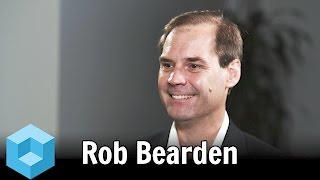
01. Prakash Nanduri, Paxata, visits #theCUBE!. (00:16)
02. Update on Paxata. (01:01)
03. Paxata's Enterprise Grade Data Preparation. (02:51)
04. Maintaining Integrity and the Steps to Navigating the Data Lake. (06:20)
05. Translating Data into Information. (07:38)
06. Simple, Original and Interactivity with Large Amounts of Data. (09:19)
07. How Companies Engage with Paxata. (10:57)
08. A Flexible Pricing Model. (13:20)
Track List created with http://www.vinjavideo.com.
--- ---
Are you a data scientist? This company says you are | #HS16SJ
by R. Danes | Jul 1, 2016
We all know that Big Data is big for a reason: It takes a very large amount of data for an analytics tool to produce actionable intelligence. The problem is that when time is of the essence — and it usually is — extracting, cleansing and preparing data can take too long, allowing the window to value to close. According to one company, for data to be a usable tool for businesses, preparation has to be a sprint not a marathon.
“I like to say that there’s a data scientist in all of us,” said Prakash Nanduri, cofounder and CEO of Paxata, Inc. He told hosts John Furrier (@furrier) and George Gilbert (@ggilbert41) of theCUBE, from the SiliconANGLE Media team, “There may be 200,000 data scientists out there, but there are 200 million business analysts.” And the later could perform data science, he said, if we could automate data preparation.
The complete idiot’s guide to data
Nanduri said that Paxata has used machine learning and other technologies to automate preparation, so anyone can “go from data to information in minutes, not months, and with clicks, not code.” He contends that Paxata requires the least technical ability of any similar data tool available.
All or nothing
Nanduri said Paxata offers an independent platform to sit on top of your data lake or infrastructure that gathers it all in one place for manipulation and analytics. And it doesn’t matter where your data lives or how many analytics tools you use.
He said that using all data and not just samples for analytics is crucial in some spaces. “When you’re focused on a use case like anti-money laundering, saying that you’re going to try to pull samples of data to clean, it doesn’t cut it,” he said. “If you’re finding a bad guy, and you’re working in national security, you need to work with full datasets not samples.”
#HS16SJ
#theCUBE
Forgot Password
Almost there!
We just sent you a verification email. Please verify your account to gain access to
Hadoop Summit 2016 | San Jose. If you don’t think you received an email check your
spam folder.
In order to sign in, enter the email address you used to registered for the event. Once completed, you will receive an email with a verification link. Open this link to automatically sign into the site.
Register For Hadoop Summit 2016 | San Jose
Please fill out the information below. You will recieve an email with a verification link confirming your registration. Click the link to automatically sign into the site.
You’re almost there!
We just sent you a verification email. Please click the verification button in the email. Once your email address is verified, you will have full access to all event content for Hadoop Summit 2016 | San Jose.
I want my badge and interests to be visible to all attendees.
Checking this box will display your presense on the attendees list, view your profile and allow other attendees to contact you via 1-1 chat. Read the Privacy Policy. At any time, you can choose to disable this preference.
Select your Interests!
add
Upload your photo
Uploading..
OR
Connect via Twitter
Connect via Linkedin
EDIT PASSWORD
Share
Forgot Password
Almost there!
We just sent you a verification email. Please verify your account to gain access to
Hadoop Summit 2016 | San Jose. If you don’t think you received an email check your
spam folder.
In order to sign in, enter the email address you used to registered for the event. Once completed, you will receive an email with a verification link. Open this link to automatically sign into the site.
Sign in to gain access to Hadoop Summit 2016 | San Jose
Please sign in with LinkedIn to continue to Hadoop Summit 2016 | San Jose. Signing in with LinkedIn ensures a professional environment.
Are you sure you want to remove access rights for this user?
Details
Manage Access
email address
Community Invitation
Prakash Nanduri, Paxata | Hadoop Summit 2016 San Jose
01. Prakash Nanduri, Paxata, visits #theCUBE!. (00:16)
02. Update on Paxata. (01:01)
03. Paxata's Enterprise Grade Data Preparation. (02:51)
04. Maintaining Integrity and the Steps to Navigating the Data Lake. (06:20)
05. Translating Data into Information. (07:38)
06. Simple, Original and Interactivity with Large Amounts of Data. (09:19)
07. How Companies Engage with Paxata. (10:57)
08. A Flexible Pricing Model. (13:20)
Track List created with http://www.vinjavideo.com.
--- ---
Are you a data scientist? This company says you are | #HS16SJ
by R. Danes | Jul 1, 2016
We all know that Big Data is big for a reason: It takes a very large amount of data for an analytics tool to produce actionable intelligence. The problem is that when time is of the essence — and it usually is — extracting, cleansing and preparing data can take too long, allowing the window to value to close. According to one company, for data to be a usable tool for businesses, preparation has to be a sprint not a marathon.
“I like to say that there’s a data scientist in all of us,” said Prakash Nanduri, cofounder and CEO of Paxata, Inc. He told hosts John Furrier (@furrier) and George Gilbert (@ggilbert41) of theCUBE, from the SiliconANGLE Media team, “There may be 200,000 data scientists out there, but there are 200 million business analysts.” And the later could perform data science, he said, if we could automate data preparation.
The complete idiot’s guide to data
Nanduri said that Paxata has used machine learning and other technologies to automate preparation, so anyone can “go from data to information in minutes, not months, and with clicks, not code.” He contends that Paxata requires the least technical ability of any similar data tool available.
All or nothing
Nanduri said Paxata offers an independent platform to sit on top of your data lake or infrastructure that gathers it all in one place for manipulation and analytics. And it doesn’t matter where your data lives or how many analytics tools you use.
He said that using all data and not just samples for analytics is crucial in some spaces. “When you’re focused on a use case like anti-money laundering, saying that you’re going to try to pull samples of data to clean, it doesn’t cut it,” he said. “If you’re finding a bad guy, and you’re working in national security, you need to work with full datasets not samples.”
#HS16SJ
#theCUBE