01. Raghu Ramakrishnan, Microsoft, visits #theCUBE!. (00:15)
02. The Diverse and Expanding Data Revolution. (00:40)
03. New Innovation and Interventions in Database Technology. (03:55)
04. Identity and the "Open" Way. (06:40)
05. Microsoft Delivering Simplicity to Customers. (09:13)
06. Customers Transitioning to the Cloud. (12:27)
07. The Current Culture at Microsoft. (16:31)
08. Microsoft's History as a Data-Driven Company. (22:30)
09. What CIOs Should Be Telling Their Boards About Security. (24:28)
10. Some Color on Satya Nadella. (26:55)
11. Changes in Microsoft: OpenSource & DevOps. (29:10)
12. The Future of Data. (31:12)
Track List created with http://www.vinjavideo.com.
--- ---
Information factories, identity standards and data at Microsoft | #HS16Dublin
by Gabriel Pesek | Apr 13, 2016
Though part of the draw to this year’s Hadoop Data Summit in Dublin, Ireland, is to introduce it to new customer bases, many of the attendees are very familiar with the utility already and are looking for something that speaks more to the effect its wide adoption is having on the business market.
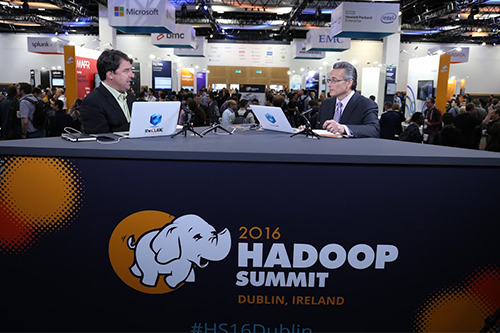
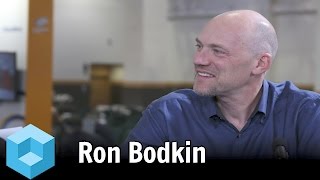
Raghu Ramakrishnan, CTO of data at Microsoft, joined John Furrier (@furrier) and Dave Vellante (@dvellante), cohosts of theCUBE, from the SiliconANGLE Media team, to talk about several points behind Microsoft’s viewpoint on the continuing data revolution and what it means for its customers.
Expansion and factories
Ramakrishnan began by giving a rough overview: “I think this trend toward many diverse kinds of data from many diverse sources, and then wanting to do many different things with it, it’s moving toward a technical revolution and a potential business revolution.” As an example, he noted how database system scaling used to only have to deal with hundreds of nodes and how that has increased to hundreds of thousands.
“Business-wise, what I think is happening is the complete transformation of what we think of as data-warehousing,” Ramakrishnan said. Through real-time processing of various types of data as they arrive in the warehouse, so many avenues of data-utilization are being opened up that it’s more a matter of efficiently managing it all than one of trying to decide what to do, and as Ramakrishnan put it, “The result is really an information production factory, if you will.”
Data and consumers
Also on the table was how the data explosion is being presented to regular customers. “The common way that people refer to something becomes a standard, right? To that extent, the game is on in terms of identity for various kinds of entities and who owns that identity,” Ramakrishnan explained. “The bottom line is … all of this is getting complex. As you add security, as you add data governance … the IT overhead of managing these systems is non-trivial. And part of the attraction of the cloud is it’s so much easier for a vendor like Microsoft to do the heavy lifting and then amortize that investment across many, many customers.”
Moving to the other side of this business equation, Ramakrishnan noted, “As a customer, the one thing we are hearing loud and clear: Make it simple.” However, this is easier said than done. Ramakrishnan explored some of the most immediate issues complicating things: “As the lifecycle grows richer, data and compute, they need to scale very differently at different stages in the lifecycle. … When data’s hot, you’re willing to pay for the premium of keeping it in memory. Later, you want the cost-efficiency of cold storage. At the same time, when you need to run that daily batch of data, you’re going to burst up in terms of terms of your CPU consumption. At other times, not really.”
Keeping the pace
But with everything in tech, and particularly the data-management sector, developing at such high speeds, Ramakrishnan was careful not to leap too far ahead in analysis. “We are in the early stages of this revolution … in terms of the ability to move and to shift their internal processes, to take full advantage; while there are some who are ahead of others, this is very much a journey that’s happening now,” he said and noted that for many companies, “A lot of the energy right now is in that cultural shift within their organizations.”
Ramakrishnan then moved to a more abstracted overview: “We see two tremendous changes. One is the shift to cloud, and the other is the enormous increase in the data-centricity of our customers. … We see this as an opportunity to redefine the warehousing side and to compete there with renewed vigor. … We see these changes … as something we are all in.”
@theCUBE
#HS16Dublin
Forgot Password
Almost there!
We just sent you a verification email. Please verify your account to gain access to
Hadoop Summit 2016 | Dublin. If you don’t think you received an email check your
spam folder.
In order to sign in, enter the email address you used to registered for the event. Once completed, you will receive an email with a verification link. Open this link to automatically sign into the site.
Register For Hadoop Summit 2016 | Dublin
Please fill out the information below. You will recieve an email with a verification link confirming your registration. Click the link to automatically sign into the site.
You’re almost there!
We just sent you a verification email. Please click the verification button in the email. Once your email address is verified, you will have full access to all event content for Hadoop Summit 2016 | Dublin.
I want my badge and interests to be visible to all attendees.
Checking this box will display your presense on the attendees list, view your profile and allow other attendees to contact you via 1-1 chat. Read the Privacy Policy. At any time, you can choose to disable this preference.
Select your Interests!
add
Upload your photo
Uploading..
OR
Connect via Twitter
Connect via Linkedin
EDIT PASSWORD
Share
Forgot Password
Almost there!
We just sent you a verification email. Please verify your account to gain access to
Hadoop Summit 2016 | Dublin. If you don’t think you received an email check your
spam folder.
In order to sign in, enter the email address you used to registered for the event. Once completed, you will receive an email with a verification link. Open this link to automatically sign into the site.
Sign in to gain access to Hadoop Summit 2016 | Dublin
Please sign in with LinkedIn to continue to Hadoop Summit 2016 | Dublin. Signing in with LinkedIn ensures a professional environment.
Are you sure you want to remove access rights for this user?
Details
Manage Access
email address
Community Invitation
Raghu Ramakrishnan, Microsoft - Hadoop Summit 2016 Dublin
01. Raghu Ramakrishnan, Microsoft, visits #theCUBE!. (00:15)
02. The Diverse and Expanding Data Revolution. (00:40)
03. New Innovation and Interventions in Database Technology. (03:55)
04. Identity and the "Open" Way. (06:40)
05. Microsoft Delivering Simplicity to Customers. (09:13)
06. Customers Transitioning to the Cloud. (12:27)
07. The Current Culture at Microsoft. (16:31)
08. Microsoft's History as a Data-Driven Company. (22:30)
09. What CIOs Should Be Telling Their Boards About Security. (24:28)
10. Some Color on Satya Nadella. (26:55)
11. Changes in Microsoft: OpenSource & DevOps. (29:10)
12. The Future of Data. (31:12)
Track List created with http://www.vinjavideo.com.
--- ---
Information factories, identity standards and data at Microsoft | #HS16Dublin
by Gabriel Pesek | Apr 13, 2016
Though part of the draw to this year’s Hadoop Data Summit in Dublin, Ireland, is to introduce it to new customer bases, many of the attendees are very familiar with the utility already and are looking for something that speaks more to the effect its wide adoption is having on the business market.
Raghu Ramakrishnan, CTO of data at Microsoft, joined John Furrier (@furrier) and Dave Vellante (@dvellante), cohosts of theCUBE, from the SiliconANGLE Media team, to talk about several points behind Microsoft’s viewpoint on the continuing data revolution and what it means for its customers.
Expansion and factories
Ramakrishnan began by giving a rough overview: “I think this trend toward many diverse kinds of data from many diverse sources, and then wanting to do many different things with it, it’s moving toward a technical revolution and a potential business revolution.” As an example, he noted how database system scaling used to only have to deal with hundreds of nodes and how that has increased to hundreds of thousands.
“Business-wise, what I think is happening is the complete transformation of what we think of as data-warehousing,” Ramakrishnan said. Through real-time processing of various types of data as they arrive in the warehouse, so many avenues of data-utilization are being opened up that it’s more a matter of efficiently managing it all than one of trying to decide what to do, and as Ramakrishnan put it, “The result is really an information production factory, if you will.”
Data and consumers
Also on the table was how the data explosion is being presented to regular customers. “The common way that people refer to something becomes a standard, right? To that extent, the game is on in terms of identity for various kinds of entities and who owns that identity,” Ramakrishnan explained. “The bottom line is … all of this is getting complex. As you add security, as you add data governance … the IT overhead of managing these systems is non-trivial. And part of the attraction of the cloud is it’s so much easier for a vendor like Microsoft to do the heavy lifting and then amortize that investment across many, many customers.”
Moving to the other side of this business equation, Ramakrishnan noted, “As a customer, the one thing we are hearing loud and clear: Make it simple.” However, this is easier said than done. Ramakrishnan explored some of the most immediate issues complicating things: “As the lifecycle grows richer, data and compute, they need to scale very differently at different stages in the lifecycle. … When data’s hot, you’re willing to pay for the premium of keeping it in memory. Later, you want the cost-efficiency of cold storage. At the same time, when you need to run that daily batch of data, you’re going to burst up in terms of terms of your CPU consumption. At other times, not really.”
Keeping the pace
But with everything in tech, and particularly the data-management sector, developing at such high speeds, Ramakrishnan was careful not to leap too far ahead in analysis. “We are in the early stages of this revolution … in terms of the ability to move and to shift their internal processes, to take full advantage; while there are some who are ahead of others, this is very much a journey that’s happening now,” he said and noted that for many companies, “A lot of the energy right now is in that cultural shift within their organizations.”
Ramakrishnan then moved to a more abstracted overview: “We see two tremendous changes. One is the shift to cloud, and the other is the enormous increase in the data-centricity of our customers. … We see this as an opportunity to redefine the warehousing side and to compete there with renewed vigor. … We see these changes … as something we are all in.”
@theCUBE
#HS16Dublin