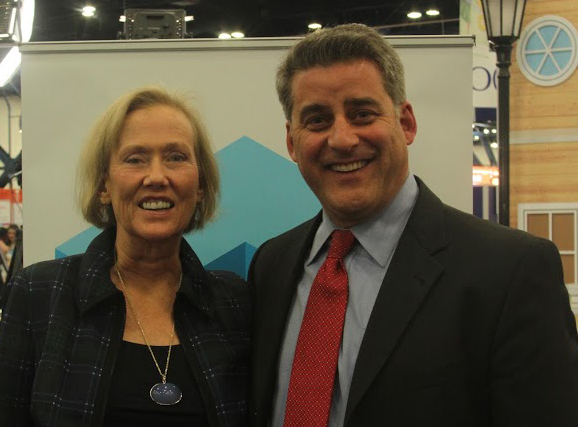
01. Reshma Saujani, Girls Who Code, visits theCUBE!. (00:16)
02. Marissa Shorenstein, AT&T, visits theCUBE!. (00:48)
03. The Mission and Background of Girls Who Code. (01:010)
04. Projects That Gets Girls Interested in Code. (02:30)
05. AT&T Relationship to Girls Who Code. (03:52)
06. The Core Program of Girls Who Code. (05:41)
07. Mentorship Opportunities in Girls Who Code. (07:55)
08. Examples of How Software is Everywhere. (10:59)
09. What's Next for GWC and the Grace Hopper Event. (11:36)
10. AT&T Changing Attitudes. (13:04)
11. How to Get Involved in Girls Who Code. (14:10)
#GHC15 #theCUBE #ATT #SiliconANGLE #GirlsWhoCode
Closing the gender gap in tech | #GHC15
by Darcie Nolan | Oct 20, 2015
Getting women into coding not only benefits those who are looking for a steady job and inspiring employment that could potentially change the world. It also means getting the diverse voice and ideas that will result in the next big innovation. One private/public partnership has stepped in to give middle school and high school girls the opportunity to get hands-on coding experience with the hopes that some of them will continue their education and contribute to the future of the industry.
Reshma Saujani, founder of Girls Who Code, and Marissa Shorenstein, president at AT&T New York, sat down with Jeff Frick, cohost of theCUBE, from the SiliconANGLE Media team, during the Grace Hopper Celebration of Women in Computing in Houston, Texas, to talk about how they are approaching education, diversity and partnerships.
Closing the gender gap
The percentage of women earning a computer science bachelor’s degree has dropped from 37 percent to 18 percent since the early 80s, according to some estimates. Girls Who Code aims to close that gender gap by providing classrooms for high school students, partnered with major companies, as well as after school programs and summer intensives.
In four years, they have taught over 10,000 girls across 40 states how to computer program by providing meaningful projects that give them hands on skills and inspiration.
Public/private partnering
By partnering with AT&T the first year, Saujani was able to get the support they needed in New York for the Girls Who Code program.
“We believe that it takes public/private partnerships to ensure that we are teaching our young women the skills that they need to compete for jobs in the 21st century,” said Shorenstein. AT&T is just one of the many companies that are looking to diversify their talent pool and raise the voice of those who have been underrepresented in the industry.
@theCUBE
#GHC15
Forgot Password
Almost there!
We just sent you a verification email. Please verify your account to gain access to
Grace Hopper Celebration of Women in Computing 2015 | Houston. If you don’t think you received an email check your
spam folder.
Sign in to Grace Hopper Celebration of Women in Computing 2015 | Houston.
In order to sign in, enter the email address you used to registered for the event. Once completed, you will receive an email with a verification link. Open this link to automatically sign into the site.
Register For Grace Hopper Celebration of Women in Computing 2015 | Houston
Please fill out the information below. You will recieve an email with a verification link confirming your registration. Click the link to automatically sign into the site.
You’re almost there!
We just sent you a verification email. Please click the verification button in the email. Once your email address is verified, you will have full access to all event content for Grace Hopper Celebration of Women in Computing 2015 | Houston.
I want my badge and interests to be visible to all attendees.
Checking this box will display your presense on the attendees list, view your profile and allow other attendees to contact you via 1-1 chat. Read the Privacy Policy. At any time, you can choose to disable this preference.
Select your Interests!
add
Upload your photo
Uploading..
OR
Connect via Twitter
Connect via Linkedin
EDIT PASSWORD
Share
Forgot Password
Almost there!
We just sent you a verification email. Please verify your account to gain access to
Grace Hopper Celebration of Women in Computing 2015 | Houston. If you don’t think you received an email check your
spam folder.
Sign in to Grace Hopper Celebration of Women in Computing 2015 | Houston.
In order to sign in, enter the email address you used to registered for the event. Once completed, you will receive an email with a verification link. Open this link to automatically sign into the site.
Sign in to gain access to Grace Hopper Celebration of Women in Computing 2015 | Houston
Please sign in with LinkedIn to continue to Grace Hopper Celebration of Women in Computing 2015 | Houston. Signing in with LinkedIn ensures a professional environment.
01. Reshma Saujani, Girls Who Code, visits theCUBE!. (00:16)
02. Marissa Shorenstein, AT&T, visits theCUBE!. (00:48)
03. The Mission and Background of Girls Who Code. (01:010)
04. Projects That Gets Girls Interested in Code. (02:30)
05. AT&T Relationship to Girls Who Code. (03:52)
06. The Core Program of Girls Who Code. (05:41)
07. Mentorship Opportunities in Girls Who Code. (07:55)
08. Examples of How Software is Everywhere. (10:59)
09. What's Next for GWC and the Grace Hopper Event. (11:36)
10. AT&T Changing Attitudes. (13:04)
11. How to Get Involved in Girls Who Code. (14:10)
#GHC15 #theCUBE #ATT #SiliconANGLE #GirlsWhoCode
Closing the gender gap in tech | #GHC15
by Darcie Nolan | Oct 20, 2015
Getting women into coding not only benefits those who are looking for a steady job and inspiring employment that could potentially change the world. It also means getting the diverse voice and ideas that will result in the next big innovation. One private/public partnership has stepped in to give middle school and high school girls the opportunity to get hands-on coding experience with the hopes that some of them will continue their education and contribute to the future of the industry.
Reshma Saujani, founder of Girls Who Code, and Marissa Shorenstein, president at AT&T New York, sat down with Jeff Frick, cohost of theCUBE, from the SiliconANGLE Media team, during the Grace Hopper Celebration of Women in Computing in Houston, Texas, to talk about how they are approaching education, diversity and partnerships.
Closing the gender gap
The percentage of women earning a computer science bachelor’s degree has dropped from 37 percent to 18 percent since the early 80s, according to some estimates. Girls Who Code aims to close that gender gap by providing classrooms for high school students, partnered with major companies, as well as after school programs and summer intensives.
In four years, they have taught over 10,000 girls across 40 states how to computer program by providing meaningful projects that give them hands on skills and inspiration.
Public/private partnering
By partnering with AT&T the first year, Saujani was able to get the support they needed in New York for the Girls Who Code program.
“We believe that it takes public/private partnerships to ensure that we are teaching our young women the skills that they need to compete for jobs in the 21st century,” said Shorenstein. AT&T is just one of the many companies that are looking to diversify their talent pool and raise the voice of those who have been underrepresented in the industry.
@theCUBE
#GHC15