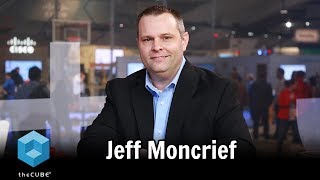
Jennifer Lin, Director of Product Management, Google Cloud, sits with John Furrier & Dave Vellante for Google Cloud Next 2018 in San Francisco, CA.
#GoogleNext18 #theCUBE
https://siliconangle.com/2018/07/25/google-plays-the-long-game-with-open-source-and-multicloud-googlenext18/
Google plays the long game with open source and multicloud
It’s no accident that Google LLC has created such a large network of loyal software developers as the search engine titan takes on enterprise cloud computing services. Much of its success in this arena has been going against the grain and doing what traditional businesses would say is dangerous — sharing your resources and opening them freely to the community.
By making much of its advanced software available to the wider developer community through industry-shaking open source initiatives, the company is actually able to evolve quickly and nurture a community willing to support its progress. While many companies today are driven by short-term revenue out of necessity, Google is able to play the long game in enterprise by driving adoption of its products built on the skill and knowledge of some of the world’s brightest minds.
“For something like Kubernetes and Istio, Google sort of bootstrapped that and then donated it to the community,” said Jennifer Lin (pictured), director of product management at Google Cloud, speaking of the open-sourced tools for orchestrating containerized applications and managing microservices. “Since then, we’ve seen just incredible participation at things like KubeCon and developer hackathons, etc. That’s both a model for growing the community but also just to educate and share a lot of the best practices in a different type of way than most software companies.”
Lin spoke with John Furrier (@furrier) and Dave Vellante (@dvellante), co-hosts of theCUBE, SiliconANGLE Media’s mobile livestreaming studio, during the Google Cloud Next event in San Francisco. They discussed Kubernetes, Istio, multicloud trends, open source impacts and more. (* Disclosure below.)
Multicloud adaptability and control
Google sees multicloud as the future, as the company has seen first hand through dealings with companies such as IBM and ride-sharing platform Lyft that customers do not want to be locked down to one cloud provider. By following the pluggable adaptable model, it becomes much easier to allow companies their choice in providers for each cloud service, according to Lin.
Now that there is workload portability, a common abstraction layer, and a single point of administrative control, there’s a lot companies can do in the cloud, Lin pointed out.
“Using some of these innovative technologies with containerization, you don’t have to worry about the kernel version in the OS and a lot of the toil that was in the system before,” Lin concluded.
Watch the complete video interview below, and be sure to check out more of SiliconANGLE’s and theCUBE’s coverage of the Google Cloud Next event. (* Disclosure: Google Cloud sponsored this segment of theCUBE. Neither Google Cloud nor other sponsors have editorial control over content on theCUBE or SiliconANGLE.)
Forgot Password
Almost there!
We just sent you a verification email. Please verify your account to gain access to
Google Cloud Next 2018 | San Francisco. If you don’t think you received an email check your
spam folder.
Sign in to Google Cloud Next 2018 | San Francisco.
In order to sign in, enter the email address you used to registered for the event. Once completed, you will receive an email with a verification link. Open this link to automatically sign into the site.
Register For Google Cloud Next 2018 | San Francisco
Please fill out the information below. You will recieve an email with a verification link confirming your registration. Click the link to automatically sign into the site.
You’re almost there!
We just sent you a verification email. Please click the verification button in the email. Once your email address is verified, you will have full access to all event content for Google Cloud Next 2018 | San Francisco.
I want my badge and interests to be visible to all attendees.
Checking this box will display your presense on the attendees list, view your profile and allow other attendees to contact you via 1-1 chat. Read the Privacy Policy. At any time, you can choose to disable this preference.
Select your Interests!
add
Upload your photo
Uploading..
OR
Connect via Twitter
Connect via Linkedin
EDIT PASSWORD
Share
Forgot Password
Almost there!
We just sent you a verification email. Please verify your account to gain access to
Google Cloud Next 2018 | San Francisco. If you don’t think you received an email check your
spam folder.
Sign in to Google Cloud Next 2018 | San Francisco.
In order to sign in, enter the email address you used to registered for the event. Once completed, you will receive an email with a verification link. Open this link to automatically sign into the site.
Sign in to gain access to Google Cloud Next 2018 | San Francisco
Please sign in with LinkedIn to continue to Google Cloud Next 2018 | San Francisco. Signing in with LinkedIn ensures a professional environment.
Are you sure you want to remove access rights for this user?
Details
Manage Access
email address
Community Invitation
Jennifer Lin, Google Cloud | Google Cloud Next 2018
Jennifer Lin, Director of Product Management, Google Cloud, sits with John Furrier & Dave Vellante for Google Cloud Next 2018 in San Francisco, CA.
#GoogleNext18 #theCUBE
https://siliconangle.com/2018/07/25/google-plays-the-long-game-with-open-source-and-multicloud-googlenext18/
Google plays the long game with open source and multicloud
It’s no accident that Google LLC has created such a large network of loyal software developers as the search engine titan takes on enterprise cloud computing services. Much of its success in this arena has been going against the grain and doing what traditional businesses would say is dangerous — sharing your resources and opening them freely to the community.
By making much of its advanced software available to the wider developer community through industry-shaking open source initiatives, the company is actually able to evolve quickly and nurture a community willing to support its progress. While many companies today are driven by short-term revenue out of necessity, Google is able to play the long game in enterprise by driving adoption of its products built on the skill and knowledge of some of the world’s brightest minds.
“For something like Kubernetes and Istio, Google sort of bootstrapped that and then donated it to the community,” said Jennifer Lin (pictured), director of product management at Google Cloud, speaking of the open-sourced tools for orchestrating containerized applications and managing microservices. “Since then, we’ve seen just incredible participation at things like KubeCon and developer hackathons, etc. That’s both a model for growing the community but also just to educate and share a lot of the best practices in a different type of way than most software companies.”
Lin spoke with John Furrier (@furrier) and Dave Vellante (@dvellante), co-hosts of theCUBE, SiliconANGLE Media’s mobile livestreaming studio, during the Google Cloud Next event in San Francisco. They discussed Kubernetes, Istio, multicloud trends, open source impacts and more. (* Disclosure below.)
Multicloud adaptability and control
Google sees multicloud as the future, as the company has seen first hand through dealings with companies such as IBM and ride-sharing platform Lyft that customers do not want to be locked down to one cloud provider. By following the pluggable adaptable model, it becomes much easier to allow companies their choice in providers for each cloud service, according to Lin.
Now that there is workload portability, a common abstraction layer, and a single point of administrative control, there’s a lot companies can do in the cloud, Lin pointed out.
“Using some of these innovative technologies with containerization, you don’t have to worry about the kernel version in the OS and a lot of the toil that was in the system before,” Lin concluded.
Watch the complete video interview below, and be sure to check out more of SiliconANGLE’s and theCUBE’s coverage of the Google Cloud Next event. (* Disclosure: Google Cloud sponsored this segment of theCUBE. Neither Google Cloud nor other sponsors have editorial control over content on theCUBE or SiliconANGLE.)