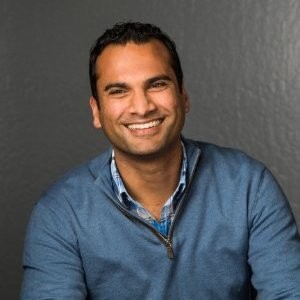
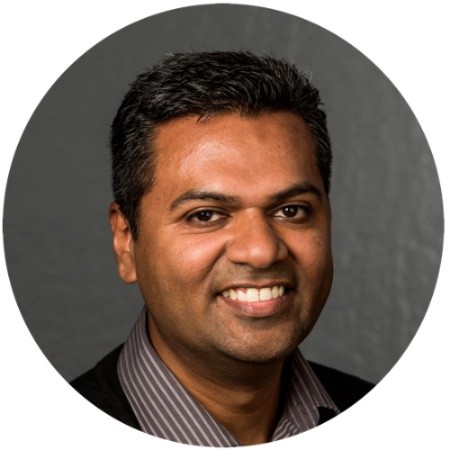
Karthik Rau, Founder and CEO, SignalFx | @krrau, & Rajesh Raman, Chief Architect, SignalFx | @RealRajeshRaman, sit with John Furrier for Google Cloud Next 2018 in San Francisco, CA.
#GoogleNext18 #theCUBE
https://siliconangle.com/2018/07/30/move-fast-dont-break-stuff-with-devops-undo-button-googlenext18/
Move fast, don’t break stuff with DevOps undo button
Not every company has the safety net to move fast and break stuff like Facebook. But they badly want to move fast with agile software deployment; can they do so and merely shake, scratch or scuff their stuff, then return it to like-new condition? A startup whose chief architect is none other than a Facebook Inc. alumnus says, they can.
Many companies are straining to grow into new agile developer operations protocols, according to Karthik Rau (pictured, left), founder and chief executive officer of SignalFx Inc. “Everything that they’ve designed is around having process and structure to check and make sure everything it’s clean before they push changes out,” he said. “And now we’re in this world where, you know, an intern or a developer can push directly on to production.”
The solution, oddly, is not to hire a full-time psychic to predict the performance of new deployments. It is rather a simple, reliable “undo button” at the ready should anything go wrong.
Rau and SignalFX Chief Architect Rajesh Raman (pictured, right) spoke with John Furrier (@furrier), host of theCUBE, SiliconANGLE Media’s mobile livestreaming studio, during the recently concluded Google Cloud Next event in San Francisco. They discussed how visibility can make distributed IT systems and DevOps release cycles manageable. (* Disclosure below.)
Buckle seat belt and floor it with CICD
The complexity of today’s information technology systems is a lot to get one’s arms around. “We went from having physical machines that live for three years in a data center … divide it up into [virtual machines] 10 years ago, now divided up into containers for every process,” Rau said, noting the current trend for even more effective isolation and deployment of software through containerization.
The number of components in every spin-up, spin-down churn is massive. “That in and of itself requires a far more analytics-based approach to understand patterns rather than what’s happening on an individual component,” Rau said. SignalFX leverages analytics to observe systems with tons of components and allows users to easily roll back a bad deployment, he explained.
Continuous integration/continuous deployment, or CICD, underlies the whole business of pushing code at warp speed, according to Raman. “The thing that makes that possible is for you to have observability into what’s happening while that push happens because it’s one thing to push very fast; it’s another thing to recognize that you might have pushed something bad and to be able to revert it very quickly too,” he said. “So I think observability is a very key aspect of this entire CICD story.”
Watch the complete video interview below, and be sure to check out more of SiliconANGLE’s and theCUBE’s coverage of the Google Cloud Next event. (* Disclosure: SignalFX Inc. sponsored this segment of theCUBE. Neither SignalFX nor other sponsors have editorial control over content on theCUBE or SiliconANGLE.)
Forgot Password
Almost there!
We just sent you a verification email. Please verify your account to gain access to
Google Cloud Next 2018 | San Francisco. If you don’t think you received an email check your
spam folder.
Sign in to Google Cloud Next 2018 | San Francisco.
In order to sign in, enter the email address you used to registered for the event. Once completed, you will receive an email with a verification link. Open this link to automatically sign into the site.
Register For Google Cloud Next 2018 | San Francisco
Please fill out the information below. You will recieve an email with a verification link confirming your registration. Click the link to automatically sign into the site.
You’re almost there!
We just sent you a verification email. Please click the verification button in the email. Once your email address is verified, you will have full access to all event content for Google Cloud Next 2018 | San Francisco.
I want my badge and interests to be visible to all attendees.
Checking this box will display your presense on the attendees list, view your profile and allow other attendees to contact you via 1-1 chat. Read the Privacy Policy. At any time, you can choose to disable this preference.
Select your Interests!
add
Upload your photo
Uploading..
OR
Connect via Twitter
Connect via Linkedin
EDIT PASSWORD
Share
Forgot Password
Almost there!
We just sent you a verification email. Please verify your account to gain access to
Google Cloud Next 2018 | San Francisco. If you don’t think you received an email check your
spam folder.
Sign in to Google Cloud Next 2018 | San Francisco.
In order to sign in, enter the email address you used to registered for the event. Once completed, you will receive an email with a verification link. Open this link to automatically sign into the site.
Sign in to gain access to Google Cloud Next 2018 | San Francisco
Please sign in with LinkedIn to continue to Google Cloud Next 2018 | San Francisco. Signing in with LinkedIn ensures a professional environment.
Are you sure you want to remove access rights for this user?
Details
Manage Access
email address
Community Invitation
Karthik Rau, SignalFx & Rajesh Raman, SignalFx | Google Cloud Next 2018
Karthik Rau, Founder and CEO, SignalFx | @krrau, & Rajesh Raman, Chief Architect, SignalFx | @RealRajeshRaman, sit with John Furrier for Google Cloud Next 2018 in San Francisco, CA.
#GoogleNext18 #theCUBE
https://siliconangle.com/2018/07/30/move-fast-dont-break-stuff-with-devops-undo-button-googlenext18/
Move fast, don’t break stuff with DevOps undo button
Not every company has the safety net to move fast and break stuff like Facebook. But they badly want to move fast with agile software deployment; can they do so and merely shake, scratch or scuff their stuff, then return it to like-new condition? A startup whose chief architect is none other than a Facebook Inc. alumnus says, they can.
Many companies are straining to grow into new agile developer operations protocols, according to Karthik Rau (pictured, left), founder and chief executive officer of SignalFx Inc. “Everything that they’ve designed is around having process and structure to check and make sure everything it’s clean before they push changes out,” he said. “And now we’re in this world where, you know, an intern or a developer can push directly on to production.”
The solution, oddly, is not to hire a full-time psychic to predict the performance of new deployments. It is rather a simple, reliable “undo button” at the ready should anything go wrong.
Rau and SignalFX Chief Architect Rajesh Raman (pictured, right) spoke with John Furrier (@furrier), host of theCUBE, SiliconANGLE Media’s mobile livestreaming studio, during the recently concluded Google Cloud Next event in San Francisco. They discussed how visibility can make distributed IT systems and DevOps release cycles manageable. (* Disclosure below.)
Buckle seat belt and floor it with CICD
The complexity of today’s information technology systems is a lot to get one’s arms around. “We went from having physical machines that live for three years in a data center … divide it up into [virtual machines] 10 years ago, now divided up into containers for every process,” Rau said, noting the current trend for even more effective isolation and deployment of software through containerization.
The number of components in every spin-up, spin-down churn is massive. “That in and of itself requires a far more analytics-based approach to understand patterns rather than what’s happening on an individual component,” Rau said. SignalFX leverages analytics to observe systems with tons of components and allows users to easily roll back a bad deployment, he explained.
Continuous integration/continuous deployment, or CICD, underlies the whole business of pushing code at warp speed, according to Raman. “The thing that makes that possible is for you to have observability into what’s happening while that push happens because it’s one thing to push very fast; it’s another thing to recognize that you might have pushed something bad and to be able to revert it very quickly too,” he said. “So I think observability is a very key aspect of this entire CICD story.”
Watch the complete video interview below, and be sure to check out more of SiliconANGLE’s and theCUBE’s coverage of the Google Cloud Next event. (* Disclosure: SignalFX Inc. sponsored this segment of theCUBE. Neither SignalFX nor other sponsors have editorial control over content on theCUBE or SiliconANGLE.)