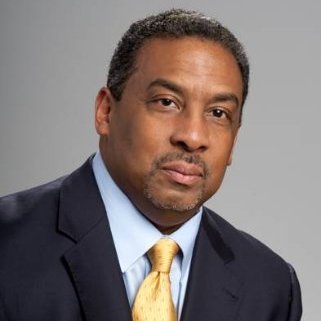
Colin Parris, VP at GE Software Research sits down with theCUBE host Jeff Frick at GE Minds + Machines 2016 in San Francisco, California.
Improve product safety with data simulations | #GEMM16
https://siliconangle.com/2016/11/17/improve-product-safety-with-data-simulations-gemm16/
While software and data utilities are taking much of the spotlight in the ongoing unification of digital and industrial business strengths, the physical side of operations is gradually reclaiming the attention of these businesses, not only with the presence of sensors on equipment, but in applying the gathered data to improving safety.
At the GE Minds + Machines conference in San Francisco, CA, Colin Parris, VP of GE Software Research, sat down with Jeff Frick (@JeffFrick), co-host of theCUBE*, from the SiliconANGLE Media team, to discuss the role of virtualization and models in modern industrial companies.
Digital dualism
Parris began by considering the changes that have taken place in the assessment of pairing digital capabilities with industrial business. “I think the discussion before was, ‘Is this a relevant topic?’” he said. “Now it’s all about, ‘How do we take the partnerships we have, and take it to the next level?’ I think everyone’s convinced that there’s a digital-industrial space; how do we get that, as fast as possible, moving in the right direction?”
Following on that line of interest, Parris introduced the idea of “digital twins,” or digital representation of specific physical assets. As he explained it, “What you have is a combination of models, and because you have a continuous stream of data coming out of those models, that model now adapts to the environment. And so you get a precise representation of a physical asset that exists, and because of that, you’re able to do some interesting business things. You’re able to predict warnings of problems, you can predict the damage, or the opportunity, and you can then optimize to get the best possible results.”
He continued by explaining how the models are tuned and changed after their initial shaping based on characteristics and other data gathered from the physical sensors, and how that allows them to learn and look for problems in similar products, which are in turn incorporated into the model for more accurate predictions.
Simulations strengthening safety
Parris moved from there to examine the benefits of applying the data of these models in simulations, aimed at both previous situations and future possibilities. He noted that while “ normally, simulations take many, many hours or days to run,” the digital twins enable a “surrogate modeling” technique of extracting specific parameters into a much small model. With this practice, the new version can be run “in a few minutes,” allowing for thousands of simulations to be carried out in a short period of time.
As the conversation continued, the focus turned to how understanding the particulars of the environments in which these products and components are being used forms another part of the modeling protocol and the role this plays in improving not only product performance, but also safety. And that is playing a major role in encouraging companies to share their data with each other, Parris said.
“If we put our data together, all of a sudden now [we can] detect when a failure’s happening, and if I can tell you a failure before it occurs, I help you,” he said. “So you’re helping each other, and especially with safety. … Coming together, it’s not just an idealistic view, it’s a pragmatic view, that says, ‘In these industries, lives are at stake.’ You have to think about this very differently.”
Watch the complete video interview below, and be sure to check out more of SiliconANGLE and theCUBE’s coverage of GE Minds + Machines.
*Disclosure: GE and other companies sponsor some GE Minds + Machines segments on SiliconANGLE Media’s theCUBE. Neither GE nor other sponsors have editorial control over content on theCUBE or SiliconANGLE.
#GEMM16 #theCUBE @General Electric #GE GE @SiliconANGLE theCUBE @theCUBE
Forgot Password
Almost there!
We just sent you a verification email. Please verify your account to gain access to
GE Minds + Machines #GEMM16. If you don’t think you received an email check your
spam folder.
In order to sign in, enter the email address you used to registered for the event. Once completed, you will receive an email with a verification link. Open this link to automatically sign into the site.
Register For GE Minds + Machines #GEMM16
Please fill out the information below. You will recieve an email with a verification link confirming your registration. Click the link to automatically sign into the site.
You’re almost there!
We just sent you a verification email. Please click the verification button in the email. Once your email address is verified, you will have full access to all event content for GE Minds + Machines #GEMM16.
I want my badge and interests to be visible to all attendees.
Checking this box will display your presense on the attendees list, view your profile and allow other attendees to contact you via 1-1 chat. Read the Privacy Policy. At any time, you can choose to disable this preference.
Select your Interests!
add
Upload your photo
Uploading..
OR
Connect via Twitter
Connect via Linkedin
EDIT PASSWORD
Share
Forgot Password
Almost there!
We just sent you a verification email. Please verify your account to gain access to
GE Minds + Machines #GEMM16. If you don’t think you received an email check your
spam folder.
In order to sign in, enter the email address you used to registered for the event. Once completed, you will receive an email with a verification link. Open this link to automatically sign into the site.
Sign in to gain access to GE Minds + Machines #GEMM16
Please sign in with LinkedIn to continue to GE Minds + Machines #GEMM16. Signing in with LinkedIn ensures a professional environment.
Are you sure you want to remove access rights for this user?
Details
Manage Access
email address
Community Invitation
Colin Parris, GE Software Research | GE Minds + Machines 2016
Colin Parris, VP at GE Software Research sits down with theCUBE host Jeff Frick at GE Minds + Machines 2016 in San Francisco, California.
Improve product safety with data simulations | #GEMM16
https://siliconangle.com/2016/11/17/improve-product-safety-with-data-simulations-gemm16/
While software and data utilities are taking much of the spotlight in the ongoing unification of digital and industrial business strengths, the physical side of operations is gradually reclaiming the attention of these businesses, not only with the presence of sensors on equipment, but in applying the gathered data to improving safety.
At the GE Minds + Machines conference in San Francisco, CA, Colin Parris, VP of GE Software Research, sat down with Jeff Frick (@JeffFrick), co-host of theCUBE*, from the SiliconANGLE Media team, to discuss the role of virtualization and models in modern industrial companies.
Digital dualism
Parris began by considering the changes that have taken place in the assessment of pairing digital capabilities with industrial business. “I think the discussion before was, ‘Is this a relevant topic?’” he said. “Now it’s all about, ‘How do we take the partnerships we have, and take it to the next level?’ I think everyone’s convinced that there’s a digital-industrial space; how do we get that, as fast as possible, moving in the right direction?”
Following on that line of interest, Parris introduced the idea of “digital twins,” or digital representation of specific physical assets. As he explained it, “What you have is a combination of models, and because you have a continuous stream of data coming out of those models, that model now adapts to the environment. And so you get a precise representation of a physical asset that exists, and because of that, you’re able to do some interesting business things. You’re able to predict warnings of problems, you can predict the damage, or the opportunity, and you can then optimize to get the best possible results.”
He continued by explaining how the models are tuned and changed after their initial shaping based on characteristics and other data gathered from the physical sensors, and how that allows them to learn and look for problems in similar products, which are in turn incorporated into the model for more accurate predictions.
Simulations strengthening safety
Parris moved from there to examine the benefits of applying the data of these models in simulations, aimed at both previous situations and future possibilities. He noted that while “ normally, simulations take many, many hours or days to run,” the digital twins enable a “surrogate modeling” technique of extracting specific parameters into a much small model. With this practice, the new version can be run “in a few minutes,” allowing for thousands of simulations to be carried out in a short period of time.
As the conversation continued, the focus turned to how understanding the particulars of the environments in which these products and components are being used forms another part of the modeling protocol and the role this plays in improving not only product performance, but also safety. And that is playing a major role in encouraging companies to share their data with each other, Parris said.
“If we put our data together, all of a sudden now [we can] detect when a failure’s happening, and if I can tell you a failure before it occurs, I help you,” he said. “So you’re helping each other, and especially with safety. … Coming together, it’s not just an idealistic view, it’s a pragmatic view, that says, ‘In these industries, lives are at stake.’ You have to think about this very differently.”
Watch the complete video interview below, and be sure to check out more of SiliconANGLE and theCUBE’s coverage of GE Minds + Machines.
*Disclosure: GE and other companies sponsor some GE Minds + Machines segments on SiliconANGLE Media’s theCUBE. Neither GE nor other sponsors have editorial control over content on theCUBE or SiliconANGLE.
#GEMM16 #theCUBE @General Electric #GE GE @SiliconANGLE theCUBE @theCUBE